24/7 Emergency Response
24/7 Emergency Water Damage Response in the Inland Empire
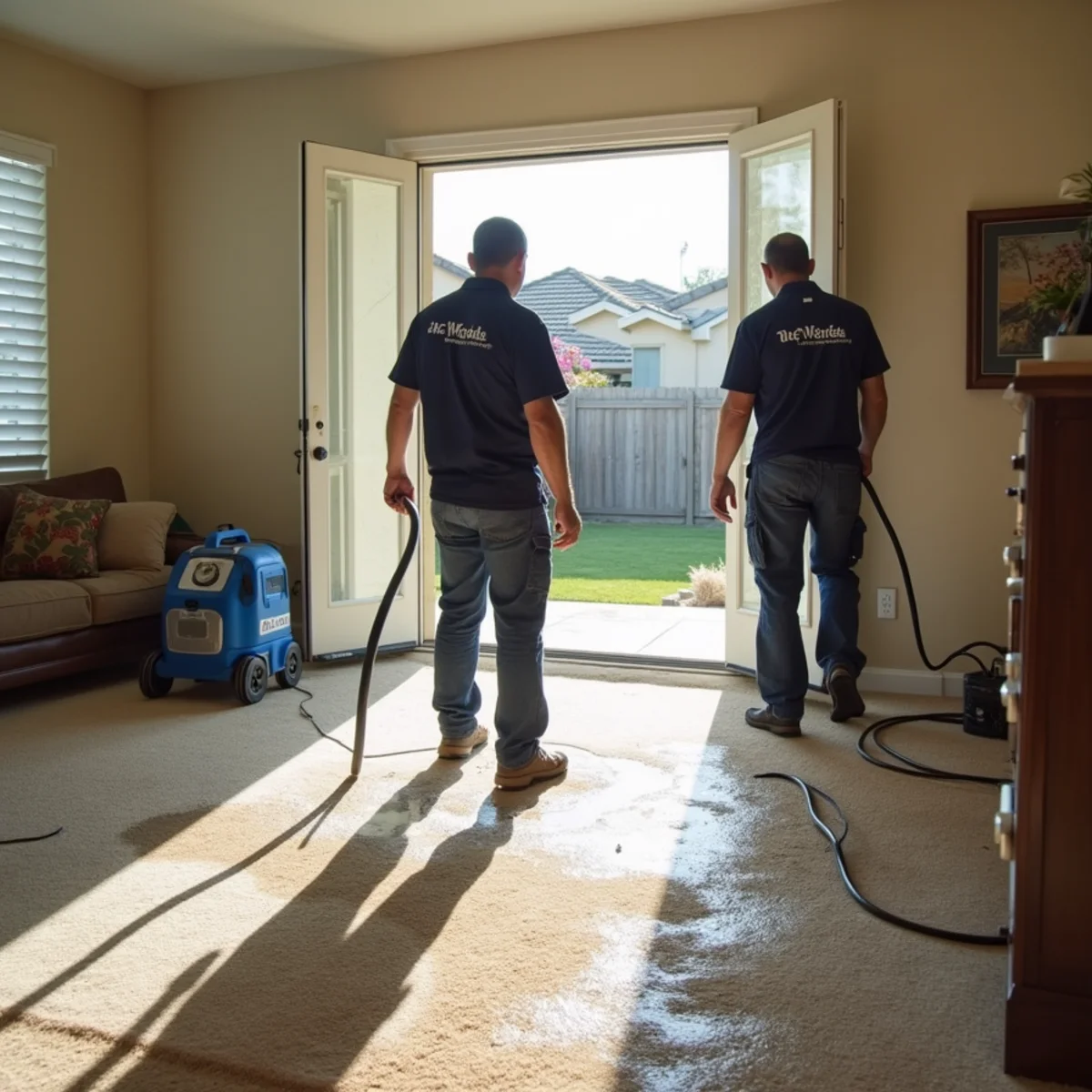
Burst pipe, slab leak, storm flood or sewage backup — we answer the phone at any hour and dispatch a crew within 60 minutes across Rancho Cucamonga. Extraction through rebuild, and we handle your adjuster.
- Documented dry standard
- Bonded & insured
- 24/7 emergency response
Get a free estimate
Tell us what happened and we'll call you straight back. If water is spreading right now, don't wait on the form — call +1 (201) 277-9344.
Answered 24/7/365
A real person picks up at 2 a.m., on Christmas, during a storm.
60-minute dispatch
Crews staged in Rancho Cucamonga — not sent from a regional hub.
Dried to a documented standard
We dry to the S500 standard and prove it with moisture logs.
We handle your adjuster
Photos, readings, drying charts and scope sent straight to your carrier.
Your First 30 Minutes: The Rancho Cucamonga Water Emergency Playbook
Print this pageDo this now
- 1Shut the water off at the main valve if you can reach it safely. If the leak is under a sink or behind a toilet, close that fixture's local shut-off first.
- 2Kill power to the affected rooms at the breaker panel — but never wade through standing water to get there.
- 3Photograph and video everything before you move a single item: the water line on the wall, the source, every room, every soaked belonging.
- 4Move electronics, documents and anything with sentimental value up and out, only if you can do it without walking through water.
- 5Start a written log — every call, every photo, every receipt. That log becomes the backbone of your insurance claim.
Whatever you do, don't
- Don't run your HVAC or household fans. You'll push moisture and spores into rooms that are still dry.
- Don't pull up wet carpet yourself. Lifting it wrong tears the backing and turns a cleanable carpet into a replacement.
- Don't enter a room with a sagging or bubbling ceiling. That drywall is holding a lot of weight.
- Don't throw damaged material away before the adjuster sees it — keep it staged in the garage or on the driveway.
Can't find the main valve? Call your water district's emergency line or the fire department — they can shut the water off at the street. Then call us at +1 (201) 277-9344.
Why the next 24–48 hours decide the cost. Mold begins growing in wet building materials within roughly 24 to 48 hours — faster in a closed-up Rancho Cucamonga house in summer. Inside that window we're usually drying materials in place. Past it, the same drywall, pad and insulation come out in bags and the job becomes demolition plus remediation plus a rebuild. Same leak, very different invoice.
Category & class
The two words that decide your entire job
Before anything gets touched we establish two things. They drive the equipment, the timeline, what can be saved and what it costs — and any company quoting a firm price before knowing them is making it up.
Category 1
Clean water
- Where it comes from
- A broken supply line, a water heater inlet, an overflowing tub, rainwater through a roof.
- Health risk
- Lowest health risk — but it degrades to Category 2 within roughly 48 hours of sitting.
- What it means for your house
- Materials can usually be dried in place. Carpet is often saved, pad frequently survives.
Category 2
Grey water
- Where it comes from
- Dishwasher or washing machine discharge, a toilet overflow without solids, a failed sump.
- Health risk
- Enough contamination to cause illness on contact or ingestion.
- What it means for your house
- Carpet pad generally comes out. Drywall below the line is often removed rather than dried.
Category 3
Black water
- Where it comes from
- Sewage, a backed-up main, ground surface water and storm runoff, or Category 2 left sitting.
- Health risk
- Pathogens and toxins. Full PPE, containment and negative air are mandatory.
- What it means for your house
- Every porous material that was contacted is removed — it cannot be disinfected in place.
And then the class: how far it spread
Category is what's in the water. Class is how much of your house it reached, and it drives the equipment count and the number of drying days.
- Class 1
- Slowest evaporation. Part of one room, little or no wet carpet, minimal absorption.
- Class 2
- An entire room of carpet and pad wet, moisture wicking less than 24 inches up the walls.
- Class 3
- Water from above. Ceilings, walls, insulation and subfloor saturated — the most equipment-intensive.
- Class 4
- Specialty drying. Deep saturation into hardwood, plaster, concrete or a crawl space.
A Category 1 Class 1 job in a hallway and a Category 3 Class 4 job across a ground floor are barely the same trade — which is why anyone quoting a firm price over the phone is guessing. More detail on how the water categories actually work.
What we do
Every kind of water loss, handled in Rancho Cucamonga
From the first emergency call through drying, mold work and putting the drywall, paint and flooring back — one crew, one contract. Start with our full guide to water damage restoration in Rancho Cucamonga, CA.
Water Damage Restoration
Emergency extraction, structural drying and full rebuild — one crew from the first phone call to the final walkthrough.
Learn moreWater Extraction
Truck-mounted units pull standing and sub-surface water out in hours — the step that decides whether your floors survive.
Learn moreStructural Drying
Air movers and commercial dehumidifiers placed to a calculated load, with daily moisture readings you get to see.
Learn moreFlood Cleanup
Storm and runoff flooding brings contaminated water. We pump, strip, sanitize and dry — then document it for your carrier.
Learn moreSewage Cleanup
Category 3 black water handled properly: PPE, containment, removal of contaminated material, disinfection and odor control.
Learn moreMold Remediation
Containment, HEPA filtration, source removal and moisture correction — remediation that fixes the cause, not just the stain.
Learn moreLeak Detection
Thermal imaging, acoustic listening and moisture meters find the leak before we open anything up.
Learn moreEmergency Water Removal
One number, answered by a person, any hour of any day — with a truck rolling before the call ends.
Learn moreStorm Damage Cleanup
Emergency tarping, water extraction and full interior restoration after Santa Ana winds and winter atmospheric rivers.
Learn moreSlab Leak Damage
The most common serious leak in Rancho Cucamonga's 1980s–90s tract homes. Detection, drying and full restoration.
Learn moreCommercial Restoration
Retail, office, warehouse and multi-tenant losses worked around your hours — so you open on time.
Learn more
Why homeowners call us
Six reasons we're different from the franchise crew
We looked at what the other Rancho Cucamonga restoration pages actually offer. This is where we deliberately do it differently.
We already live here
Our trucks stage off White Birch Drive in Rancho Cucamonga — not a hub in Orange County or San Diego. That is the whole reason we can promise 60 minutes.
The clock is the enemy, not the invoice
Mold gets going in 24–48 hours. Every hour of standing water widens the scope and the bill, so we extract first and paperwork second.
Adjuster-ready documentation
Timestamped photos, moisture maps, daily drying logs, equipment counts and a final report — the package your carrier needs to approve the claim without a fight.
Extraction through rebuild, one contract
We dry it, then we put the drywall, baseboard, paint and flooring back. You are not left hiring three more contractors after the fans leave.
We dry to a number, not a feeling
Materials get moisture-mapped on arrival and read daily against a documented dry standard. Equipment leaves when the numbers say so.
Straight answers about cost
We tell you what drives the price on your specific loss, what insurance usually covers here in California, and when a job is small enough to handle yourself.
A side-by-side
What you should expect from a restoration company
Worth asking any company you're considering — not just us.
- Free on-site estimate, 24/7$150–$250 “assessment fee”
- A person answers the phone at 3 a.m.Answering service takes a message
- 60-minute dispatch inside Rancho Cucamonga2–6 hour window from a regional hub
- Daily moisture readings you get to see“It’s dry” — no documentation
- Adjuster documentation package includedYou chase your own paperwork
- Extraction through rebuild under one contractHand-off to three subcontractors
- IICRC S500 drying standard, in writingFans dropped off, picked up in 3 days
How it works
From the first call to the final coat of paint
The same six stages on a laundry-room supply line and a whole-floor flood. What changes is how long each takes.
Call and rapid assessment
Dispatch asks four things: where you are, where the water came from, how far it's spread, and whether anyone is unsafe. A crew rolls while we're still on the phone.
Moisture mapping
Thermal imaging and penetrating meters find the water you can't see — behind baseboards, inside wall cavities, under cabinets. This map defines the scope and becomes claim evidence.
Extraction
Truck-mounted and portable extraction units pull standing water and sub-surface moisture out of carpet, pad and hard surfaces. This single step removes far more water than days of evaporation.
Structural drying
Air movers and commercial dehumidifiers are placed to a calculated load, not by guesswork. We return daily, take readings, and move equipment as materials give up moisture.
Cleaning and antimicrobial
Affected surfaces are cleaned and treated to prevent microbial growth. HEPA air scrubbers run during any demolition to keep spores and dust out of the rest of the house.
Rebuild and final walkthrough
Drywall, texture, paint, baseboard, insulation and flooring go back in. We confirm final moisture readings with you and hand over the complete documentation package.
From panic to restored
What the first 72 hours actually look like
Nobody has done this before their first time. Here is the whole arc, hour by hour, so you know what you're agreeing to before you agree to it.
- Hour 0
You find it
A warm patch underfoot, a stain spreading across a ceiling, or water crossing a hallway. Shut the water off at the main if you can reach it safely, and photograph everything before you move a single item.
- Hour 1
One call, crew dispatched
A person answers — four questions, then a truck rolls. We coach you through the shut-off and what not to touch while the crew is already driving.
- Hour 2
Arrival and assessment
Safety check first, then thermal imaging and meters map what's wet behind the baseboards and inside the wall cavities. That map sets the scope and becomes your claim evidence.
- Hours 2 – 4
Extraction
Standing water first, then sub-surface water pulled up through carpet and pad. Unsalvageable pad comes out, and drying equipment goes down before the crew leaves.
- Days 1 – 3
Drying and daily readings
Air movers and dehumidifiers run continuously. A technician returns every day, reads the same mapped points, and charts them against the dry standard — and you see the numbers.
- Days 4 – 5
Cleaning and antimicrobial
Affected surfaces are cleaned and treated. HEPA air scrubbers run through any demolition so nothing travels into rooms that stayed dry.
- Days 5 – 7
Rebuild and walkthrough
Drywall, texture, paint, baseboard and flooring go back. We confirm final moisture readings with you and hand over the complete documentation package for your adjuster.
What it costs
Honest ranges, before you pick up the phone
Water damage and freezing account for 29.4% of all home insurance claims — second only to wind and hail, per the Insurance Information Institute. It is one of the most common losses a homeowner will ever have, and you deserve to know the shape of the bill.
| Phase of work | Typical range | What it covers |
|---|---|---|
| Water extraction | $1,000 – $5,000 | Standing water removal with commercial pumps and truck-mounted units, initial moisture assessment, removal of unsalvageable carpet pad. |
| Structural drying | $1,500 – $8,000 | Commercial dehumidifiers and air movers, daily moisture monitoring, equipment repositioning, drying to the IICRC S500 standard. |
| Full restoration (extraction + drying + rebuild) | $3,000 – $30,000+ | Everything above plus antimicrobial treatment, controlled demolition, and reconstruction — drywall, texture, paint, baseboard and flooring. |
| Typical total residential loss | $1,384 – $6,384 (avg. ≈ $3,867) | The combined figure most standard residential water events land within, per 2026 industry pricing data. |
These are national industry ranges for 2026, published for orientation — not a quote, and not a price for your property. California labour and materials run above national averages, and the four factors below can move any of these numbers by a wide margin. Your written estimate comes after we've seen the job, and the assessment is free.
What moves the number
Water category
Category 3 requires PPE, containment and regulated disposal. The same square footage can cost two or three times a Category 1 loss.
How long it sat
The one factor you control. Past 24–48 hours, materials that would have been dried in place come out in bags instead.
Area and volume affected
More rooms means more equipment and more drying days. Vaulted ceilings raise the dehumidification load beyond what the floor area suggests.
What the water touched
Carpet over slab is the cheapest outcome. Hardwood, custom cabinetry and tile over a mud bed need specialty drying or replacement.
For a fuller breakdown — including what carriers typically pay and what you should expect out of pocket — read our Rancho Cucamonga water damage restoration cost guide.
Insurance
We work with your adjuster, so you don't have to
What your policy usually does and doesn't cover
Almost every California water damage question comes down to two words in the policy: sudden and accidental. Here's roughly where the line falls.
Usually covered
- Burst supply lines and pinhole pipe failures
- Water heater ruptures and appliance hose failures
- Overflowing tubs, sinks and toilets (sudden and accidental)
- Roof leaks caused by a covered wind event
Usually not covered
- Gradual seepage from a slow leak — treated as a maintenance issue
- Groundwater and storm flooding — needs separate flood insurance
- Sewer and drain backup without a specific endorsement
- The failed pipe or appliance itself, on most policies
Call your carrier early, ask specifically about your deductible and any mold sub-limit, and keep a written log of every call — date, time, who you spoke to, reference number. We'll tell you which side of that line your loss looks like before you file. More detail in our guide to what California homeowners insurance covers.
We deal with your adjuster
You should not be the middleman during the worst week of your year. We speak to your adjuster directly, attend the on-site inspection, and hand over a documentation package built for exactly what carriers ask for:
- Timestamped photos and video of every affected room, taken before anything is moved
- Moisture maps of each affected material, with the dry standard we're measuring against
- Daily drying logs and readings from the same mapped points
- Equipment inventory and run hours, so your carrier can verify the scope
- Material removal logs, with everything photographed before disposal
- A final restoration report with verified dry readings
Keep what we remove. Cut-out drywall, carpet pad, damaged cabinetry — none of it goes in a skip until your adjuster has had the chance to inspect it. Homeowners who bin the evidence first routinely lose thousands off the settlement.
Talk it through: +1 (201) 277-9344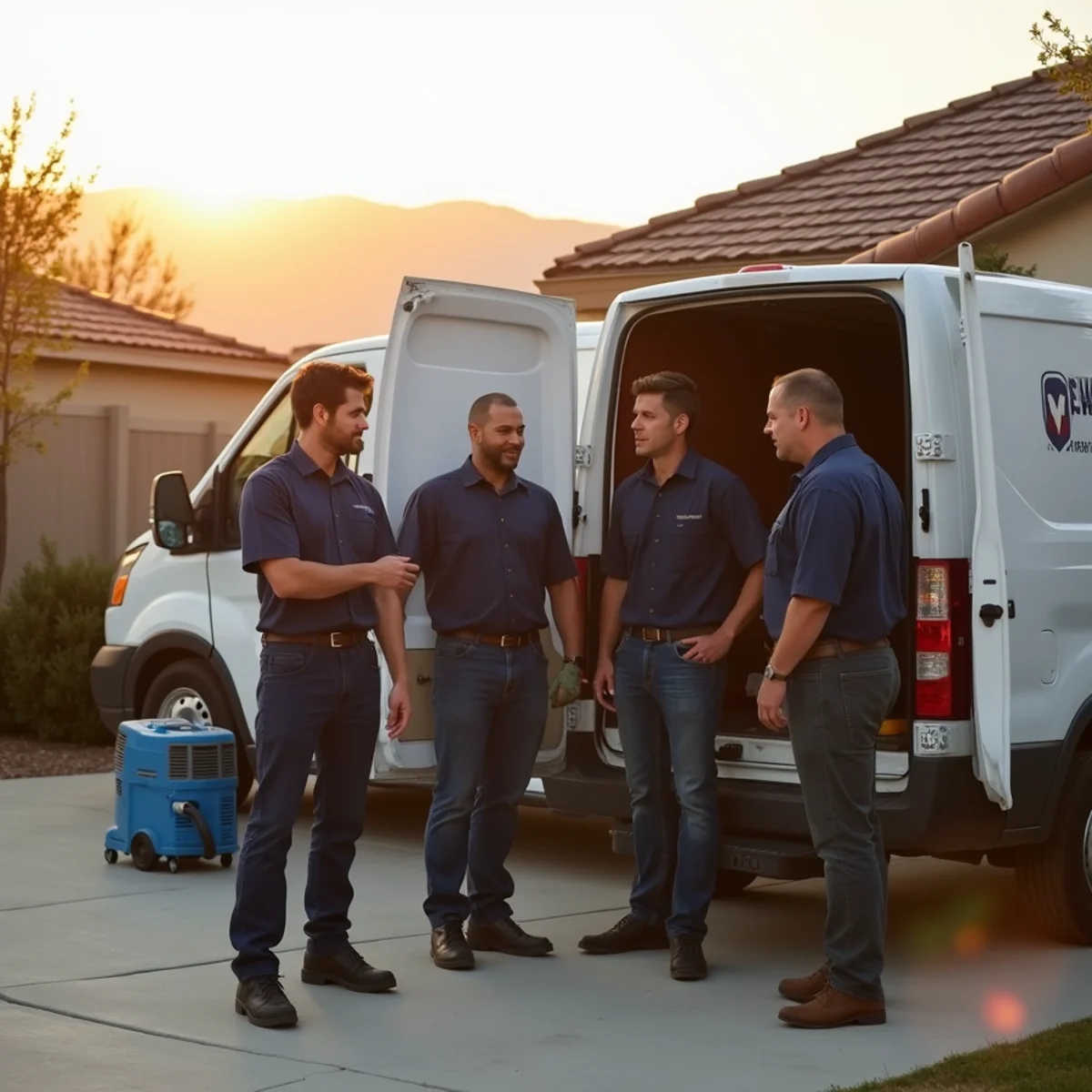
Locally owned & operated
We're based here, not dispatched here
Our trucks stage off White Birch Drive in Rancho Cucamonga. That's the whole reason we can promise 60 minutes rather than a four-hour window — we're not driving in from Orange County at 2 a.m.
It also means we know the housing. We know which neighborhoods sit on 1980s slab with in-slab copper at pinhole age, which ones take the worst of the Cajon Pass winds every October, and which streets have clay laterals under sixty-year-old trees.
- Crews working to the published S500 drying standard
- Documentation package built for your insurance adjuster
- Extraction through rebuild under one contract
- Free on-site assessment and written estimate
Check us, and check anyone else. Verify a California contractor licence at cslb.ca.gov and technician certification at iicrc.org. Both take about two minutes, and you should ask for proof of general liability and workers' compensation cover before anyone starts work.
Local risk guide
The Inland Empire water risks most homeowners never think about
This valley damages homes in ways a generic franchise page never mentions. Knowing which one applies to your street is most of the prevention.
- October – March
Santa Ana winds
Offshore gusts funnel through the Cajon Pass and lift roof tile, bend flashing and crack vent boots. Regional hazard records log roughly 231 high-wind events within 50 miles over the past 60 years. The damage rarely leaks the day it happens — it leaks at the first December storm.
- November – March
Flash flooding and runoff
Foothill topography plus ground baked hard for eight months means rain runs instead of soaking in. Regional records log about 428 floods within 50 miles over 60 years — roughly seven a year. Tropical Storm Hilary put over a foot of rain into parts of the county in a single August event.
- Year-round
Hard water and aging plumbing
Inland Empire water is hard and aggressive toward copper. It accelerates scale in water heaters and pits supply lines from the inside — the leading cause of pinhole leaks in the city's 1980s–90s slab-era housing.
- For years after a fire
Wildfire burn scars
Burned slopes lose the vegetation that used to absorb rainfall, so runoff and debris flow stay elevated long after the fire is out. Regional records log around 252 wildfires within 50 miles over 60 years.
When to be most vigilant
- Fall — October & November
- Santa Ana wind season. Have the roof, flashing and any tree limbs near the house checked before the first storm, not after it.
- Winter — December to February
- The heaviest rain months. Clear gutters, extend downspouts clear of the foundation, and flush every yard drain and swale.
- Year-round
- Watch the components with a service life: water heaters at 8–12 years, washing machine supply lines every 3–5 years, and refrigerator icemaker lines.
The full pre-season walkthrough is in our Inland Empire winter storm prep checklist, and the wind-then-rain pattern is explained in how Santa Ana winds turn into December roof leaks.
Where we work
60 service areas across the Inland Empire
Every Rancho Cucamonga neighborhood, plus the cities within roughly 30 minutes of our base.
Rancho Cucamonga neighborhoods
Our promises, in writing
What every Rancho Cucamonga job gets
Four commitments we make on the phone before we ever pull into your driveway.
A human answers, every time
Call +1 (201) 277-9344 at any hour and you get a person who can dispatch a truck — not a voicemail box or an overseas call centre.
No charge to come look
On-site assessment and estimate are free. If the fix is something you can handle yourself, we'll tell you that and leave.
You see the numbers we see
Daily moisture readings, equipment logs and photos are shared with you — and with your adjuster — as we go.
Dry means dry to standard
We don't pull equipment when it feels dry. We pull it when materials hit their documented dry standard under IICRC S500.
From the blog
Straight answers, written for people mid-emergency
Cost guides, insurance explainers and the local risk factors nobody else writes about.
Cost & Insurance
Flood Insurance vs. Homeowners Insurance: Why Storm Flooding Usually Isn't Covered
The exclusion that surprises people every winter — and how to tell whether your property actually needs a separate flood policy.
5 min read
Cost & Insurance
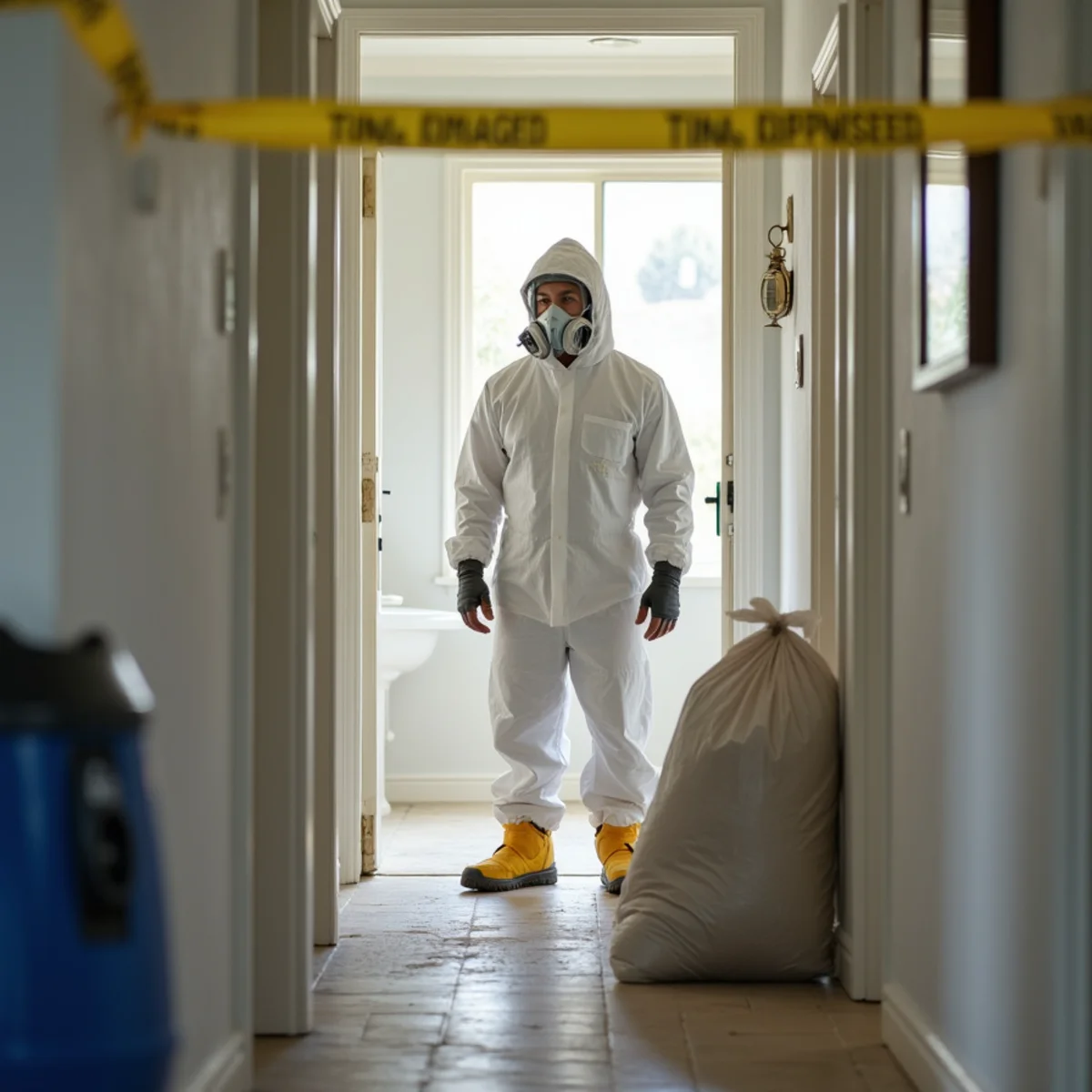
Sewage Backup Cleanup Costs — and Whether Your Insurance Will Actually Pay
The endorsement most people don't have, the material that has to come out regardless, and where the money actually goes.
5 min read
How Restoration Works
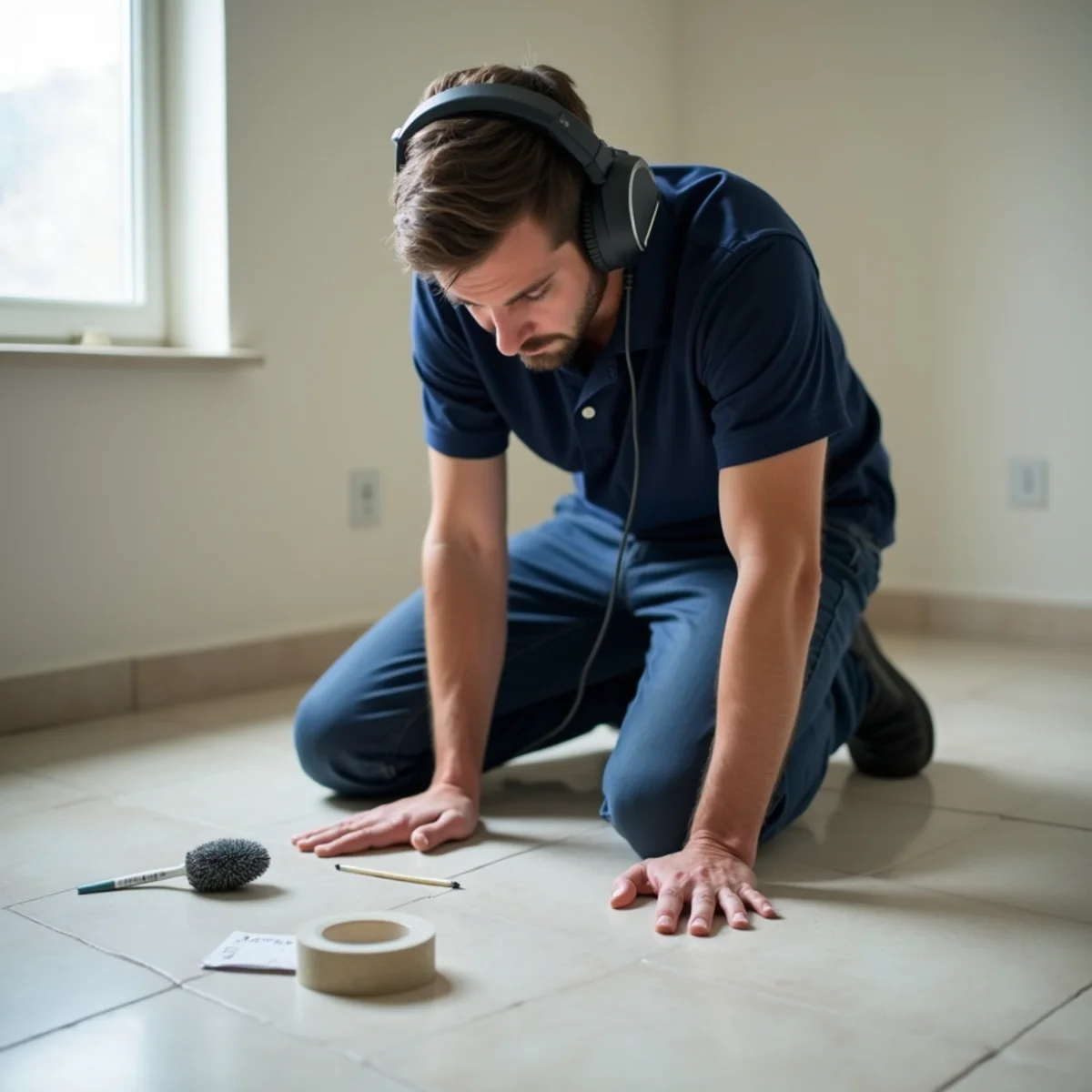
How Pros Find Slab Leaks Without Tearing Up Your Whole Floor
Four techniques that turn 'somewhere under the west half of the house' into a marked spot on your floor.
5 min read
Find us
Based in Rancho Cucamonga, working across the Inland Empire
RC Water Pros
Water Damage Restoration · Rancho Cucamonga, CA
- 11190 White Birch Dr
Rancho Cucamonga, CA 91730 - +1 (201) 277-9344
- Emergency response 24 hours a day, 7 days a week
Office & estimates: Mon–Sat, 7:00 AM – 7:00 PM
Common questions
What people ask us before they call
How fast can you get to my home in Rancho Cucamonga?
We stage crews and equipment locally, off White Birch Drive, and dispatch within 60 minutes for emergencies anywhere in Rancho Cucamonga. Neighboring cities like Upland, Ontario and Fontana typically run 15 to 25 minutes behind that. Call +1 (201) 277-9344 and we'll give you a real arrival window rather than a four-hour block.
Do you really answer the phone at 3 a.m.?
Yes. Emergency dispatch is staffed 24 hours a day, every day of the year including holidays, by someone who can send a truck. If a restoration company's line goes to voicemail overnight, you've reached an answering service and your call is being logged for the morning.
What should I do before your crew arrives?
Shut the water off at the main if you can reach it safely. Turn off power to affected rooms at the breaker — but never wade through standing water to reach the panel. Photograph and video everything before you move anything. Don't run your HVAC or household fans, don't lift wet carpet, and don't throw anything away until your adjuster has seen it.
Will my homeowners insurance cover the damage?
Usually, if the cause was sudden and accidental — a burst supply line, a failed water heater, an appliance hose, or a roof leak from wind damage. Usually not, if it was gradual seepage over months, groundwater or storm flooding (that needs separate flood insurance), or a sewer backup without a specific endorsement. We'll tell you which side of that line your loss looks like before you file, and we document everything your adjuster will ask for.
How much does water damage restoration cost?
It depends heavily on the category of water, how far it spread, what materials it reached and how long it sat — those factors can change the number by a factor of five, which is why nobody honest quotes a firm price over the phone. The on-site assessment and written estimate are free, and we're direct about which parts of a scope carriers typically pay for and which they don't.
How long does the drying take?
Most residential jobs need three to five days of active drying. Deep saturation into hardwood, concrete or a crawl space takes longer. You'll get moisture readings every day, measured against a documented dry standard, so you always know how much longer rather than waiting to be told it's finished.
Can mold still grow after the water is removed?
Yes — and that's the whole reason drying is a separate discipline from extraction. Mold can begin growing within 24 to 48 hours wherever materials stay wet, including inside wall cavities and under flooring where nothing looks damp. Removing the standing water doesn't remove the moisture that soaked into drywall, framing and concrete. We dry to a documented moisture standard rather than to the point where a surface feels dry, and we treat affected surfaces with an antimicrobial before anything is closed back up.
Do you handle the repairs too, or just the drying?
Both, under one contract. We carry the job from emergency extraction through drywall, texture, paint, baseboard, insulation and flooring. It's worth asking any restoration company this directly — many dry the house, pull their equipment and hand you a list of subcontractors to manage yourself.
Can I stay in my house during restoration?
Often yes, for a contained clean-water loss where power is safe, no ceiling is at risk and you still have a working kitchen and bathroom. Plan to relocate if the water was contaminated, if the electrical system is compromised, or if your only bathroom is out of service. The crew lead will give you a straight recommendation at the first assessment.
Every hour of standing water costs you more
Free assessment, 60-minute dispatch across Rancho Cucamonga, and someone answers at 3 a.m.
- Documented dry standard
- Bonded & insured
- 24/7 emergency response