How Restoration Works
Category 1, 2, or 3? Why the Type of Floodwater Changes the Entire Cleanup
Dealing with this right now? We answer 24/7 and dispatch across Rancho Cucamonga in 60 minutes.
+1 (201) 277-9344Before anything gets extracted, a restoration technician establishes one thing: what category the water is. That single classification determines the protocol, the equipment, what can be saved, how long it takes and what it costs.
It comes from the IICRC S500, the published standard for professional water damage restoration. Here's how it works and why it matters to you.
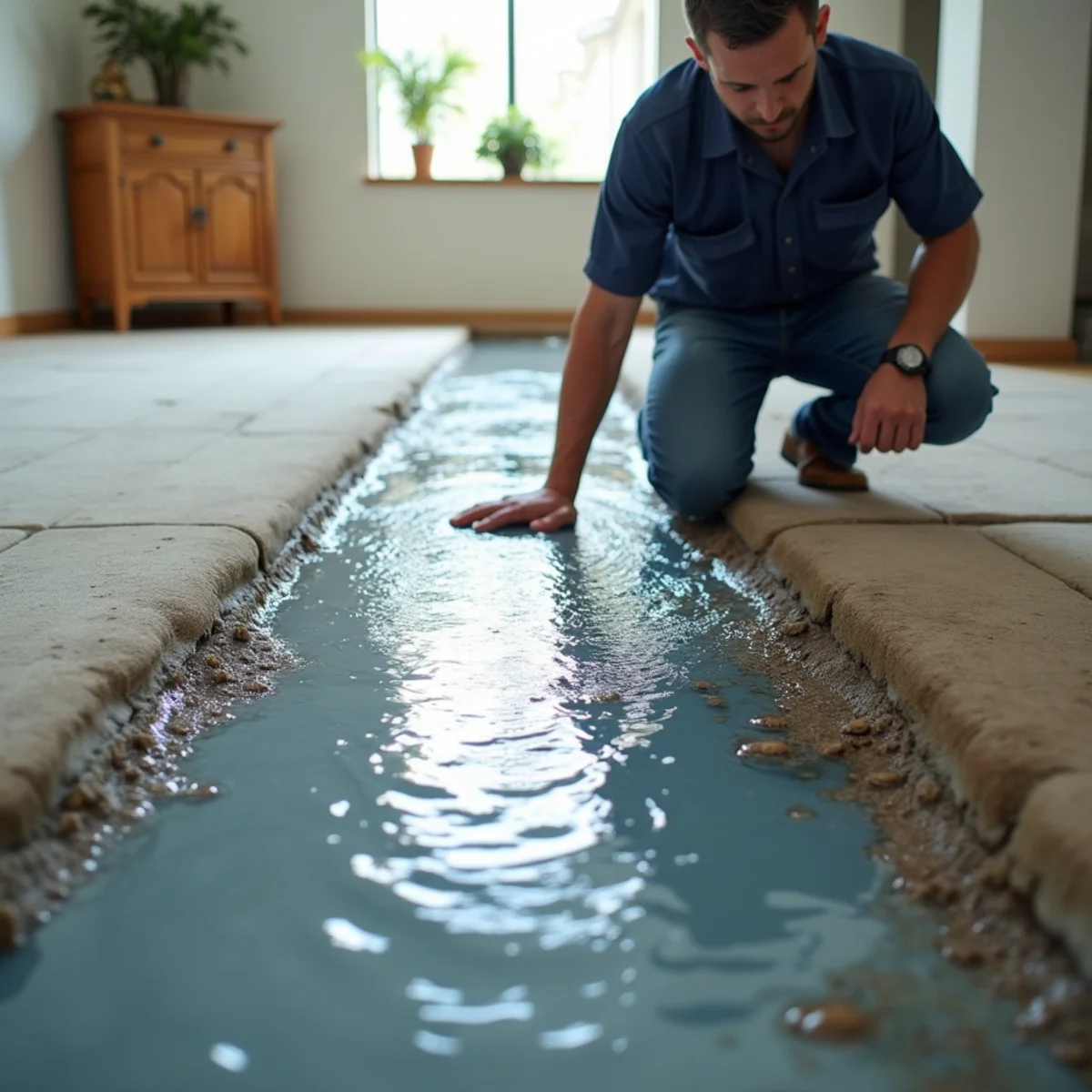
Category 1 — clean water
Water from a sanitary source that poses no substantial risk on contact or ingestion.
Sources: a broken supply line, a water heater inlet, a tub or sink overflow with no contaminants, rainwater entering directly, melting ice.
Protocol: materials can generally be dried in place. Carpet is often saved, pad is often saved, drywall usually dries with released baseboards or injection drying. Antimicrobial treatment is preventative rather than remedial.
The catch, and it's a big one: Category 1 doesn't stay Category 1. Sitting water picks up contamination from the materials it touches, from the building, and from ambient microbial growth. Within roughly 48 hours — faster in a warm house — it degrades to Category 2.
So a clean supply line that ran while you were away for the weekend is not a Category 1 loss when you get home.
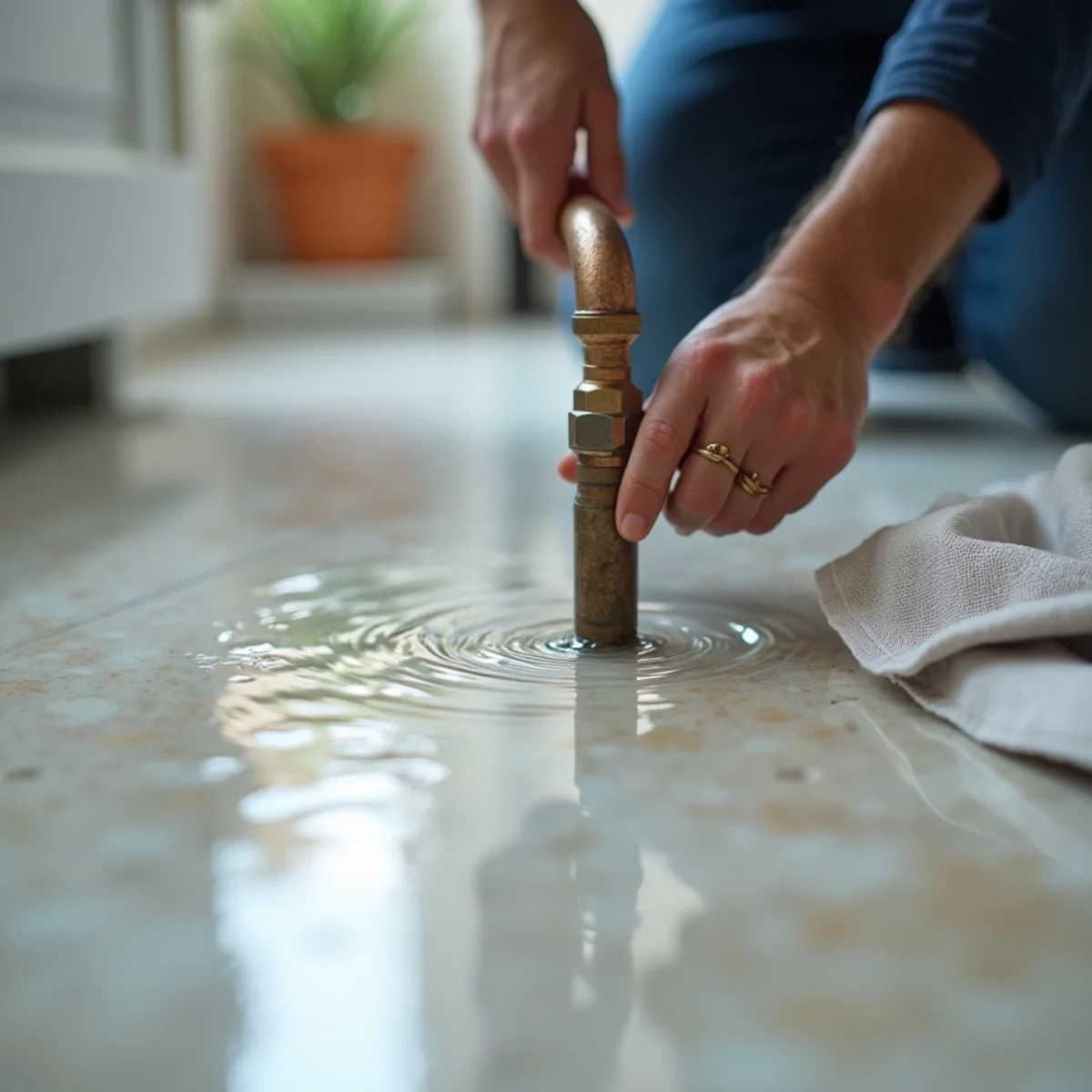
Category 2 — grey water
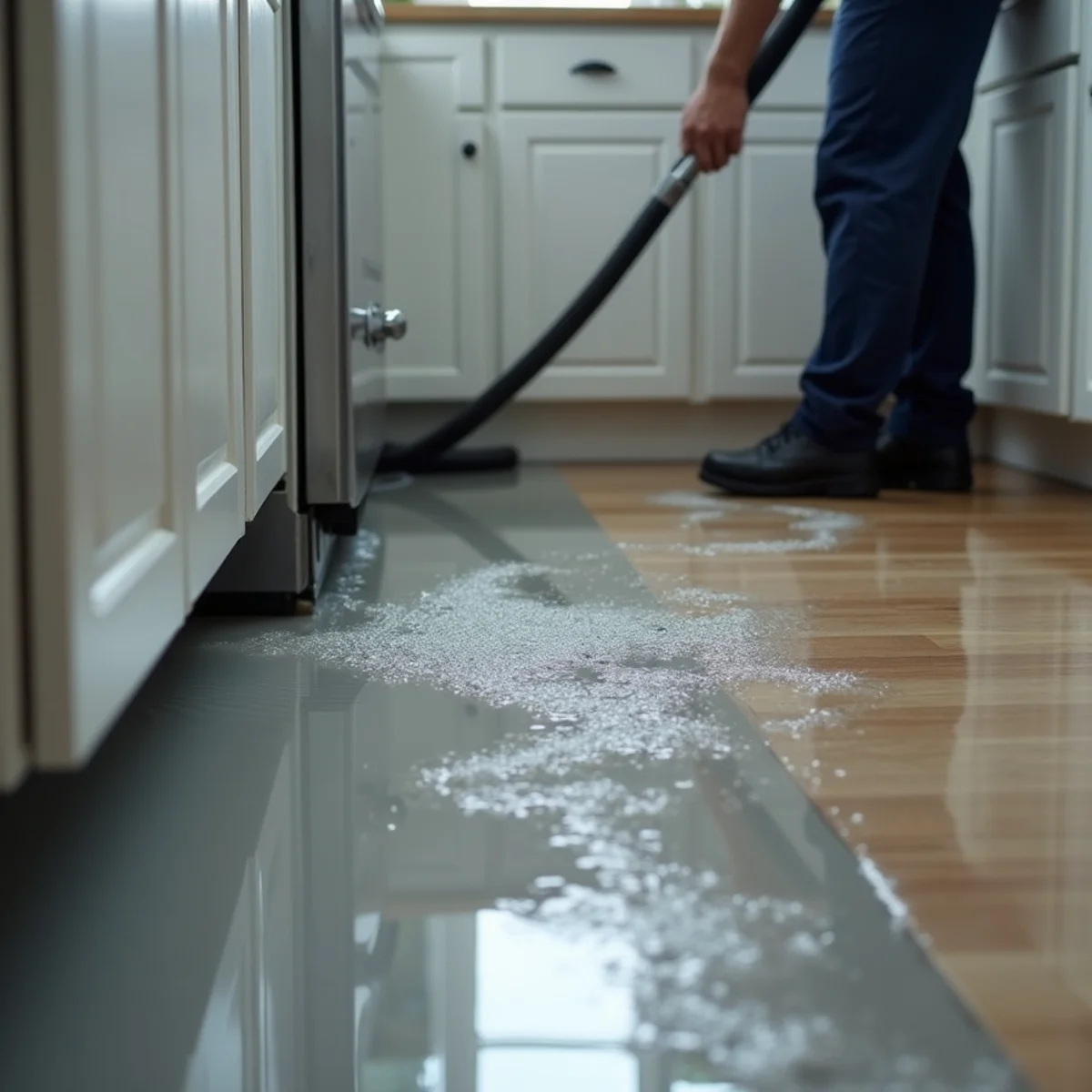
Significant contamination, with potential to cause discomfort or illness on contact or ingestion.
Sources: dishwasher or washing machine discharge, a toilet overflow containing urine but no solids, a failed sump pump, water from a waterbed or aquarium, and any Category 1 that has been sitting.
Protocol: more aggressive. Carpet pad is generally removed. Carpet may be salvageable with proper cleaning and antimicrobial treatment, depending on how long. Drywall below the line is often removed rather than dried. Cleaning and disinfection are required, not optional.
And it degrades too — Category 2 becomes Category 3 given enough time.
Category 3 — black water
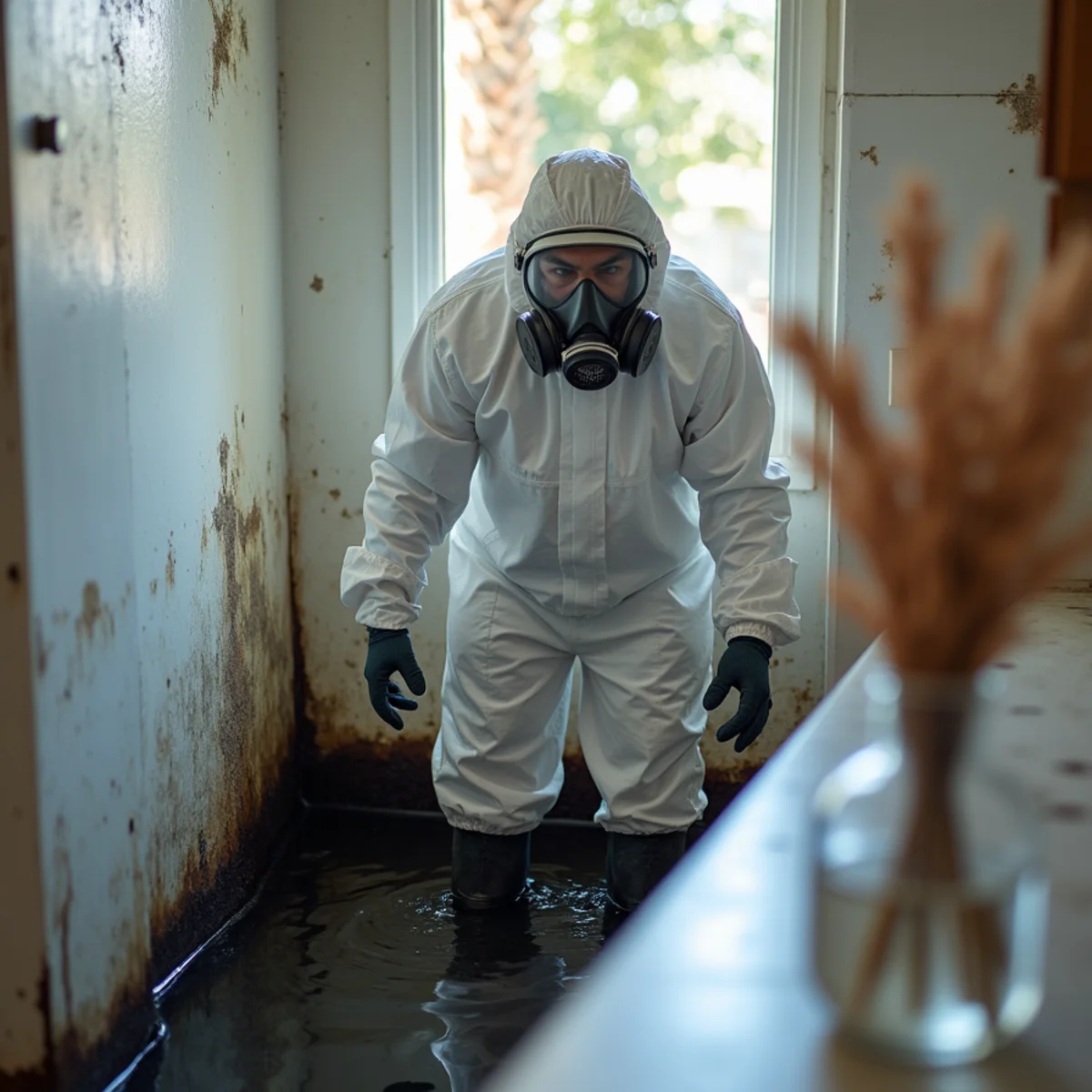
Grossly contaminated, containing pathogenic, toxigenic or otherwise harmful agents.
Sources: sewage, a backed-up main line, toilet overflow containing solids, any water that came in across the ground (storm runoff, a channel or creek overflow, rising groundwater), water from beyond a toilet trap, and any Category 2 left long enough.
Protocol: the strictest.
- Full PPE for everyone in the space
- Physical containment with negative air pressure and HEPA filtration
- All contaminated porous materials removed — carpet, pad, drywall below the line, insulation, particle board cabinetry, upholstered furniture. No exceptions, because the contamination is inside the material.
- Semi-porous materials (framing, plywood) cleaned aggressively and evaluated
- Clean first, then disinfect — disinfectant over soil load accomplishes nothing
- Regulated disposal
- Verification before rebuild
That second-to-last bullet is the thing homeowners find hardest: a Category 3 loss removes far more material than a Category 1 loss of identical size. That's the contamination, not an upsell.
The point people miss: storm water is Category 3
Clear-looking runoff that came under a garage door is Category 3. It crossed asphalt, lawns treated with fertiliser and pesticide, whatever the neighbourhood's animals left behind, and possibly an overwhelmed storm system.
This is the classification that most surprises homeowners, and it's the reason flood cleanup removes so much more material than a burst pipe of the same volume.
Class, which is a different thing
Category is what's in the water. Class is how far it spread and how hard it will be to dry — and it drives equipment and timeline rather than protocol.
Class 1 — least absorption. Part of a room, minimal wet carpet, low-porosity materials.
Class 2 — an entire room of carpet and pad, moisture wicking up walls less than about 24 inches.
Class 3 — water from above, saturating ceilings, walls, insulation and subfloor. The most equipment-intensive.
Class 4 — specialty drying. Deep saturation into hardwood, plaster, concrete or a crawl space, requiring low-humidity methods and extended timelines.
A Category 1 Class 1 job and a Category 3 Class 4 job are barely the same trade.
Why this matters for your claim
Your estimate is built around category and class, and an adjuster reviewing it will expect the scope to match the classification.
If a company classifies a sewage backup as Category 2 to keep the scope small, you get an underscoped job and a house that isn't properly remediated. If a company classifies a clean supply-line loss as Category 3 to expand the scope, that's the opposite problem.
You're entitled to know the classification and the reasoning. Ask for both, and expect a straight answer about the source and the elapsed time.
The category can change while you wait
This is the part that surprises people, and it has direct financial consequences: a loss does not stay in the category it started in.
Clean water from a supply line is Category 1 on the day it happens. Left in contact with building materials, dust, soil and whatever is in the carpet pad, it degrades. Industry guidance treats time and contamination as sufficient to reclassify a loss, and in practice a Category 1 event that sits for a couple of days in a warm house is being handled as Category 2 by the time anyone arrives.
The same escalation continues. Water sitting long enough for growth to establish, or water that has picked up contamination from what it has passed through, is Category 3 work regardless of how clean it was when the pipe failed.
That matters because the category drives the protocol, and the protocol drives what can be saved. Category 1 permits drying carpet, pad and drywall in place. Category 3 requires removal of porous material below the water line.
In other words, the delay does not just make the job bigger. It changes the rules that decide how much of your house has to come out.
The practical takeaway
Time converts categories. Clean water becomes grey, grey becomes black. Everything about your outcome — what's saved, what's removed, what it costs — is downstream of how fast the call was made.
That's true whether you're in a newer home in Ontario where the loss is an appliance line, or in a slab-era tract like Rochester where the water has been coming up through the floor for a week before anyone noticed.
Not sure what you're dealing with? Call +1 (201) 277-9344 — we'll tell you honestly.
FAQ
Questions people also ask
Is storm water that came into my house considered clean?
No. Any water that crossed the ground before entering is Category 3 — grossly contaminated — regardless of appearance. It has crossed roads, treated lawns and possibly an overwhelmed storm system. That's why flood cleanup removes far more material than a burst pipe of the same volume.
How quickly does clean water become contaminated?
Roughly 48 hours, faster in a warm house. Sitting water picks up contamination from the materials it touches and from ambient microbial growth. A clean supply line that ran over a long weekend is not a Category 1 loss by the time you get home.
Who decides what category my loss is?
The restoration technician, based on the source and the elapsed time, using the IICRC S500 framework. You're entitled to know the classification and the reasoning behind it — ask for both. The category determines the entire protocol, so it's the most consequential judgement made on your job.
Does the category change what insurance pays?
Not directly — coverage turns on the cause of the loss rather than its category. What the category changes is the scope, and therefore the size of the claim: Category 1 permits drying carpet, pad and drywall in place, while Category 3 requires removal of porous material below the water line. The same failure, discovered a week apart, can produce very different invoices for that reason.
Services mentioned
- Flood CleanupStorm and runoff flooding brings contaminated water. We pump, strip, sanitize and dry — then document it for your carrier.
- Sewage CleanupCategory 3 black water handled properly: PPE, containment, removal of contaminated material, disinfection and odor control.
- Water Damage RestorationEmergency extraction, structural drying and full rebuild — one crew from the first phone call to the final walkthrough.
Keep reading
How Restoration Works
How Pros Find Slab Leaks Without Tearing Up Your Whole Floor
Four techniques that turn 'somewhere under the west half of the house' into a marked spot on your floor.
5 min read
How Restoration Works
Hidden Leak Symptoms: Warm Floor Spots, High Water Bills, and the Sound of Running Water
Hidden leaks announce themselves indirectly. Here are the signals worth acting on, and the meter test that settles it.
5 min read
How Restoration Works
Black Mold vs. Mildew: How to Tell the Difference and When to Call a Pro
One wipes off a shower tile. The other is growing in the material. Here's how to tell which you have without a lab.
5 min read