
How Restoration Works
Black Mold vs. Mildew: How to Tell the Difference and When to Call a Pro
Dealing with this right now? We answer 24/7 and dispatch across Rancho Cucamonga in 60 minutes.
+1 (201) 277-9344"Is it black mold?" is the question we get asked most, and it's almost always the wrong question.
Here's the more useful framing.
| Mildew | Mold | |
|---|---|---|
| Where it grows | On a surface | Into a porous material |
| Typical spot | Grout, shower tile, a window frame | Drywall, insulation, subfloor, cabinet base |
| What it means | A ventilation problem | A moisture problem inside the structure |
| Wipes off | Yes, permanently | The surface does; the growth in the material does not |
| The fix | Clean it and improve airflow | Contain, remove the affected material, dry the cause |
Mildew: surface growth on a non-porous surface
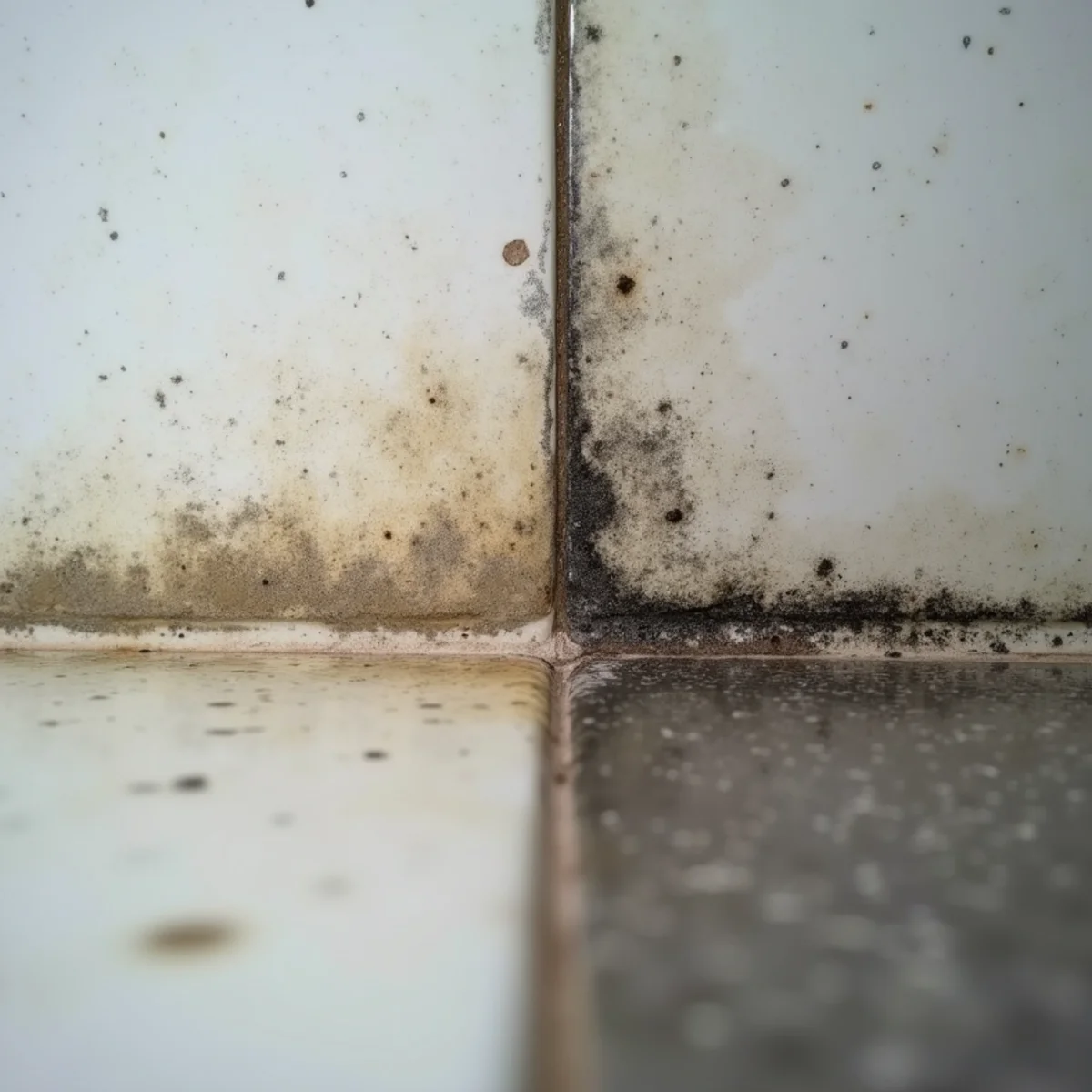
What people call mildew is typically surface-level fungal growth on a non-porous material — shower tile, grout, a window sill, the rubber seal on a washing machine door.
Characteristics: flat and powdery, usually white, grey or a dusty black; sits on the surface rather than in the material; wipes off; comes back if the moisture and ventilation problem isn't addressed.
Cause: repeated wetting plus poor ventilation. A bathroom without an extractor fan, or with one that vents into the attic instead of outside.
Fix: clean it with an appropriate cleaner, then solve the ventilation. Run the fan during and for twenty minutes after every shower. Squeegee the shower walls. Leave the door open.
That is genuinely a DIY job.
Mold: growth in a porous material
What matters is growth in a material rather than on it — drywall, wood, carpet, insulation, particle board.
Characteristics: fuzzy or slimy rather than powdery; any colour including black, green, grey, white and orange; doesn't wipe off, because the root structure is inside the material; the material may be soft, stained or discoloured; frequently accompanied by a musty smell.
Cause: a moisture source. Always. A leak, a slab leak, condensation, a roof failure, a drainage problem.
Fix: remove the material, fix the moisture source. Not a DIY job beyond a very small area.
The colour question
Colour does not identify species, and species rarely changes what you do.
Several fungi are dark. Stachybotrys chartarum — the one popular usage calls "black mold" — is one of them, but so are various Cladosporium and Aspergillus species, and you cannot tell them apart by looking.
More importantly, the remediation protocol is the same regardless: contain the area, remove the contaminated porous material, HEPA clean, fix the moisture source, verify. Nobody changes the method based on the species.
Which is why we don't use species identification as a scare tactic, and why a company that leads with "you might have black mold" before doing any assessment deserves scepticism.
The health question, honestly
Reputable health authorities are consistent on this: indoor mold exposure can cause upper respiratory symptoms, coughing, wheezing, and asthma exacerbation in people with asthma. People with allergies, immunocompromise or chronic respiratory conditions can be more affected.
The claims you'll see online about specific "toxic black mold" syndromes go well beyond what the evidence supports.
The sensible position: mold indoors is a building problem that should be fixed, and some people react to it more than others. If members of your household have symptoms that improve when they leave the house, that's worth taking seriously — and worth mentioning to your doctor as well as to a remediation company.
How to tell which you have, practically
Where is it? Shower tile, grout, window sill, plastic seal → probably surface mildew. Drywall, wood, carpet, insulation, cabinet base → mold in the material.
Does it wipe off? Cleanly, leaving no stain → surface. Leaves a stain, or the material is soft → in the material.
Is the material sound? Press it. Soft, spongy or crumbling means the growth is structural.
Is there a smell? A persistent musty smell means active growth with volume behind it, not a surface film.
Is there a moisture source? This is the real question. Mildew on shower grout has an obvious source. Growth on a bedroom wall does not — and finding out why that wall is wet matters more than identifying what's growing on it.
When to call
Handle it yourself if: it's surface growth on non-porous material, under about ten square feet, with an obvious ventilation cause and no water damage history.
Call a professional if: it's on drywall, wood, carpet or insulation; it covers more than about ten square feet; there's a musty smell you can't source; it followed a water event; you can see it but not reach it (inside a wall, in an attic, in a crawl space); or anyone in the household has respiratory symptoms.
And don't scrub visible growth on porous material. Disturbing it distributes spores and expands the area that will need containment.
What proper remediation actually involves
The distinction matters most because it determines the scale of the response, so here is what the professional version looks like when growth is in the structure rather than on a surface.
Containment first. Plastic sheeting seals the work area from the rest of the building, and negative air pressure with HEPA filtration means air flows into the contained space rather than out of it. Without that step, opening a wall distributes spores through the whole house — which is how a contained problem in one room becomes a general one.
Removal, not treatment. Porous material with growth in it comes out: drywall, insulation, carpet pad, particleboard. Non-porous and semi-porous material — framing, concrete, solid wood — is cleaned rather than removed.
Drying the cause. Growth is a symptom of moisture, so the source is corrected and the assembly is dried to a verified standard. Remediation without that is a repeat visit.
Verification. The work area is cleaned, HEPA vacuumed and checked before rebuilding, ideally by someone independent of the company doing the work.
The reason surface mildew does not need any of this is that nothing has grown into the material. Wipe it off, fix the ventilation that caused it, and it is genuinely finished.
The bit that actually matters
Whatever is growing, it's growing because something is wet. Cleaning the growth without finding the moisture source is a delay, not a repair.
That source is frequently not obvious. In the slab-era tracts across southwest Rancho Cucamonga it's often an in-slab pinhole leak wetting the wall base from below. In older post-war housing like Montclair's, it can be a cast-iron drain failing under the slab. Both are invisible until someone goes looking with a meter.
Free inspection and moisture assessment: +1 (201) 277-9344.
FAQ
Questions people also ask
Is black mold more dangerous than other mold?
Colour doesn't identify species, and species rarely changes what you do about it. Several common fungi are dark. The remediation protocol — contain, remove the contaminated material, HEPA clean, fix the moisture source, verify — is the same regardless. Be sceptical of any company leading with 'black mold' before doing an assessment.
Can I clean mold with bleach?
On non-porous surfaces like tile and glass, a suitable cleaner works fine. On porous material like drywall or wood it doesn't — bleach is mostly water, so you add moisture to the material while the root structure stays inside it. You get a lighter-looking surface and continued growth underneath.
How much mold is too much to handle myself?
The common threshold is about ten square feet, and it only applies to surface growth on non-porous material with an obvious ventilation cause. Anything on drywall, wood, carpet or insulation, anything you can smell but can't locate, and anything following a water event should be assessed professionally.
Do I need an air test to know which one I have?
Rarely, at the diagnostic stage. If growth is visible on a hard surface in a bathroom, that is mildew and testing tells you nothing you cannot see. If a wall was wet and was not dried within a couple of days, the useful question is where to look rather than what a spore count says — readings vary hour to hour and a low one does not clear a cavity nobody opened. Testing earns its money verifying a completed remediation.
Services mentioned
- Mold RemediationContainment, HEPA filtration, source removal and moisture correction — remediation that fixes the cause, not just the stain.
- Leak DetectionThermal imaging, acoustic listening and moisture meters find the leak before we open anything up.
- Structural DryingAir movers and commercial dehumidifiers placed to a calculated load, with daily moisture readings you get to see.
Keep reading
How Restoration Works
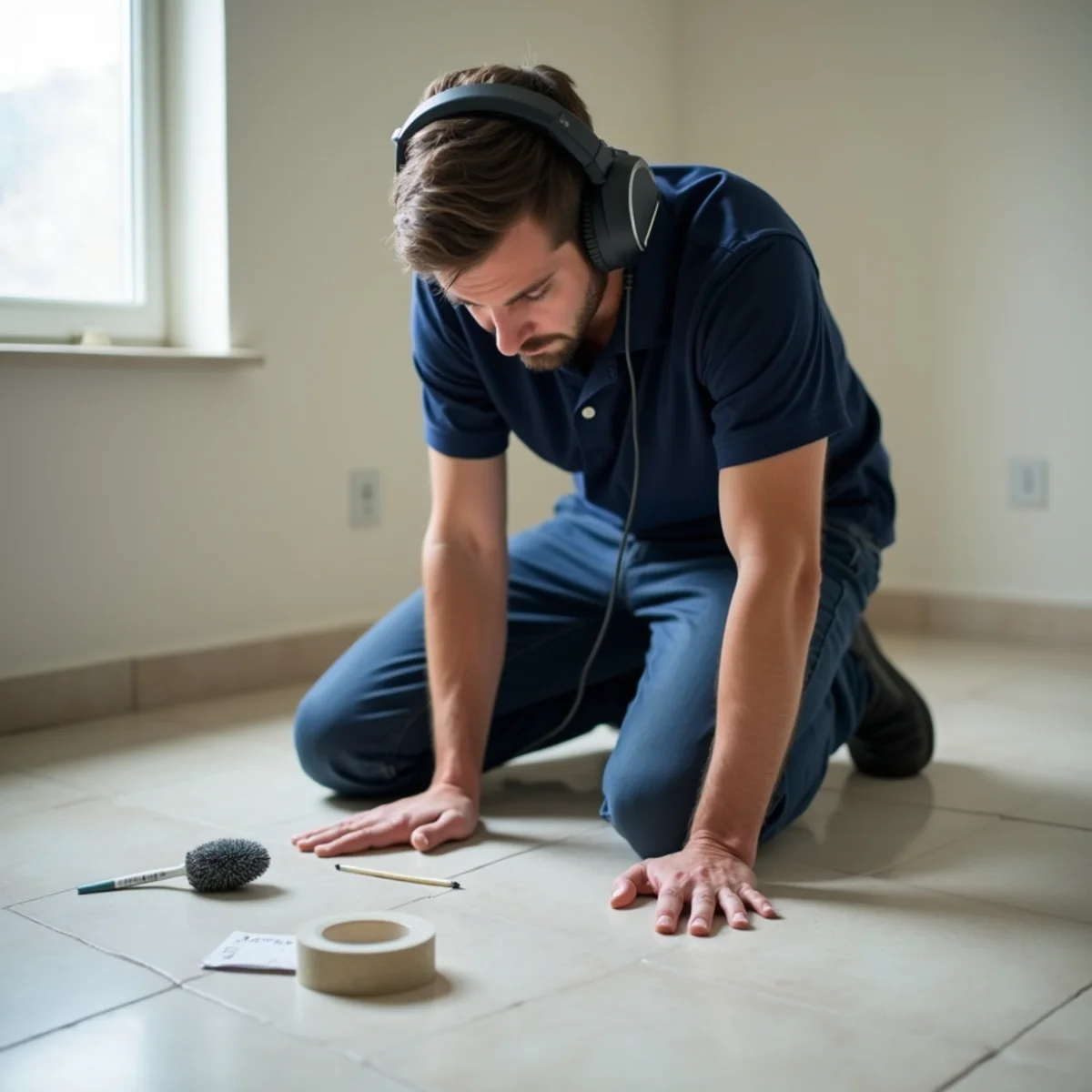
How Pros Find Slab Leaks Without Tearing Up Your Whole Floor
Four techniques that turn 'somewhere under the west half of the house' into a marked spot on your floor.
5 min read
How Restoration Works
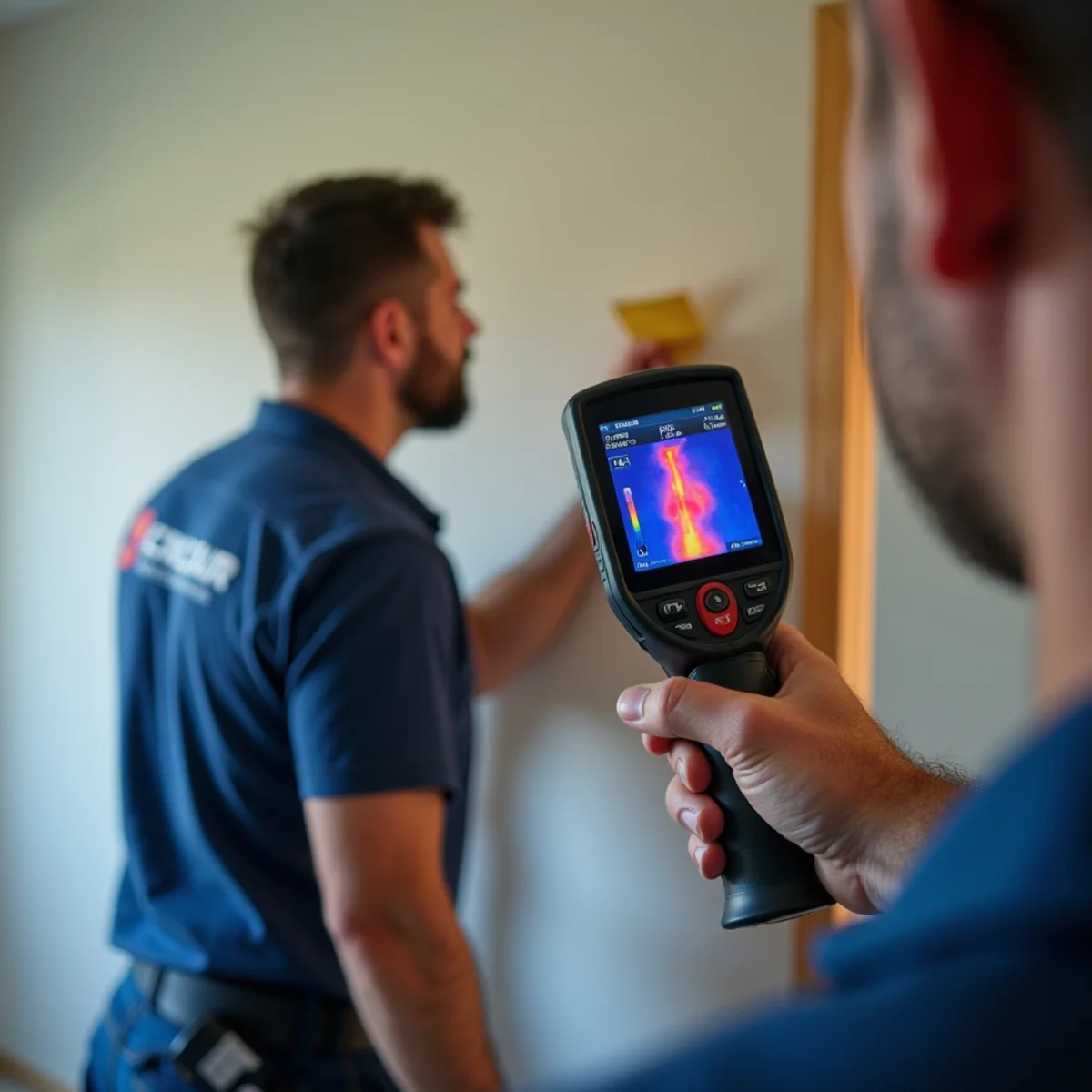
Hidden Leak Symptoms: Warm Floor Spots, High Water Bills, and the Sound of Running Water
Hidden leaks announce themselves indirectly. Here are the signals worth acting on, and the meter test that settles it.
5 min read
How Restoration Works
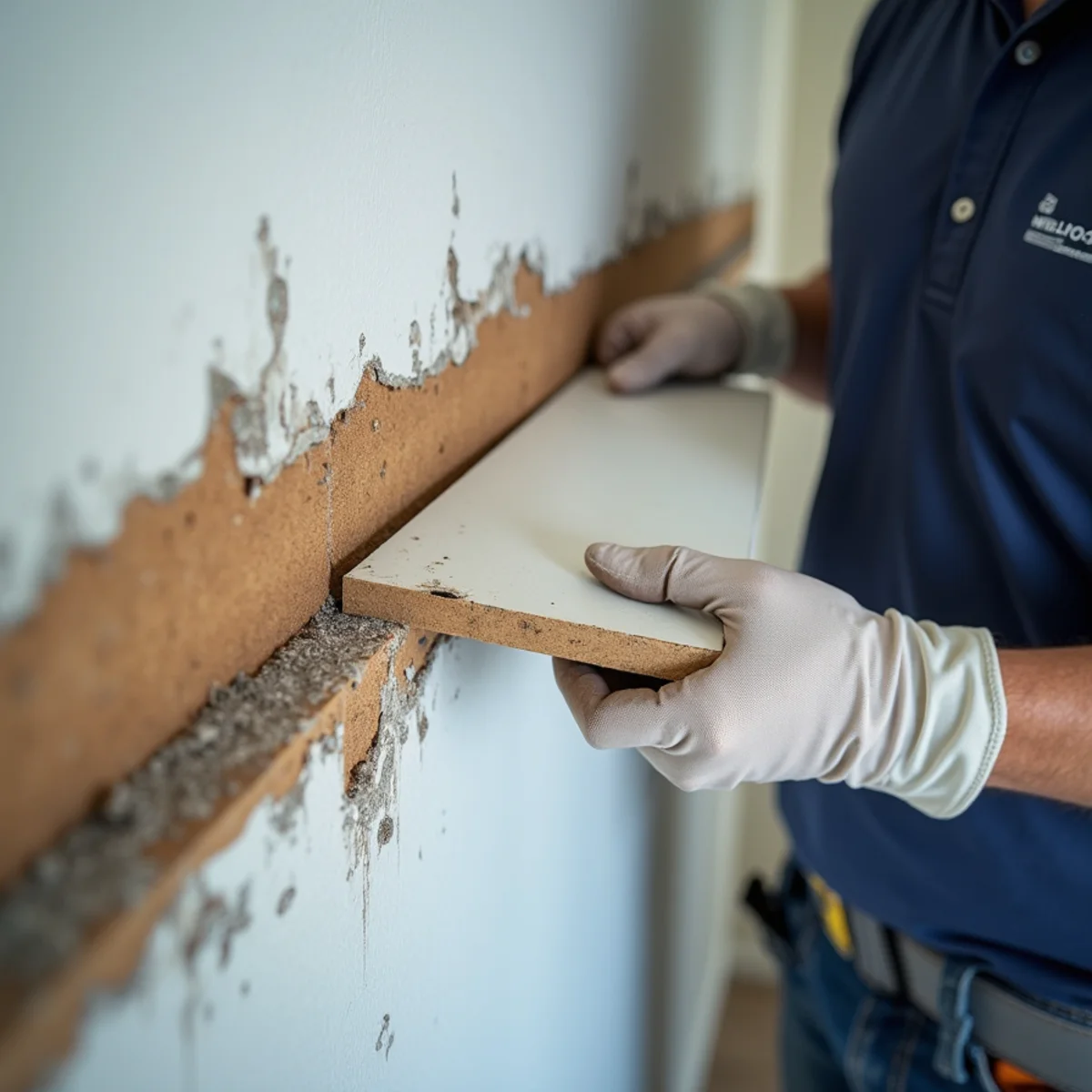
How Fast Does Mold Grow After a Leak? Inside the 24–48 Hour Window
The clock that decides whether your loss is a dry-out or a demolition — and what makes it run faster in an Inland Empire house.
5 min read