
How Restoration Works
How Fast Does Mold Grow After a Leak? Inside the 24–48 Hour Window
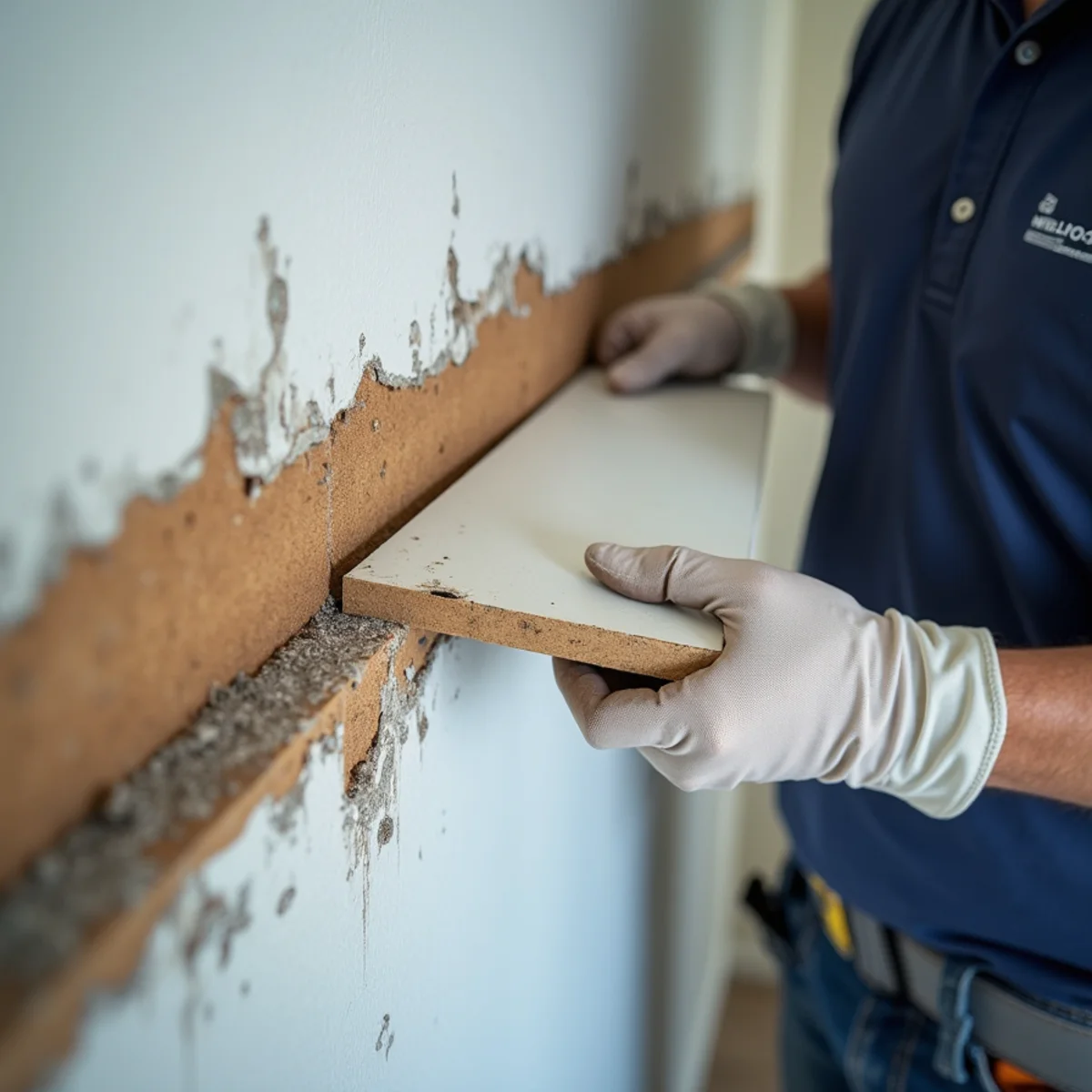
Dealing with this right now? We answer 24/7 and dispatch across Rancho Cucamonga in 60 minutes.
+1 (201) 277-9344Mold spores are already in your house. They're in every house, all the time, drifting in through open doors and on clothing. They're inert and harmless in that state.
What they lack is water. Give them water and an organic food source, and they germinate.
Growth needs four things at once, and a wet building supplies all of them:
- Moisture — the only one you can actually take away.
- Food — paper facing on drywall, wood, dust, carpet backing.
- Temperature — ordinary room temperature is ideal.
- Time — measured in days, not weeks.
The timeline
Hours 0–24. Spores that land on wet material begin to absorb moisture and germinate. Nothing is visible. Nothing smells. The material is simply wet.
Hours 24–48. Germination and initial hyphal growth. Still generally not visible to the eye, though a sensitive nose may pick up the first microbial odor. This is the window. Materials dried within it typically require no remediation at all.
Days 3–7. Visible colonies begin to appear on surfaces, and the characteristic musty smell becomes obvious. On the back face of drywall, inside a wall cavity, this is happening in the dark where nobody sees it.
Days 7–21. Colonies mature and begin producing spores, which distribute to other damp areas. The affected area expands beyond the original wet zone.
Weeks 3+. Established growth with structural consequences — degradation of the material itself, and a remediation scope substantially larger than the original loss.
What makes it faster
Temperature. Growth accelerates in warm conditions. A closed-up Rancho Cucamonga house in August, with the AC off because nobody's home, is close to ideal.
Still air. Enclosed cavities — inside walls, under cabinets, in crawl spaces — have no airflow to carry moisture away, so material stays wet longer and growth proceeds faster.
Food source. Drywall paper, carpet backing, wood, dust and cardboard are all excellent. Bare concrete, tile and metal are not.
Water category. Contaminated water carries a much larger initial microbial load, so the process starts from a running start.
What makes it slower
Fast, thorough drying is the only real answer. Lower temperature helps marginally. Airflow across a wet surface helps a great deal — but only if the moisture being carried away is then removed from the air by dehumidification, which household fans don't do.
The financial consequence, plainly
Inside 48 hours, we're usually drying materials in place. Carpet extracted and floated, pad often saved, drywall dried through released baseboards or injection, cabinets vented, slab dried. Nothing comes out, nothing gets rebuilt.
Past that window, those same materials come out in bags. Now you have containment, negative air, HEPA filtration, removal of carpet, pad, drywall and insulation, disposal, verification — and then a reconstruction phase to put it all back.
Same leak. Frequently a difference of several multiples on the invoice.
There's also an insurance dimension. Most California policies cover mold resulting from a covered water loss that was reported promptly, often subject to a specific sub-limit. Mold from a leak that sat is much more likely to be characterised as a maintenance failure — and excluded.
Why this is a bigger deal in Inland Empire homes than people expect
Rancho Cucamonga averages under 18 inches of rain a year with low ambient humidity, and homeowners reasonably conclude mold isn't much of a local problem.
Mold doesn't respond to the regional average. It responds to the moisture content of the material it's sitting on. And the local housing stock produces plenty of wet material in dark, still places:
Slab leaks wetting carpet pad and wall bases from below — the dominant failure mode in the city's 1980s–90s slab-era tracts. The water is under the flooring, in the dark, warm from a hot-side line, with no airflow. It can run for weeks.
Water heaters weeping into garage drywall in a garage that reaches well above living-space temperature all summer.
Under-sink leaks into a particle board cabinet base — enclosed, unventilated, and made of the most absorbent material in the house.
Roof leaks after wind season, tracking into attic insulation and sitting there.
Older housing adds its own version. In Historic Cucamonga and the post-war grids of Montclair, plaster holds moisture far longer than drywall, and raised foundations give water somewhere to collect that nobody inspects.
Why you cannot smell it early
The forty-eight hour figure describes when growth begins, not when it becomes perceptible — and the gap between those two points is where most of the damage decisions get made badly.
Growth establishes in a wall cavity, under a subfloor or behind a cabinet kick, which are all places with very little air exchange with the room. The colonies produce the volatile compounds responsible for that musty smell, but those compounds have to migrate out through the assembly before a person in the room can detect them. That commonly takes weeks.
So the sequence homeowners experience is: leak, cleanup that seemed adequate, three or four normal weeks, then a smell that appears out of nowhere. It did not appear out of nowhere. It has been developing since day two.
On testing. Air sampling has a legitimate role — establishing a baseline, or verifying that a remediation worked — but it is a poor tool for deciding whether you have a problem after a known leak. Spore counts vary hour to hour and between rooms, and a low reading does not clear a wall cavity you have not opened.
If there was water in a wall and it was not dried within a couple of days, the useful question is not whether to test. It is where to look.
What to do with this
Treat every water event as a 48-hour clock, not a weekend project.
Call before you're sure it's serious. The assessment is free, and being told a loss is small enough to handle yourself is a good outcome.
Don't close anything up — new drywall, new flooring — until you've seen a moisture reading confirming the substrate is dry.
If you're going away, shut the main off. The most expensive losses we see are the ones that ran for a week in an empty house, and every one of them was a mold job by the time anyone opened the front door.
Water event in the last 48 hours? Call +1 (201) 277-9344 while it's still a drying job.
FAQ
Questions people also ask
If I dry it within 48 hours, will I definitely avoid mold?
Not guaranteed, but it's overwhelmingly the biggest factor. Materials dried thoroughly to a documented standard within that window typically require no remediation. The qualifier is 'thoroughly' — surface-dry with a wet cavity behind it doesn't count, which is why verification with a meter matters.
Why does mold grow in a dry climate like the Inland Empire?
Because mold responds to the moisture content of the material it's on, not the regional humidity average. A slab leak under carpet pad, a weeping water heater behind garage drywall, or a leak in a particle board cabinet base creates a warm, dark, still, wet environment regardless of what the weather is doing outside.
Can mold grow inside a wall where I can't see it?
Yes, and that's the usual case. The back face of drywall inside a wall cavity is dark, still and made of paper — ideal conditions. It's why professionals meter cavities and open them where readings justify it, rather than judging by what the room-facing surface looks like.
Why did we not smell anything for weeks?
Because growth establishes inside assemblies — a wall cavity, under a subfloor, behind a cabinet kick — where there is very little air exchange with the room. The compounds responsible for that musty smell have to migrate out through the assembly before anyone can detect them, which commonly takes weeks. The smell appearing a month later did not start a month later.
Services mentioned
- Mold RemediationContainment, HEPA filtration, source removal and moisture correction — remediation that fixes the cause, not just the stain.
- Structural DryingAir movers and commercial dehumidifiers placed to a calculated load, with daily moisture readings you get to see.
- Water ExtractionTruck-mounted units pull standing and sub-surface water out in hours — the step that decides whether your floors survive.
Keep reading
How Restoration Works
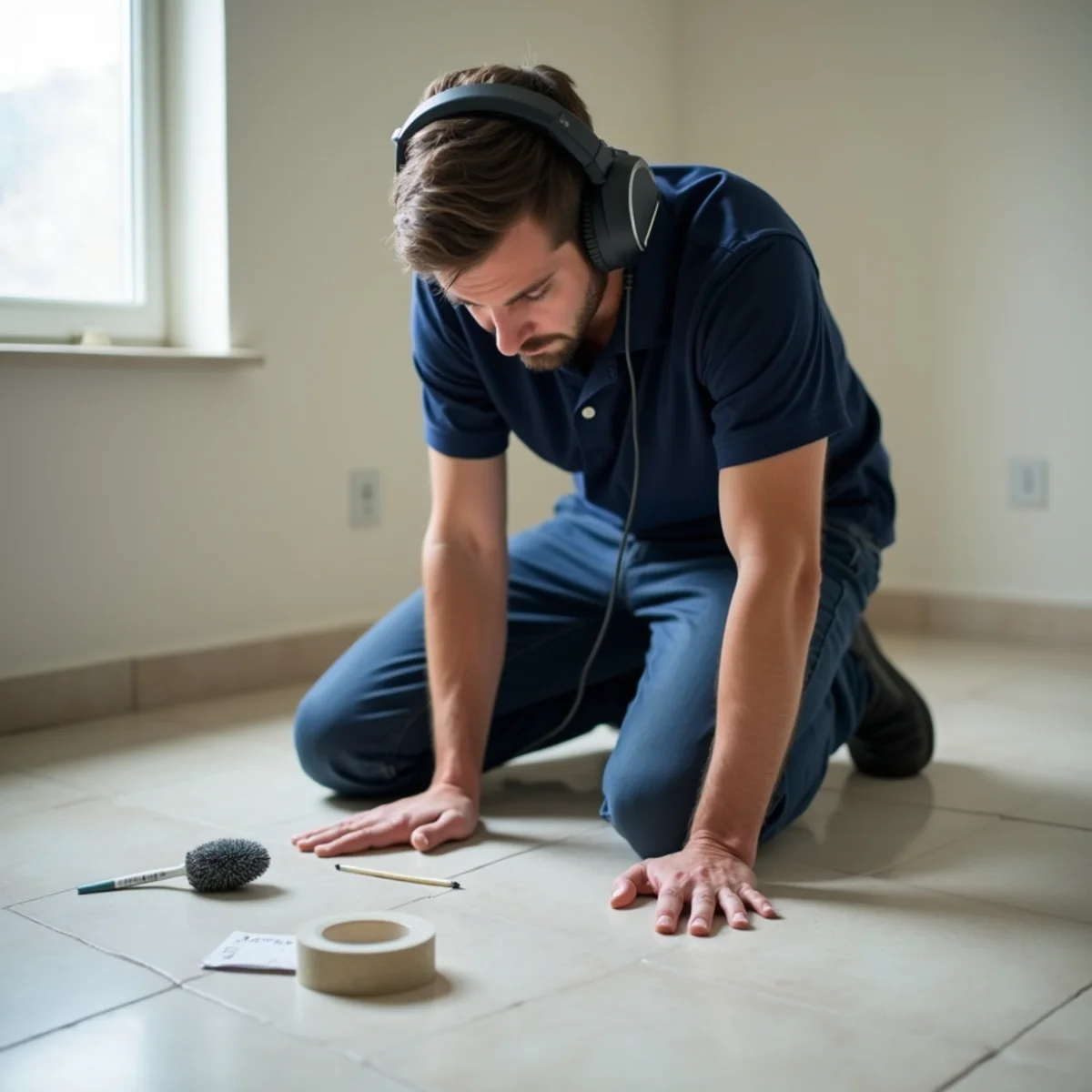
How Pros Find Slab Leaks Without Tearing Up Your Whole Floor
Four techniques that turn 'somewhere under the west half of the house' into a marked spot on your floor.
5 min read
How Restoration Works
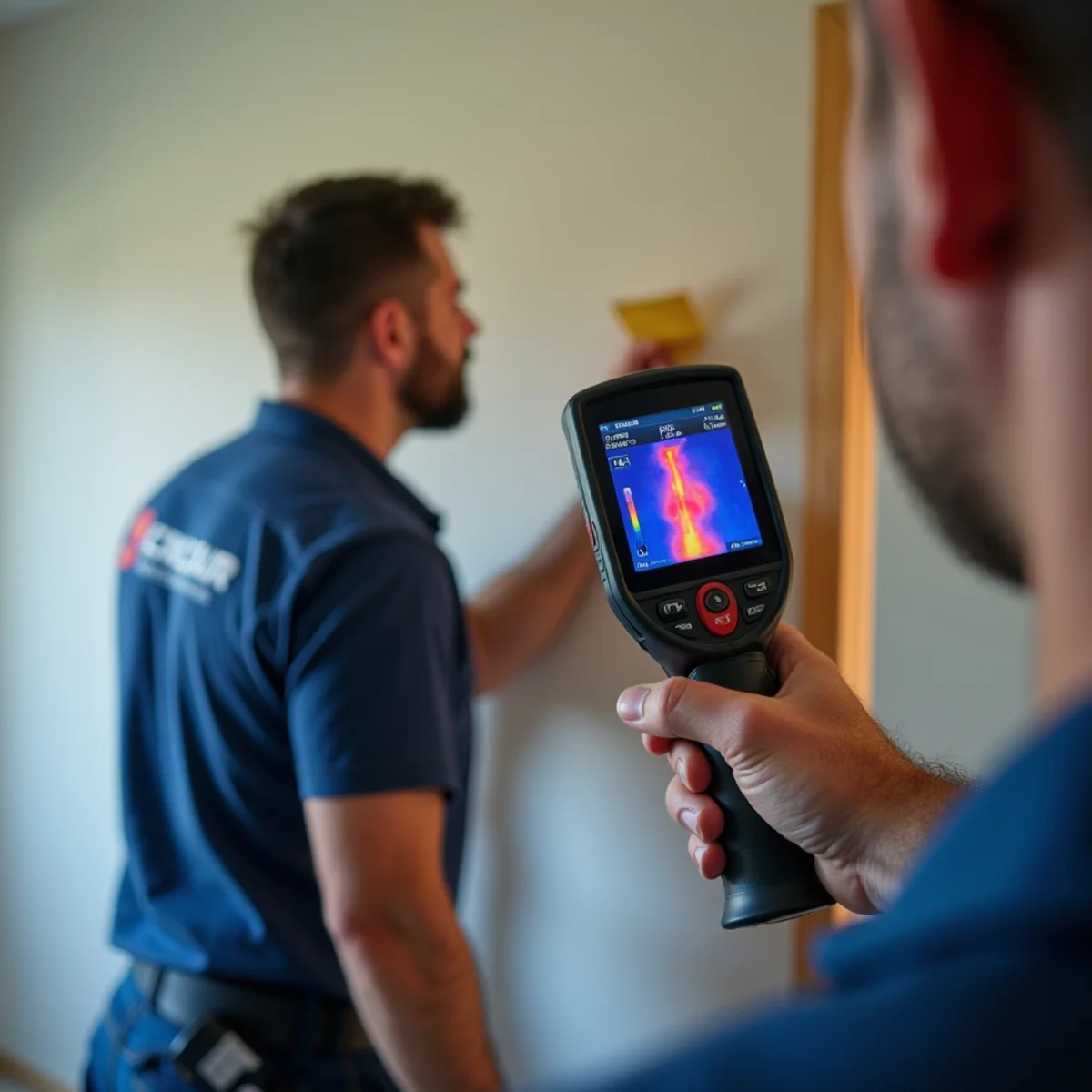
Hidden Leak Symptoms: Warm Floor Spots, High Water Bills, and the Sound of Running Water
Hidden leaks announce themselves indirectly. Here are the signals worth acting on, and the meter test that settles it.
5 min read
How Restoration Works
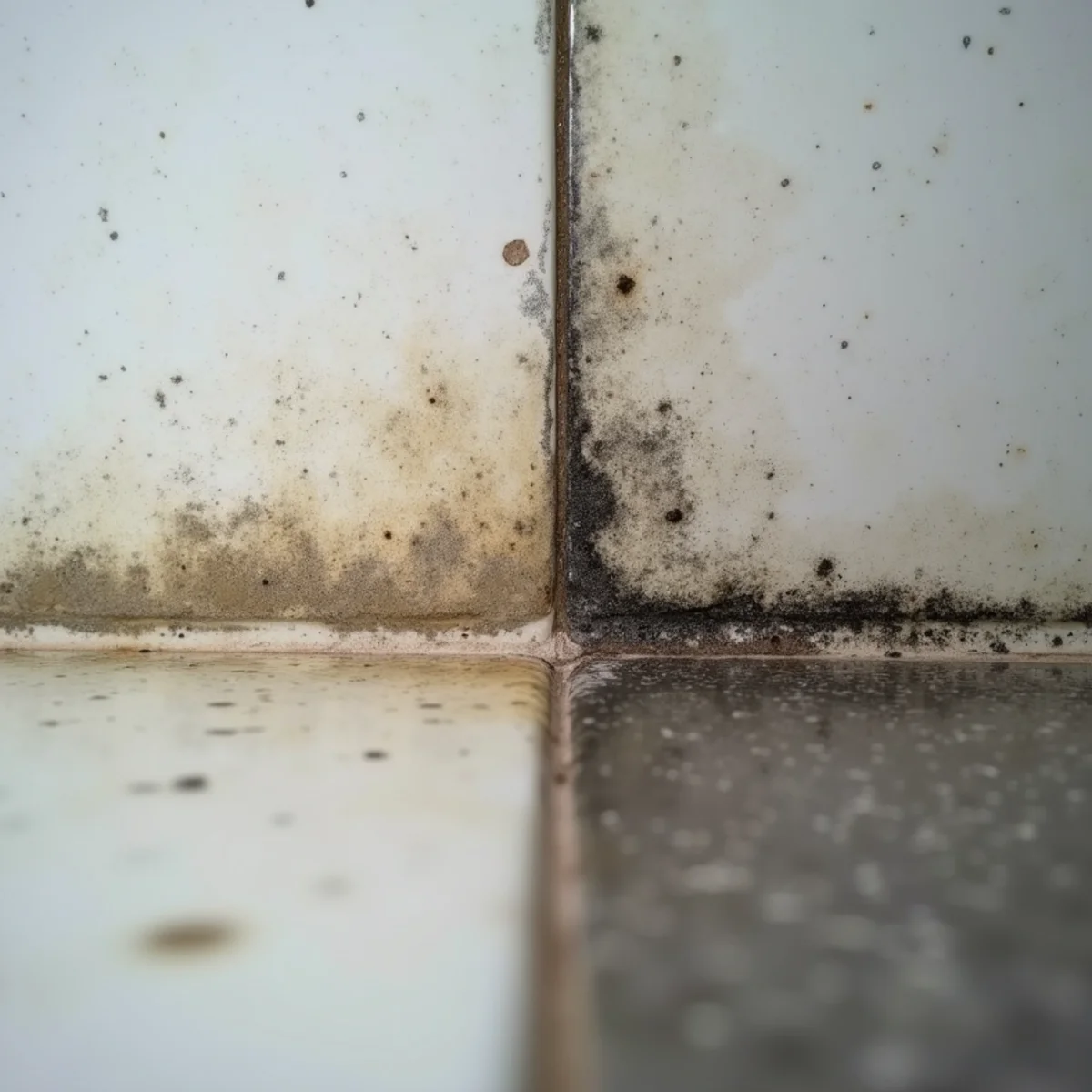
Black Mold vs. Mildew: How to Tell the Difference and When to Call a Pro
One wipes off a shower tile. The other is growing in the material. Here's how to tell which you have without a lab.
5 min read