
24/7 Emergency Service
Ceiling Water Damage Repair in Rancho Cucamonga, CA
Find the actual leak, dry the cavity above, then repair and texture-match — not just paint over the stain.
- Documented dry standard
- Bonded & insured
- 24/7 emergency response
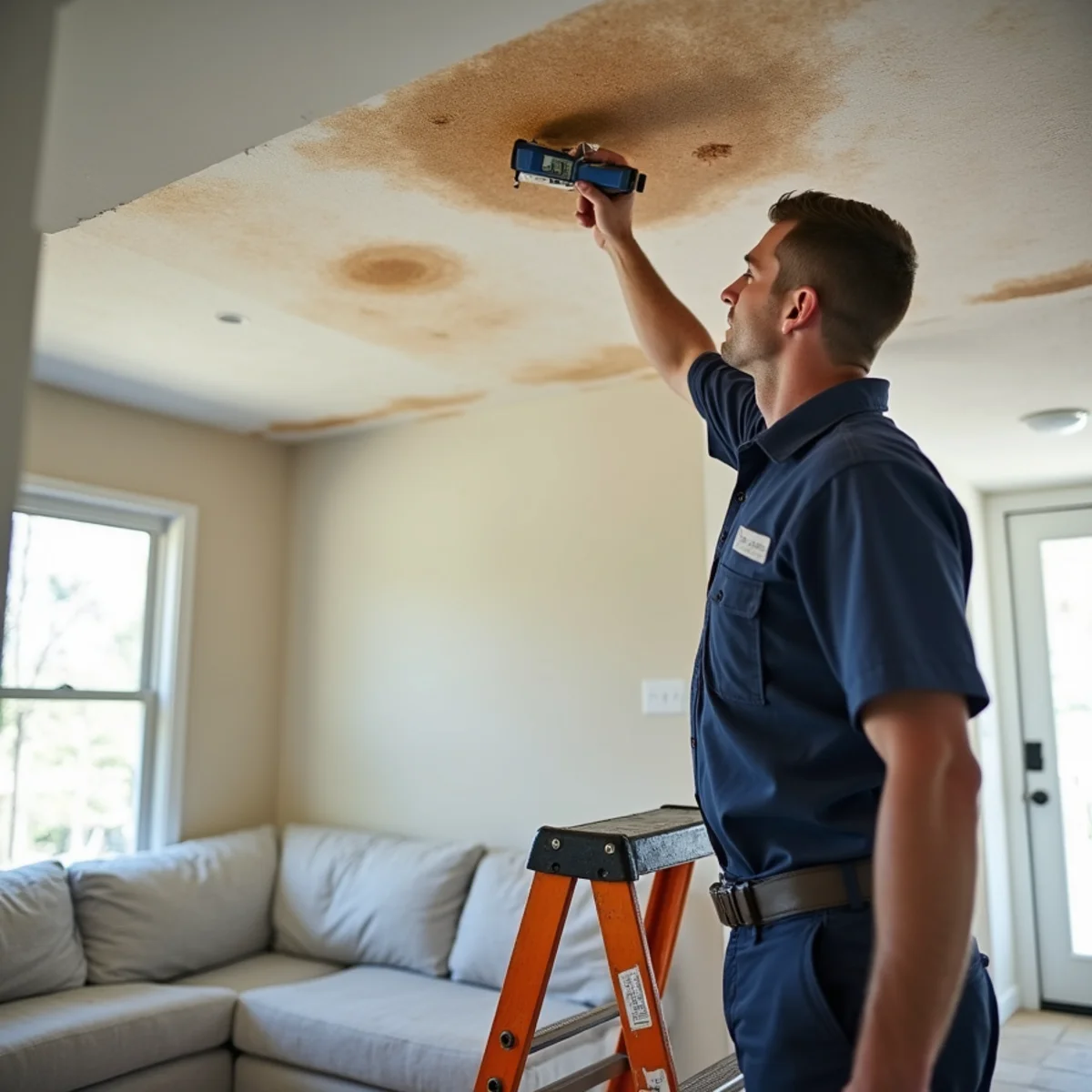
A brown ring on the ceiling is the end of a story that started somewhere else. Water travelled along a rafter or a truss chord, found a low point, and dropped through — often several feet from where it got in.
Painting over it does nothing. We find the source, dry the cavity, and repair the ceiling properly. Call +1 (201) 277-9344.
If your ceiling is sagging or bulging, stay out of that room. Wet drywall holds a surprising amount of weight and it fails all at once.
Water actively spreading? Call now — every hour widens the damage and the bill.
+1 (201) 277-9344Do you need this service?
What your ceiling is telling you
The appearance of the damage narrows down the cause more than most people realise.
A brown or yellow ring with a defined edge
A leak that has stopped, at least for now. The ring marks the furthest the water spread before it dried. Common after a single storm event.
A dark, spreading stain with no clear edge
Active and ongoing. Something is still delivering water into that cavity right now.
Sagging, bulging or a visible bubble
Water is pooling on top of the drywall. This is a collapse hazard — clear the room, don't puncture it yourself.
Cracking or nail pops appearing in a line
The drywall has been wet and moved. Often shows up along a joist line after the water has already dried.
Peeling paint or bubbling texture
The finish has lost adhesion to a saturated substrate. The drywall behind it is almost always compromised.
Staining around a light fixture or ceiling fan
Water follows the path of least resistance and fixture penetrations are it. Kill that circuit at the breaker before doing anything else.
The leak is almost never above the stain
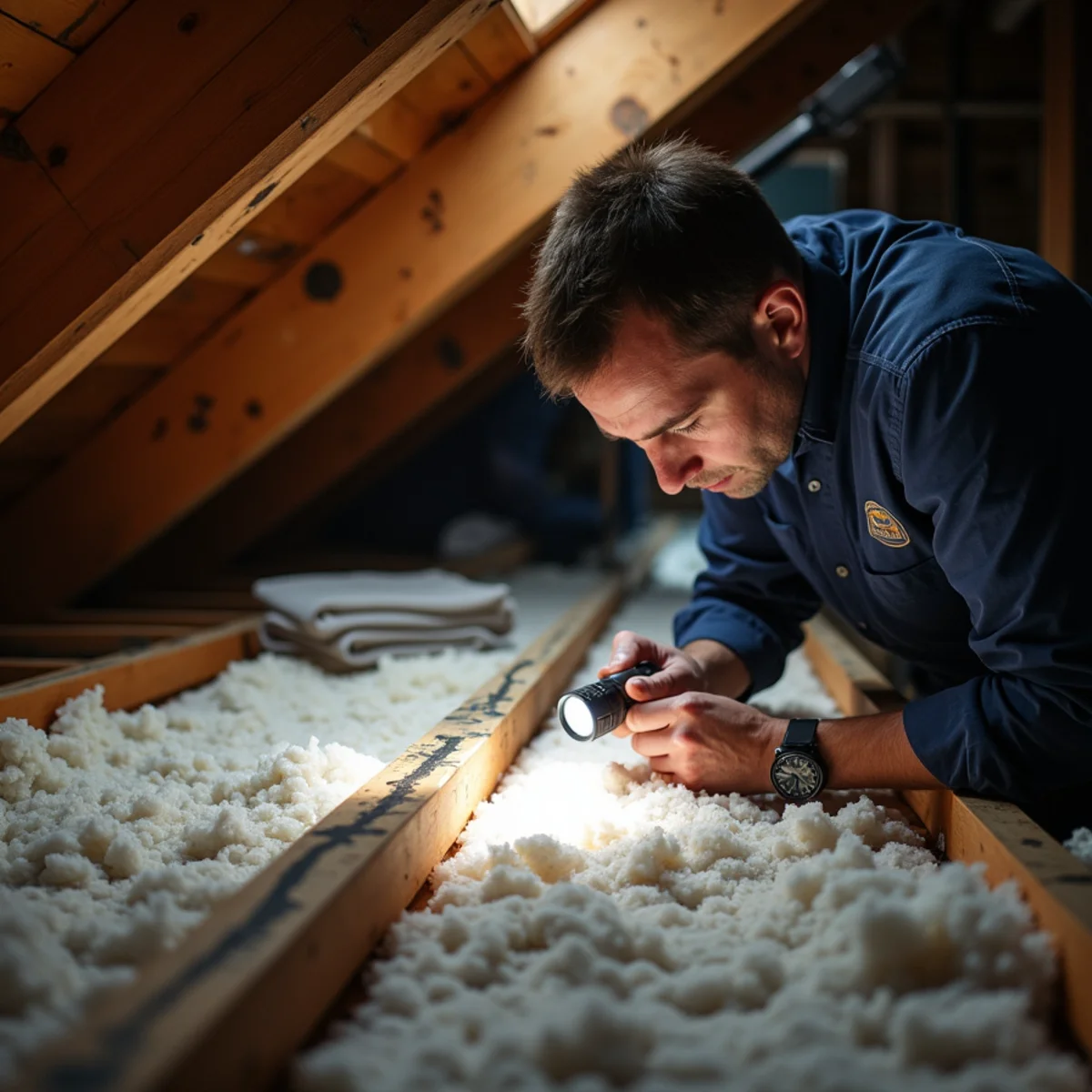
This is the single most useful thing to know about ceiling damage. Water entering a roof or a wall runs downhill along framing — rafters, truss chords, the top plate — until it hits an obstruction or a penetration and drops. Ten to fifteen feet of horizontal travel is unremarkable.
Which is why opening the ceiling directly above the stain frequently finds nothing, and why we start with thermal imaging and moisture mapping from below, then get into the attic and trace it back to the actual entry point. Cutting first and looking second is how a small repair becomes a large one.
Where the water is usually coming from
Roof and flashing failures. The most common cause on a single-story Rancho Cucamonga home, particularly after Santa Ana wind season lifts tile or bends flashing between October and March. Full detail on roof leak water damage.
A bathroom above. A failed shower pan, a leaking toilet flange, a tub overflow, or a supply line inside the wall. If your stain is directly under an upstairs bathroom, that's the first place to look — and the damage is usually worse than the stain suggests, because it's been happening slowly.
HVAC condensate. Air handlers in attics have a drain pan and a condensate line. When the line plugs, the pan overflows into the ceiling. This is a summer problem and it produces very characteristic stains right under the unit.
A supply or drain line in a second-floor wall or joist bay. Often a pinhole in aging copper — see burst pipe cleanup and leak detection.
Ice damming — no. Roof ponding — sometimes. Low-slope sections and patio covers on Rancho Cucamonga homes can hold water at the transition to the main roof during a heavy winter storm.
Repair versus replace
The honest framework we use:
Drywall can often be dried in place and saved if the water was clean, if it hasn't lost structural integrity, and if we get to it fast. Staining alone doesn't condemn a ceiling.
It comes out if it's sagging, if the paper facing has delaminated, if the water was contaminated, or if it's been wet long enough that there's growth on the back — which we check by inspecting from the attic, not by guessing.
Insulation above always comes out if it's wet. Blown-in and batt insulation don't recover from saturation, and wet insulation sitting on your ceiling drywall will keep it wet for weeks.
That third point is the one homeowners most often don't hear from other companies, and it's the reason a "repaired" ceiling grows mold two months later.
Texture matching is a real skill
Once the drying is verified, the repair has to actually disappear. Most Rancho Cucamonga homes have a sprayed texture — knockdown, orange peel, or on older homes a heavier stipple — and a patch that doesn't match reads as a scar on the ceiling forever.
We match texture on site and feather the repair, and where the plane is small enough or the ceiling is a single visual field, we'll recommend painting corner to corner rather than spot-priming. A perfect texture match with a slightly different paint sheen is still a visible patch. On the flip side, if you have a popcorn ceiling in a home built before roughly 1980, that material may contain asbestos and needs testing before it's disturbed — we'll stop and tell you rather than sanding into it.
Related: ceiling leaking during a storm — what to do and can wet drywall be saved.
Second-floor leaks damage three assemblies, not one
When water comes through a downstairs ceiling from a failure upstairs, the ceiling is the last thing it touched and the least of what is wet. Three separate assemblies are involved and only two of them are visible from any room in the house.
The upper floor and its subfloor. Water sits on the finished floor, finds the nearest gap — a threshold, the edge of a cabinet run, a poorly sealed penetration — and goes down. The subfloor beneath it wicks and holds.
The joist cavity between the levels. This is the one that decides whether the repair holds. It has almost no air exchange with either room, so it dries slowest, and it is invisible from above and below. Pointing air movers at a ceiling from the room below does very little to it. We open it, meter the joists directly and dry it as its own chamber.
The ceiling assembly itself. Drywall, texture, insulation if it is an insulated ceiling, and the electrical boxes and fixtures that water has run around.
There is a fourth path worth knowing about. Water travelling along a joist bay frequently finds a wall and runs down inside it, wetting the bottom plate of a first-floor wall several feet away from the visible stain. Metering those wall bases takes a couple of minutes and it is where a large share of the "you dried it and it came back" calls originate.
The practical consequence: a ceiling repair quoted from what is visible in the room below is quoting one of four wet assemblies.
Our process
How ceiling water damage repair works, step by step
Make the room safe
Sagging drywall is a collapse hazard and wet ceilings near fixtures are an electrical one. The circuit gets killed and the area cleared first.
Controlled release
If water is pooling above the drywall, we relieve it at a controlled point rather than letting the ceiling fail on its own schedule.
Trace the actual source
Thermal imaging from below plus attic inspection to follow the water back along framing to the real entry point.
Open, remove and inspect above
Affected drywall is opened where needed, wet insulation is removed, and the cavity is checked for existing microbial growth.
Dry the assembly
Framing and remaining drywall are dried with directed airflow and monitored to a documented dry standard.
Repair, texture and paint
New drywall, taping, texture matched on site, primed and painted to a clean visual break.
- Documented dry standard
- Bonded & insured
- 24/7 emergency response
What it costs
What moves the price on a job like this
We won't quote your property over the phone — too many variables. Here's what an honest estimate is built from.
- 1
Size of the affected area
A two-foot stain in a hallway and a saturated ceiling plane across a living room are very different repairs.
- 2
Whether the drywall can be saved
Drying in place is far cheaper than cut-out, replacement, taping and finishing.
- 3
Insulation replacement
Wet attic insulation over the repair area has to be removed and replaced — a real material and labor line, not an optional one.
- 4
Ceiling height and type
Vaulted and two-story ceilings require staging or lifts. Heavy or unusual textures take longer to match.
- 5
The source repair
Fixing the roof, the shower pan or the condensate line is a separate trade and a separate cost from the ceiling work itself.
- 6
Asbestos testing on older textures
Popcorn and some sprayed textures in pre-1980 homes require testing before disturbance, which adds a step before repair can begin.
The on-site assessment and written estimate are free. See our Rancho Cucamonga, CA cost guide for typical ranges.
Why RC Water Pros
Why Rancho Cucamonga homeowners call us for this
Five things we commit to on every job, before we ever pull into your driveway.
60-minute dispatch, from inside the city
Our crews and equipment stage off 11190 White Birch Dr in Rancho Cucamonga — not a regional hub an hour away. On ceiling water damage repair that arrival gap is the difference between drying in place and demolition.
Every job run to the published S500 standard
Every job is run to the published industry standard for water damage restoration, with a documented dry standard established from your own unaffected materials — not a technician's judgement about what feels dry.
Adjuster-ready documentation on every job
Timestamped photos, moisture maps, daily drying logs, equipment run hours and a written scope, delivered in the format carriers expect. We speak to your adjuster directly so you aren't the middleman.
Extraction through rebuild, one contract
We don't dry your property and hand you a list of subcontractors. The crew that dries it puts the drywall, texture, paint, baseboard and flooring back, under one point of contact.
Free assessment and a written estimate
Free on-site assessment and written estimate, no charge to come and look, and a straight answer about whether the job is small enough for you to handle yourself.
FAQ
Ceiling Water Damage Repair questions
My ceiling is bulging. Should I poke a hole to drain it?
Get everyone out from under it first and call us. If you're on your own with water actively pooling and no help coming for hours, a small relief hole at the lowest point of the bulge with a bucket underneath is better than an uncontrolled collapse — but do it from the side, never underneath, and only after the circuit is off. If we can be there shortly, wait for us.
Can I just paint over a water stain?
Only if the leak is genuinely fixed, the cavity above is genuinely dry, and the drywall is structurally sound — and that needs to be verified with a meter, not assumed. Stain-blocking primer over a wet substrate hides the evidence while the problem continues. It's also the reason many stains bleed straight back through within a few weeks.
How do you find where the leak is actually coming from?
Thermal imaging from inside to see the moisture pattern, moisture meters to confirm the extent, then attic access to trace the water back along the framing to the true entry point. Water can travel ten or fifteen feet horizontally before it drops, so opening the ceiling directly above the stain often finds nothing.
Will the repair be noticeable?
Not if the texture is matched properly. We spray and match on site, feather the transition, and where a spot repair would leave a sheen difference we'll recommend painting the full plane instead. Patching a ceiling badly is permanent in a way that patching a wall isn't.
How long after a ceiling leak can I repaint?
Not until the cavity above verifies dry, which is typically three to five days of active drying after the source is fixed. Painting a ceiling that reads wet traps moisture against the drywall and the stain bleeds straight back through, often within a couple of weeks. We meter the drywall and the framing above it, and the repair sequence is dry first, then new board and tape if needed, then texture matched on site, then primer and paint.
The stain is small. Does that mean the damage is small?
Not reliably. The stain marks where water finally came through the finish, not where it spread. A drip that found a light fixture or a seam can produce a modest mark on the ceiling while the insulation above it and the joist cavity are wet across a much larger area. That is why we meter the assembly and the surrounding walls rather than scoping from the size of the mark.
Related services
- Roof Leak DamageWind lifts the tile in October, the December storm finds the gap. We tarp, strip wet insulation and dry the structure.
- Storm Damage CleanupEmergency tarping, water extraction and full interior restoration after Santa Ana winds and winter atmospheric rivers.
- Structural DryingAir movers and commercial dehumidifiers placed to a calculated load, with daily moisture readings you get to see.
Further reading
Emergency Guides
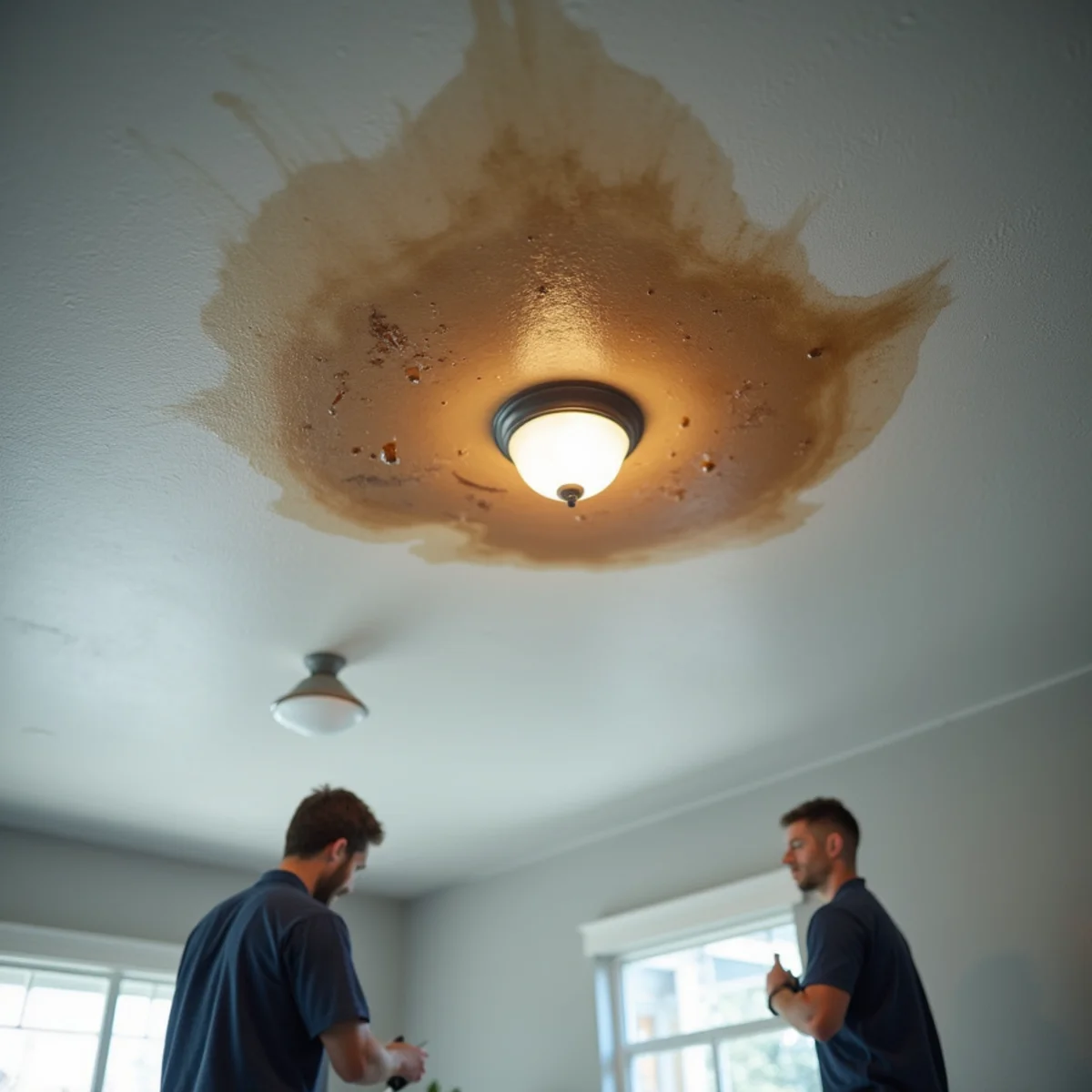
Ceiling Leaking During a Storm? What to Do in the Next 30 Minutes
Clear the room, kill the circuit, catch what you can — and why the leak is almost never directly above the stain.
5 min read
How Restoration Works
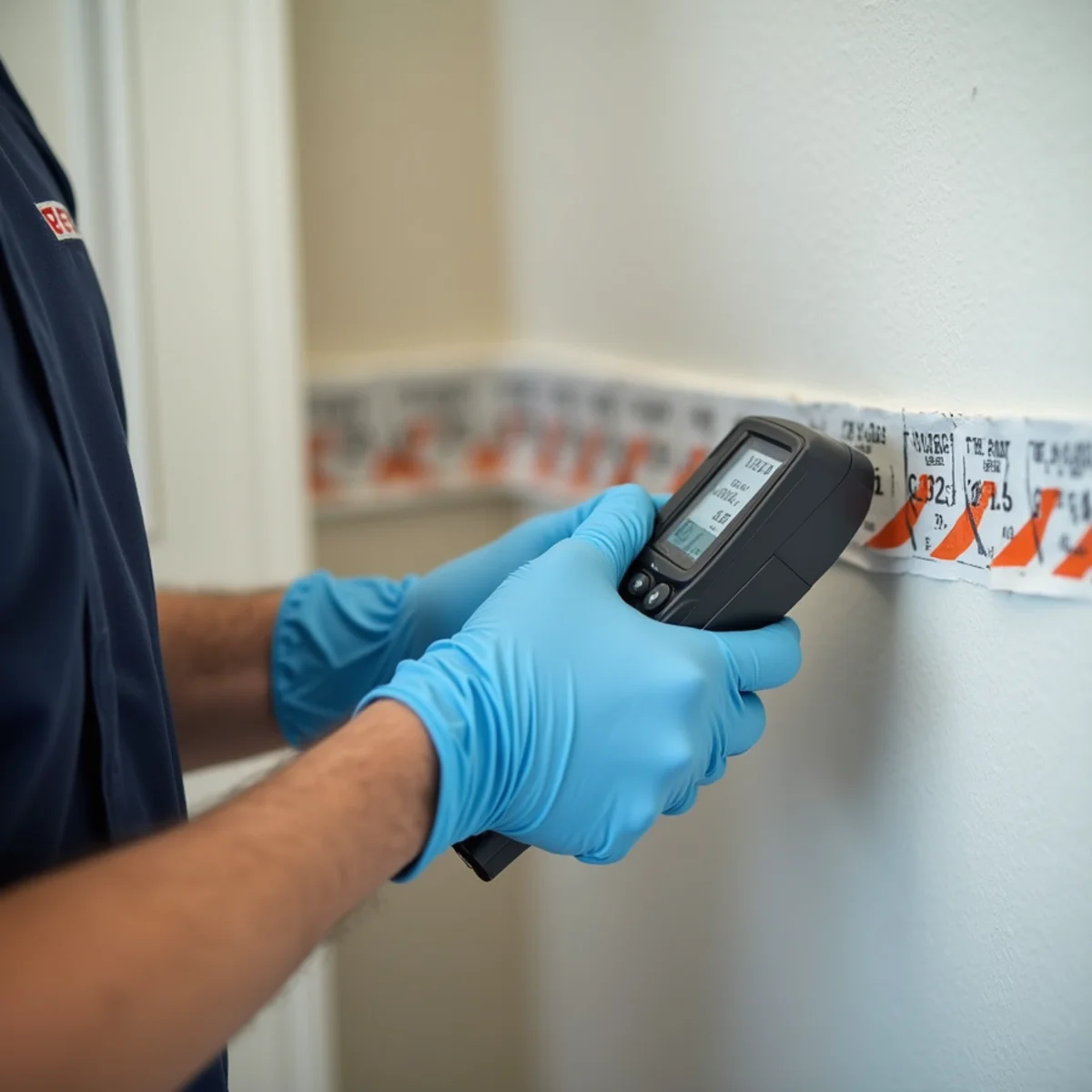
Wet Drywall: When It Can Be Saved and When It Has to Come Out
Four questions decide it — water category, structural integrity, how long it's been wet, and what's behind it.
5 min read
Where we work
Ceiling Water Damage Repair across the Inland Empire
Based in Rancho Cucamonga, serving the surrounding cities and neighborhoods 24/7.
Need ceiling water damage repair in Rancho Cucamonga?
Free assessment, 60-minute dispatch, and a real person on the phone at any hour.
- Documented dry standard
- Bonded & insured
- 24/7 emergency response