
How Restoration Works
Wet Drywall: When It Can Be Saved and When It Has to Come Out
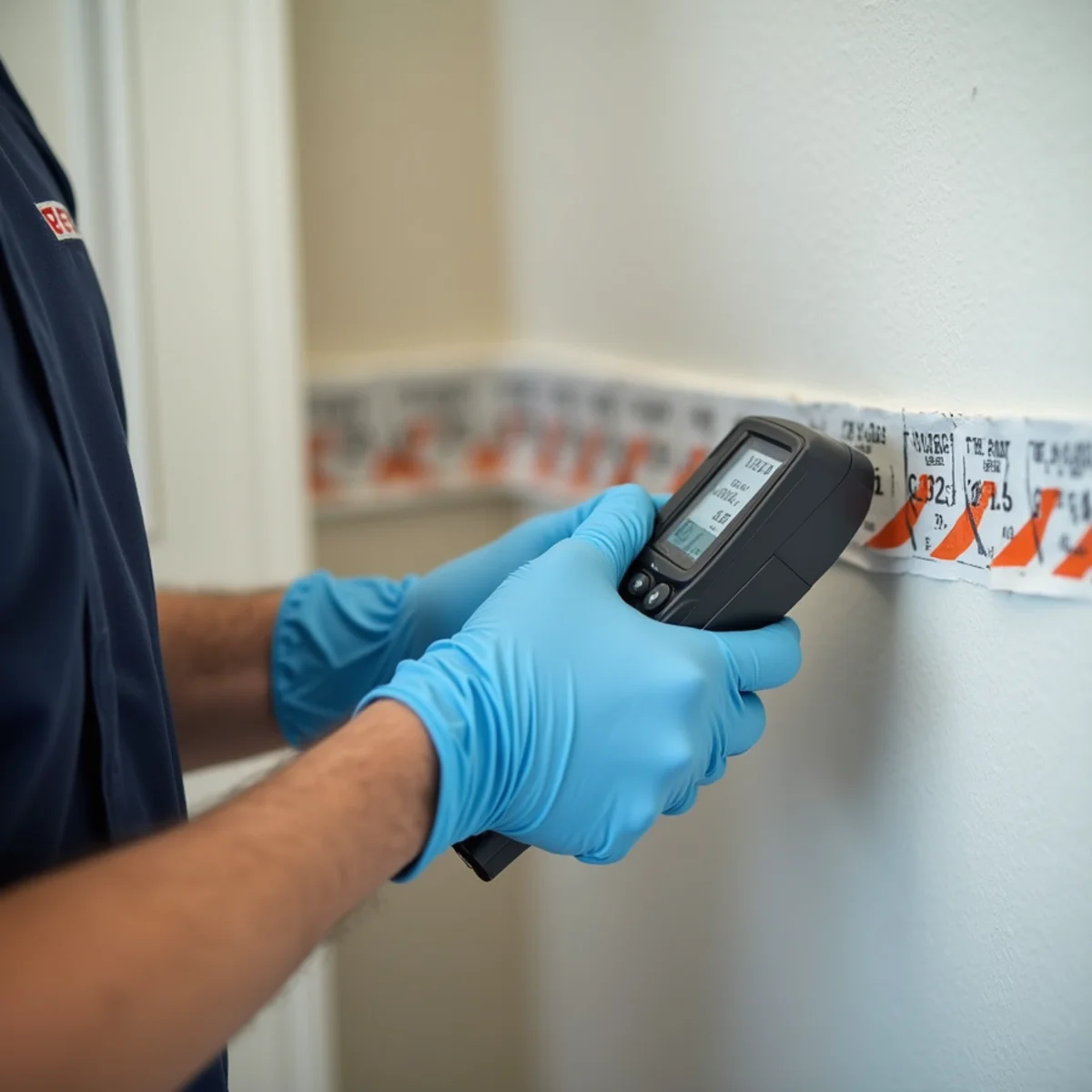
Dealing with this right now? We answer 24/7 and dispatch across Rancho Cucamonga in 60 minutes.
+1 (201) 277-9344Homeowners are frequently told the wet drywall "has to come out," and sometimes that's true. Often it isn't, and the difference is worth several thousand dollars.
Here's how the decision is actually made.
The short version: clean water, caught within a couple of days, on drywall that still holds its shape — that usually dries in place. Contaminated water, a soft or crumbling board, or a wall that has been wet for the better part of a week — that comes out. Four questions settle which one you have.
Drywall is more resilient than people assume
Gypsum board is a gypsum core between two layers of paper. It absorbs water readily and wicks it upward against gravity — which is why a six-inch water line often means the bottom two feet of the wall is wet.
But absorbing water and being ruined are different things. Drywall that got wet and was dried promptly, without losing structural integrity, is generally fine. Staining alone doesn't condemn it.
The four questions
1. What was in the water?
Category 1 (clean) — dry it in place, if the other three answers cooperate.
Category 2 (grey) — usually removed below the water line, though some assemblies can be cleaned and dried.
Category 3 (black) — comes out. No exceptions. Contaminated porous material can't be reliably disinfected because the contamination is inside the material, not on it.
2. Has it lost structural integrity?
The tests are physical:
- Does it feel soft or spongy when pressed?
- Is it sagging or bowing?
- Has the paper facing separated from the core (delamination)?
- Does it crumble at the cut edge?
Any of those and it's gone, regardless of category.
3. How long has it been wet?
The threshold is about 48 hours. Beyond it, growth is likely — particularly on the back face, in the wall cavity, where you can't see it and where conditions are darker and stiller.
This is why fast response changes cost so dramatically. Same wall, same water, different outcome.
4. What's behind it?
This is the question amateurs skip.
Even if the drywall is fine, the insulation behind it may not be. Wet batt insulation loses R-value permanently and holds moisture against the framing and the back of the drywall indefinitely.
And you cannot dry a closed wall cavity by pointing a fan at the room side. Air has to reach it.
How professionals dry a wall in place
The techniques that let drywall stay:
Remove the baseboard. Water wicks up from the floor, so releasing the base and drilling small holes behind the baseboard line lets air into the cavity through openings that are completely hidden when the base goes back on.
Injection drying. Directed airflow forced into the cavity through small ports, which dries the insulation, the framing and both drywall faces without opening the wall.
Negative air on the cavity. Pulling air through rather than pushing.
Metering, not guessing. Readings taken at the same mapped points daily, compared against a dry standard established from unaffected walls in the same house.
If someone tells you a wall is dry without producing a number, they don't know.
When it does come out: the flood cut
When removal is necessary, it's done to a documented line — commonly a set height above the visible water line, typically two or four feet, cut level so the replacement piece lands on framing.
Why cut higher than the water line? Because drywall wicks upward, so the wet zone extends above where the water actually stood. The cut has to reach dry material.
Wet insulation comes out with it. That's not optional — it doesn't recover, and leaving it means the new drywall goes up over a wet cavity.
Special cases
Plaster and lath. Older homes across Upland, Ontario, Pomona and Historic Cucamonga have plaster rather than drywall. Plaster holds moisture much longer and needs a longer drying cycle — but it can usually be saved, and it should be, because it can't be replaced by the sheet and matching it is skilled work.
Ceilings. Different rules. A ceiling holds water against gravity and the failure mode is collapse. Sagging or bulging ceiling drywall comes out regardless of category. See ceiling water damage repair.
Textured walls. In newer homes across Chino and the Day Creek corridor, sprayed texture means a patch has to be matched on site. Sometimes a full-wall skim and repaint produces a better result than a spot patch, and it's worth discussing before the repair rather than after.
Below-grade and garage walls. Drywall sitting directly on a slab wicks fast and is usually saturated in the bottom foot even when the room above looks fine.
What it costs, and what insurance usually pays
Drying a wall in place and cutting it out are very different numbers, which is why the assessment is worth insisting on rather than accepting a default answer.
Drying in place means equipment time and monitoring — a few days of a dehumidifier and directed airflow, then a repaint if the finish is marked. Removing and replacing means demolition, disposal, new board, taping, three coats of compound, texture matching, primer and paint, plus the baseboard and any tile or cabinetry that had to come off for access. On a single room the gap between those two paths is routinely several thousand dollars.
For a covered claim — a sudden discharge from a supply line, an appliance or a burst pipe — both approaches are ordinarily within scope, so the question is not who pays but what the property actually needs. Insurers generally have no objection to drying in place; it costs them less than replacement.
Where it matters most is on a loss you are paying for yourself, or on a policy with a deductible large enough that the whole job is effectively out of pocket. There, the difference between a wall that gets dried and a wall that gets demolished is the difference between an inconvenient week and a renovation.
The one thing worth knowing: the decision has a deadline. A wall that could have been dried on day one usually cannot be by day five.
What to do while you wait
Don't remove baseboards or cut anything yourself — you'll damage material that could have been saved and you'll disturb whatever is growing behind it.
Don't run the HVAC to dry the room.
Do photograph the water line with something in frame for scale. That height is the single most consequential measurement in the whole job.
Moisture assessment: +1 (201) 277-9344.
FAQ
Questions people also ask
Does water-stained drywall always have to be replaced?
No. Staining alone doesn't condemn drywall. What condemns it is contaminated water, lost structural integrity (soft, sagging, delaminated paper facing), more than about 48 hours wet, or growth on the back face. Clean water caught quickly can usually be dried in place.
Why do they cut higher than the water line?
Because drywall wicks moisture upward against gravity — a six-inch water line commonly means the bottom two feet is wet. The cut has to reach genuinely dry material, and it's made level so the replacement piece lands on framing. Wet insulation comes out with it.
Can a wall be dried without opening it?
Often, yes. Removing the baseboard and drilling small holes behind the base line lets air into the cavity through openings that are completely hidden once the base goes back on. Injection drying forces directed airflow through the cavity to dry insulation, framing and both drywall faces without cutting the wall open.
How much does drying a wall cost compared with replacing it?
On a single room the gap between the two paths is routinely several thousand dollars. Drying in place is equipment time, monitoring and a repaint. Replacement is demolition, disposal, new board, taping, three coats, texture matching, primer, paint, plus the baseboard and any tile or cabinetry that came off for access. On a covered claim both are within scope, so the question is what the property actually needs.
Services mentioned
- Water ExtractionTruck-mounted units pull standing and sub-surface water out in hours — the step that decides whether your floors survive.
- Structural DryingAir movers and commercial dehumidifiers placed to a calculated load, with daily moisture readings you get to see.
- Mold RemediationContainment, HEPA filtration, source removal and moisture correction — remediation that fixes the cause, not just the stain.
Keep reading

How Restoration Works
How Pros Find Slab Leaks Without Tearing Up Your Whole Floor
Four techniques that turn 'somewhere under the west half of the house' into a marked spot on your floor.
5 min read
How Restoration Works
Hidden Leak Symptoms: Warm Floor Spots, High Water Bills, and the Sound of Running Water
Hidden leaks announce themselves indirectly. Here are the signals worth acting on, and the meter test that settles it.
5 min read
How Restoration Works
Black Mold vs. Mildew: How to Tell the Difference and When to Call a Pro
One wipes off a shower tile. The other is growing in the material. Here's how to tell which you have without a lab.
5 min read