
Free Written Estimate
Water Heater Leak Cleanup in Rancho Cucamonga, CA
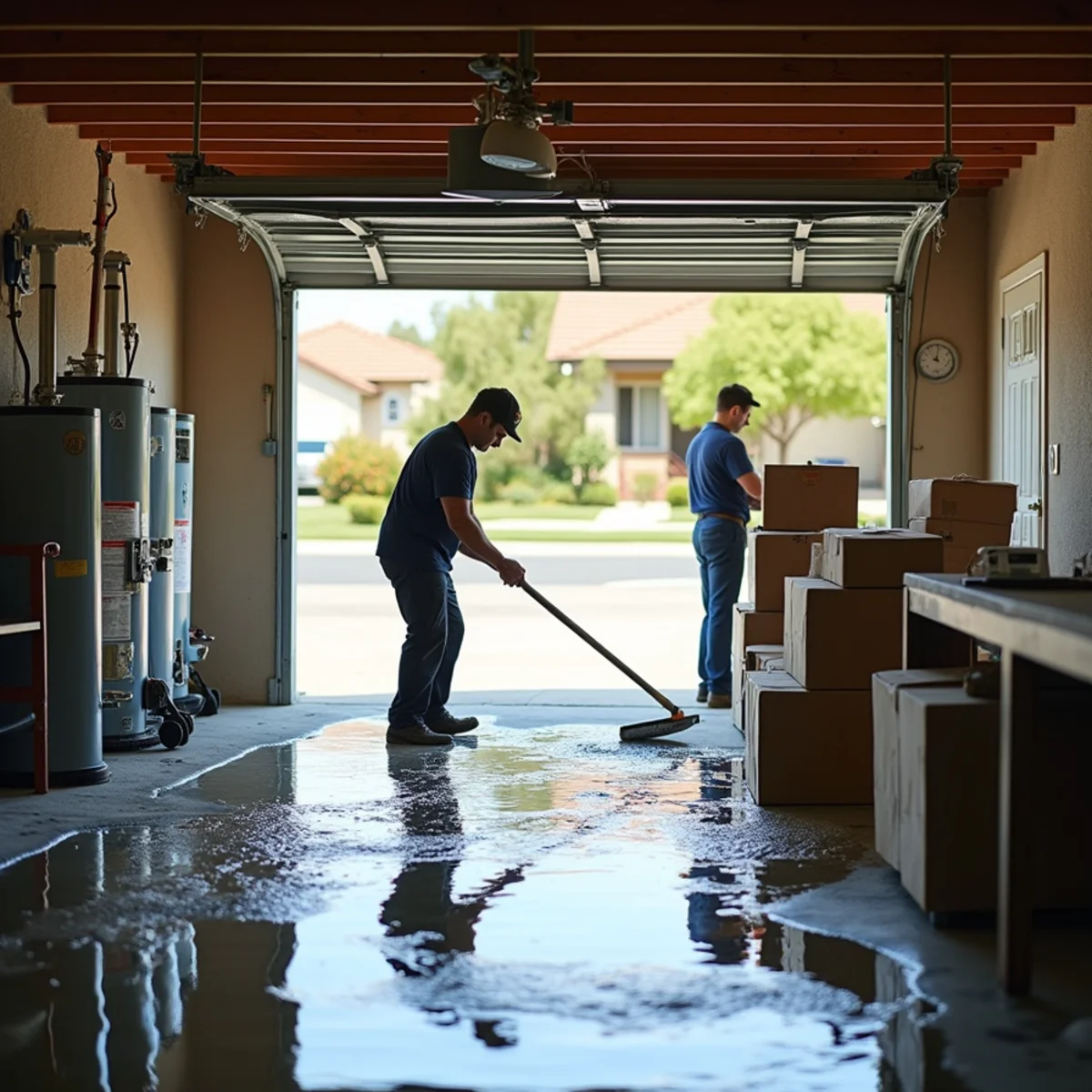
Forty to eighty gallons across a garage slab, heading for the house. Extraction, drywall drying and mold prevention.
- Documented dry standard
- Bonded & insured
- 24/7 emergency response
A water heater doesn't usually announce itself. It weeps quietly behind the strapping for weeks, then the tank seam lets go and puts its entire capacity — 40, 50, sometimes 80 gallons — onto the garage floor in a few minutes.
And garage slabs in Rancho Cucamonga tract homes are frequently pitched toward the interior door, not the driveway. Call +1 (201) 277-9344.
Water actively spreading? Call now — every hour widens the damage and the bill.
+1 (201) 277-9344Do you need this service?
Catch it before the tank lets go
Tanks give warning. Most homeowners just don't know what they're looking at.
Rust-colored water or staining at the base
The tank is corroding from the inside. Once rust reaches the outside, the seam is on borrowed time.
A small puddle that keeps reappearing
A weeping tank or a failing T&P valve. Wiping it up doesn't fix it, and the drywall behind has been absorbing it for a while.
Popping or rumbling during heating
Sediment buildup — a hard-water hallmark here — insulating the tank bottom and overheating the steel above it.
The unit is over ten years old
Typical service life is 8–12 years, and Inland Empire hard water pushes toward the low end of that range.
Water running from the discharge pipe
The temperature and pressure relief valve is doing its job — which means something upstream (pressure or temperature) is wrong.
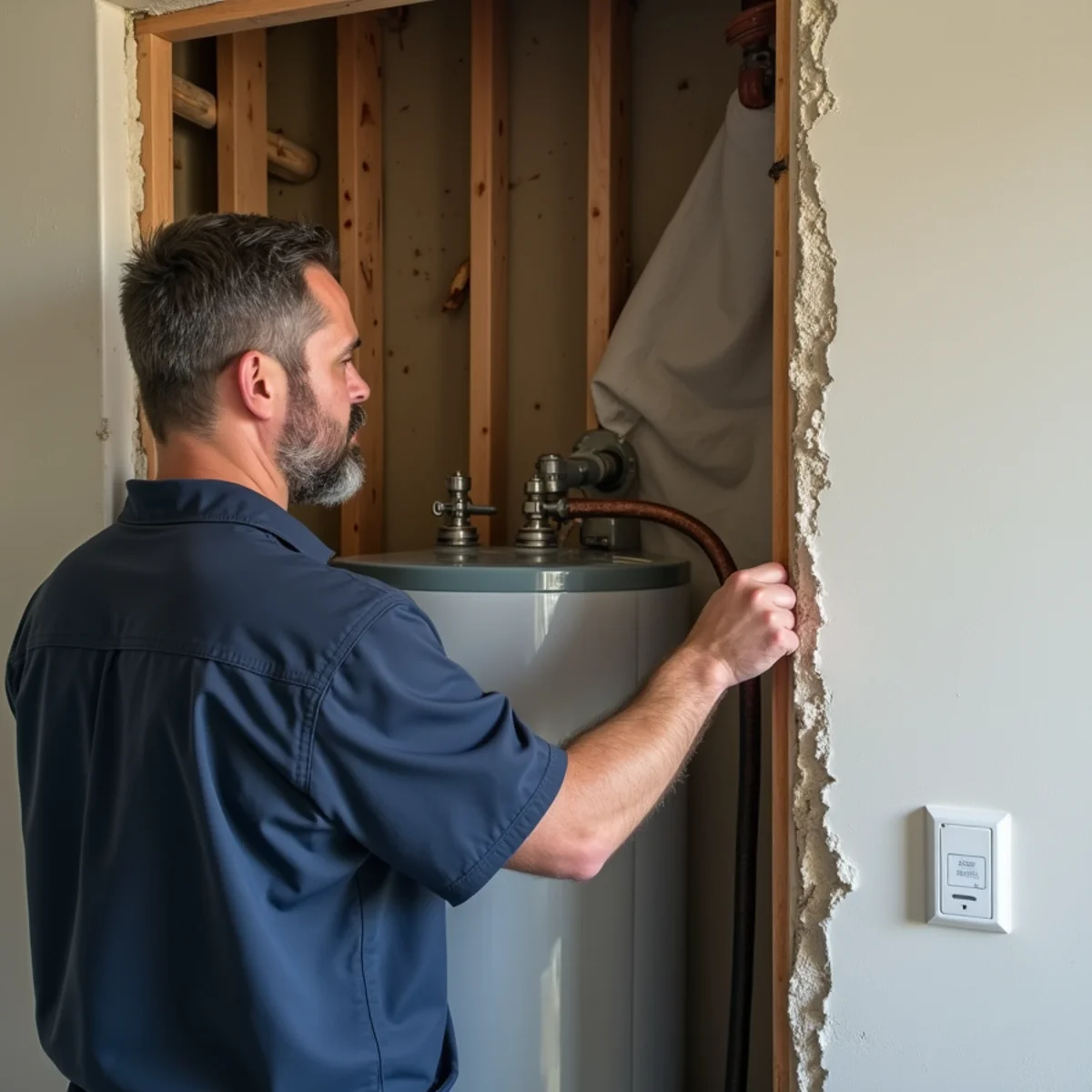
Damp or stained drywall behind the heater
The most missed sign. The tank has been leaking backward into the wall, not forward onto the floor.
Why the garage is the worst place for this to happen
In most of Rancho Cucamonga's tract housing, the water heater sits in the garage — and the garage is a bad room to flood, for four specific reasons.
The slab drains the wrong way. Garage slabs are typically sloped, but not always toward the door. A lot of homes here send water toward the interior threshold, which means a tank failure delivers water directly into the hallway, laundry room or kitchen.
The drywall wicks immediately. Garage walls are usually unfinished or minimally finished drywall sitting right on the slab. It draws water upward within minutes and holds it — and because nobody looks at garage walls closely, it stays wet.
Everything you own is stored on the floor. Cardboard boxes, holiday decorations, paperwork, tools, kids' sports gear. Cardboard wicks water several inches up and turns into a mold substrate within a day or two.
Garages get hot. A closed Rancho Cucamonga garage in summer runs well above living-space temperature. Warm plus wet plus cardboard is close to an ideal microbial growth environment, and the 24–48 hour clock runs faster in there than anywhere else in the house.
California's strapping law — and what it does and doesn't do
California Health & Safety Code §19211 requires water heaters to be braced, anchored or strapped to resist falling or horizontal displacement in an earthquake. Two straps, upper and lower third of the tank. It's checked at sale, and it's a genuinely good law.
What it does: keeps a full tank from toppling and shearing its gas and water connections during a quake.
What it doesn't do: stop the tank from corroding. Strapping is a seismic safety measure, not a leak prevention measure — and we mention it because homeowners sometimes assume a recently-inspected, properly-strapped heater is a heater in good condition. Those are unrelated facts. See California's water heater strapping law for the full picture.
The other thing worth checking while you're looking: is there a drain pan under the tank, and is it actually piped to a drain or the exterior? A pan that isn't plumbed anywhere just holds the first gallon.
Hard water is what's killing your tank
Inland Empire water carries a heavy mineral load. Inside a water heater, those minerals precipitate out and settle as sediment on the tank bottom.
That sediment does two things. It insulates the bottom of the tank from the water above it, so the burner has to run longer and the steel gets hotter than it was designed to — which accelerates failure and raises your gas bill. And it accelerates the consumption of the anode rod, the sacrificial component that corrodes so your tank doesn't. Once the anode is gone, the tank starts corroding, and from there it's a countdown.
Practical consequence: flushing the tank annually and having the anode rod checked at around five years genuinely extends service life here. It's a cheap plumber visit against replacing a tank plus restoring a flooded garage.
What we do
Extraction of standing water from the garage slab and anywhere it migrated. Removal of the wet drywall behind and beside the tank — this is nearly always necessary, and it's the step most commonly skipped. Contents triage: cardboard that got wet is a total loss and needs to come out before it grows. Structural drying of the slab, the wall bases and any interior rooms the water reached. Then rebuild — drywall, texture, paint and any affected interior flooring.
We coordinate the replacement heater with a licensed plumber. And while the wall is open, that's the cheapest moment in the tank's whole life cycle to add a proper drain pan and a piped discharge line.
Insurance
A water heater tank failure is a textbook sudden and accidental discharge — generally covered on a standard California homeowners policy for the resulting water damage.
The near-universal exclusion is the water heater itself. Carriers treat the appliance as a maintenance item. So the damage to your garage, drywall, flooring and belongings is typically covered; the new tank is out of pocket.
Where claims get argued is the slow-weep scenario: a tank that had been leaking for months before it failed. That reads as gradual damage to an adjuster. Photograph the tank and the surrounding damage before it's removed, and keep the old unit until your adjuster has released it.
Fit the pan and the shut-off while the wall is open
Every water heater failure we clean up involves opening the wall behind or beside the tank, and that is the cheapest moment in the appliance's entire life to fix the things that made this event expensive.
A drain pan piped to somewhere. A great many installations have no pan at all, and a large share of the rest have a pan sitting on the floor connected to nothing — which catches a slow drip and does absolutely nothing about a tank that lets go. A pan plumbed to an actual discharge point turns the next failure from a flooded garage and hallway into water running harmlessly outside.
A shut-off you can reach and turn. The cold inlet valve above the tank is what stops the tank refilling, and on an older installation it is often seized from never having been moved. Replacing it costs very little while everything is accessible.
A relief valve discharge line that terminates safely. Frequently missing, incorrectly routed or terminating inside the garage.
Seismic strapping done properly. Two straps, upper third and lower third of the tank, anchored into structure rather than drywall, kept clear of the controls. If the wall is open, the anchoring can be done into framing rather than with hollow-wall fixings.
A leak sensor beside the pan. A few dollars, battery powered, and it catches the slow weep that precedes most catastrophic failures by weeks.
None of this is our work — it is your plumber's, and it is an hour of their time. But the access is open exactly once, and the difference it makes to the next tank failure is the difference between a phone call and a claim.
Our process
How water heater leak cleanup works, step by step
Shut off water and fuel
Cold-water inlet closed, gas or electric supply to the unit off. We'll walk you through it on the phone if you're waiting on us.
Extract the garage and anywhere it reached
Standing water comes off the slab and out of any interior rooms the water crossed into.
Contents triage
Wet cardboard and porous stored goods come out immediately — documented and photographed for your claim before disposal.
Open and dry the wall behind the tank
The drywall behind a leaking heater is almost always saturated. It comes out to a documented line and the cavity is dried.
Dry slab and interior spread
Garage slab, wall bases and any affected interior flooring are dried to a documented standard with daily readings.
Replacement coordination and rebuild
New tank installed by a licensed plumber, drain pan piped properly, then drywall, texture and paint restored.
- Documented dry standard
- Bonded & insured
- 24/7 emergency response
What it costs
What moves the price on a job like this
We won't quote your property over the phone — too many variables. Here's what an honest estimate is built from.
- 1
How far the water travelled
A tank that emptied into a garage with a driveway-facing slope is a fraction of one that ran into carpeted interior rooms.
- 2
Drywall and framing removal
The wall behind and beside the tank is usually saturated. Height and length of the cut line drive the rebuild.
- 3
Contents loss
Stored belongings on a garage floor absorb quickly. Documenting and disposing of them is part of the job — and part of the claim.
- 4
Interior flooring
Water reaching hallway carpet, laminate or engineered wood turns a garage job into an interior restoration.
- 5
Mold if it sat
A tank that failed while you were away, in a hot garage, frequently means containment and remediation before any rebuild.
The on-site assessment and written estimate are free. See our Rancho Cucamonga, CA cost guide for typical ranges.
Why RC Water Pros
Why Rancho Cucamonga homeowners call us for this
Five things we commit to on every job, before we ever pull into your driveway.
60-minute dispatch, from inside the city
Our crews and equipment stage off 11190 White Birch Dr in Rancho Cucamonga — not a regional hub an hour away. On water heater leak cleanup that arrival gap is the difference between drying in place and demolition.
Every job run to the published S500 standard
Every job is run to the published industry standard for water damage restoration, with a documented dry standard established from your own unaffected materials — not a technician's judgement about what feels dry.
Adjuster-ready documentation on every job
Timestamped photos, moisture maps, daily drying logs, equipment run hours and a written scope, delivered in the format carriers expect. We speak to your adjuster directly so you aren't the middleman.
Extraction through rebuild, one contract
We don't dry your property and hand you a list of subcontractors. The crew that dries it puts the drywall, texture, paint, baseboard and flooring back, under one point of contact.
Free assessment and a written estimate
Free on-site assessment and written estimate, no charge to come and look, and a straight answer about whether the job is small enough for you to handle yourself.
FAQ
Water Heater Leak Cleanup questions
My water heater is leaking a little. Is that an emergency?
It's not a 2 a.m. emergency, but it is a this-week problem. A weeping tank is a tank that has corroded through somewhere, and seam failures are sudden — you don't get a gradual escalation. Shut the cold-water inlet, turn off the gas or breaker to the unit, and get a plumber out before it becomes a garage full of water.
How long do water heaters last in Rancho Cucamonga?
Typical service life is 8–12 years, and Inland Empire hard water pushes most tanks toward the shorter end. Sediment insulates the tank bottom and burns through the anode rod faster than in soft-water regions. Annual flushing and an anode check around year five genuinely help.
Does insurance cover a burst water heater?
The resulting water damage is normally covered as sudden and accidental discharge. The replacement water heater itself is normally excluded as a maintenance item. Claims get contested when the tank had visibly been weeping for months, so photograph the unit and the damage before anything is removed and keep the old tank until the adjuster releases it.
Do I need to replace the drywall behind it?
Almost always, yes. Garage drywall sits directly on the slab, wicks water fast, and a leaking tank has usually been wetting the wall behind it before the failure. Leaving it means mold in a hot garage. While it's open is also the cheapest moment to add a properly piped drain pan.
Should we switch to a tankless unit while the old one is out?
It's the cheapest moment to consider it, since the space is already open and the old tank is coming out regardless. Tankless removes the failure mode entirely — there is no 50-gallon reservoir to let go — but it usually needs gas line, venting and sometimes electrical work, so the install cost is higher than a like-for-like tank. That's a conversation for your plumber. What we'd insist on either way is a drain pan piped to an actual drain.
The tank is being replaced anyway. Is any of that extra work worth it?
It is the best-value hour on the whole job. A new tank has the same ten-to-twelve year service life as the one that just failed, in the same hard water, in the same location — so the question is not whether there will be a next time but what happens when there is. A pan piped to a discharge point, a working shut-off and a leak sensor cost a fraction of what the cleanup you are currently paying for cost, and they are only cheap while the wall is open.
Related services
- Emergency Water RemovalOne number, answered by a person, any hour of any day — with a truck rolling before the call ends.
- Structural DryingAir movers and commercial dehumidifiers placed to a calculated load, with daily moisture readings you get to see.
- Mold RemediationContainment, HEPA filtration, source removal and moisture correction — remediation that fixes the cause, not just the stain.
Further reading
Emergency Guides
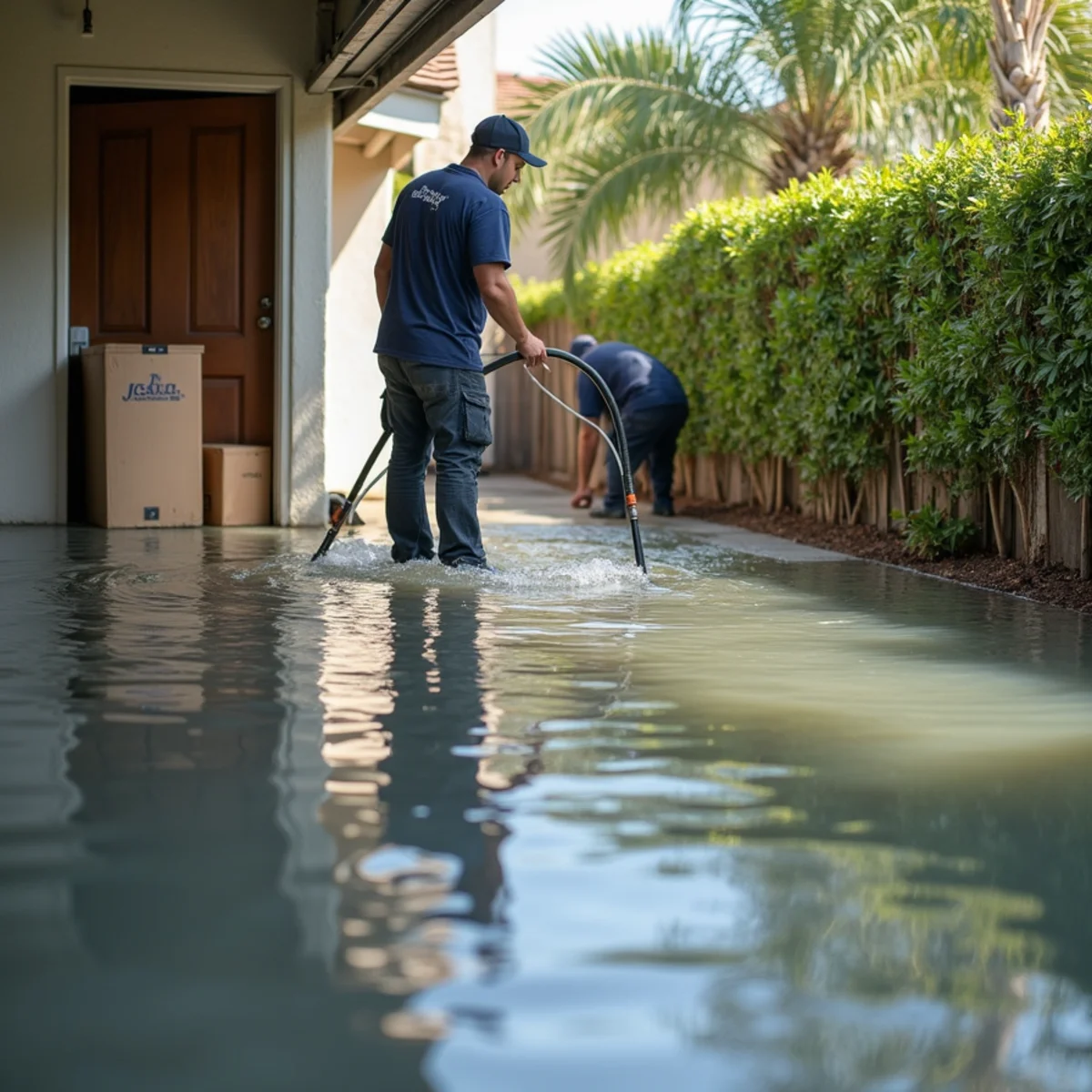
Water Heater Flooded the Garage: Emergency Steps Before Help Arrives
Forty to eighty gallons across a garage slab that often drains toward the house. Shut-down sequence, what to save, and what not to touch.
5 min read
Local Risk & Rancho Cucamonga
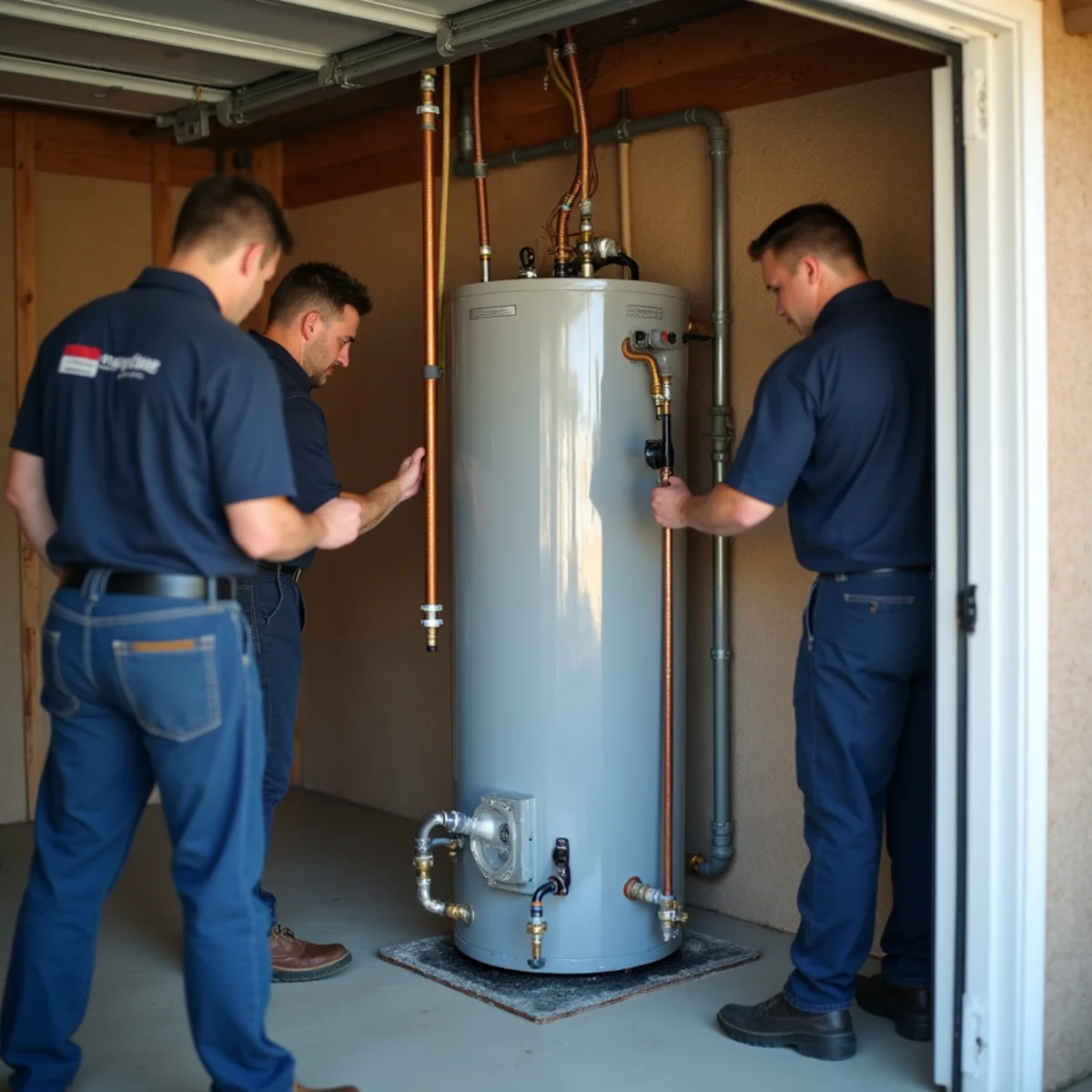
California's Water Heater Strapping Law (HSC §19211): The Earthquake Leak Risk Hiding in Your Garage
Strapping stops your tank falling over in a quake. It does nothing about the tank corroding — and people conflate the two.
5 min read
Where we work
Water Heater Leak Cleanup across the Inland Empire
Based in Rancho Cucamonga, serving the surrounding cities and neighborhoods 24/7.
Need water heater leak cleanup in Rancho Cucamonga?
Free assessment, 60-minute dispatch, and a real person on the phone at any hour.
- Documented dry standard
- Bonded & insured
- 24/7 emergency response