Free Written Estimate
Mold Remediation in Rancho Cucamonga, CA
Containment, HEPA filtration, source removal and moisture correction — remediation that fixes the cause, not just the stain.
- Documented dry standard
- Bonded & insured
- 24/7 emergency response
Mold is a symptom. It grows because something has been wet for long enough, and any remediation that doesn't find and fix that moisture source is a temporary cosmetic job.
We remediate to the IICRC S520 approach: contain the area, remove the growth and the material feeding it, filter the air, and correct the water problem underneath. Call +1 (201) 277-9344 to get an inspection scheduled.
Water actively spreading? Call now — every hour widens the damage and the bill.
+1 (201) 277-9344Do you need this service?
What tells us there's mold behind a surface
You rarely see the whole picture from the room side. These are the indicators we act on.
Visible growth on drywall, framing or the back of baseboard
Anything black, green, grey or fuzzy on a building material that has been wet. Colour does not tell you the species — or the risk.
A persistent earthy or musty odor
Microbial volatile organic compounds are produced by active growth. If a room smells like a wet basement, something in it is growing.
Symptoms that improve when you leave the house
Congestion, eye irritation, headaches or asthma flare-ups that ease at work or on vacation are worth taking seriously.
A past leak that was never dried properly
By far the most common cause we find. A leak that got 'mopped up' six months ago is the origin of most of the mold we remediate.
Staining or bubbling paint around windows and under sinks
Chronic small leaks — a slow angle stop, a failed window seal — grow mold quietly for months before anything is visible.
The 24–48 hour rule, and what it really means
Mold needs three things: moisture, an organic food source, and time. Drywall paper, carpet backing, wood and dust supply the food. Under typical indoor conditions, growth can begin within 24 to 48 hours of a material getting wet and staying wet.
That is why we treat fast drying as mold prevention rather than a separate service. A leak found and dried inside that window rarely produces growth. The same leak left over a long weekend usually does.
It also means a mold problem is always a moisture problem with a delay. When we're called to remediate, half the work is finding out what has been wet and why — a slab leak under the floor, a roof leak tracking down a wall cavity, a condensation problem, or a leak nobody ever fixed. If we clean the growth and don't solve that, you'll see it again.
How remediation is actually done
Proper remediation is a controlled process. Skipping steps is what turns a contained problem into a whole-house one.
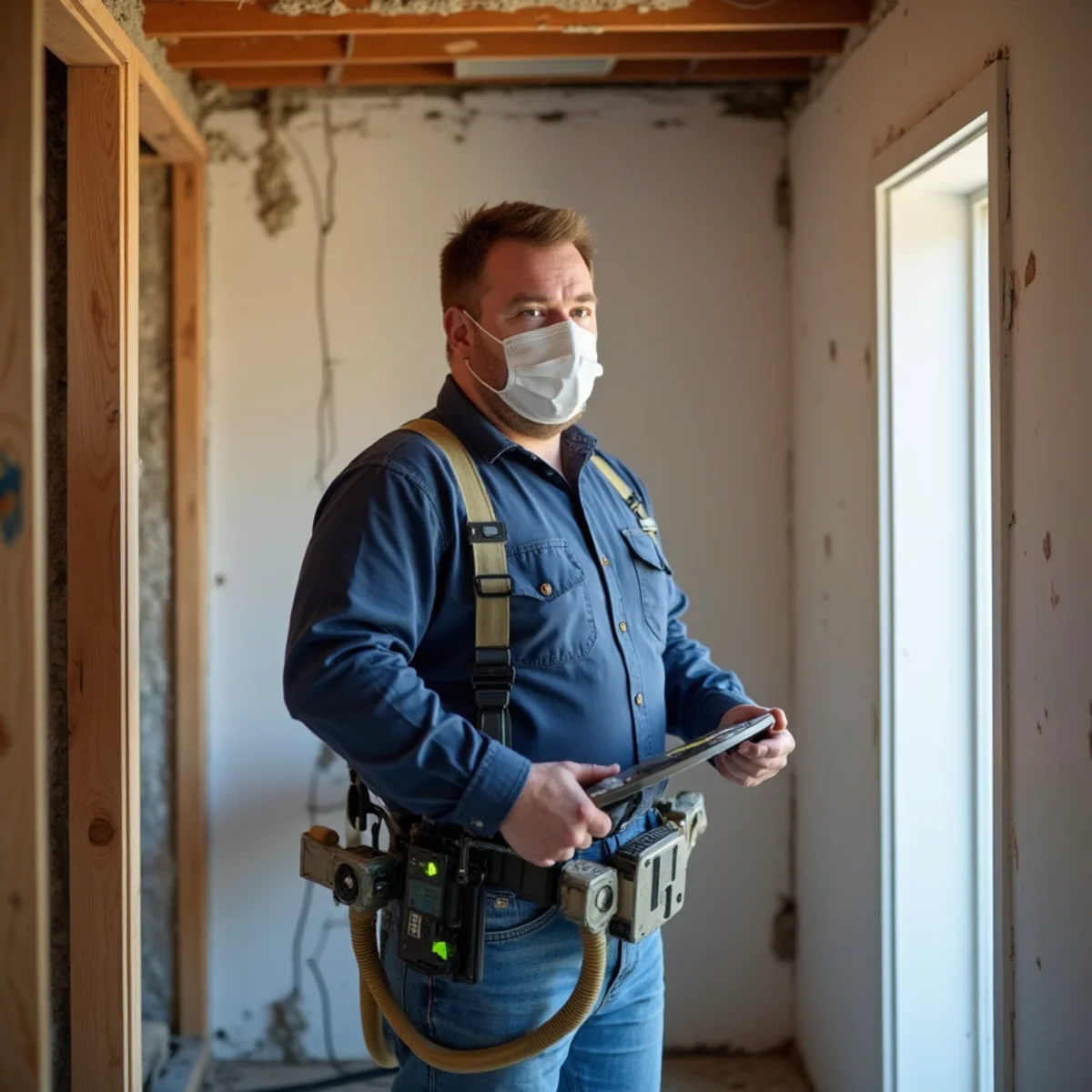
Assessment and moisture mapping. We find the extent of the growth and, critically, the water source feeding it. This includes thermal imaging and meter readings into wall cavities, under flooring and in adjacent rooms.
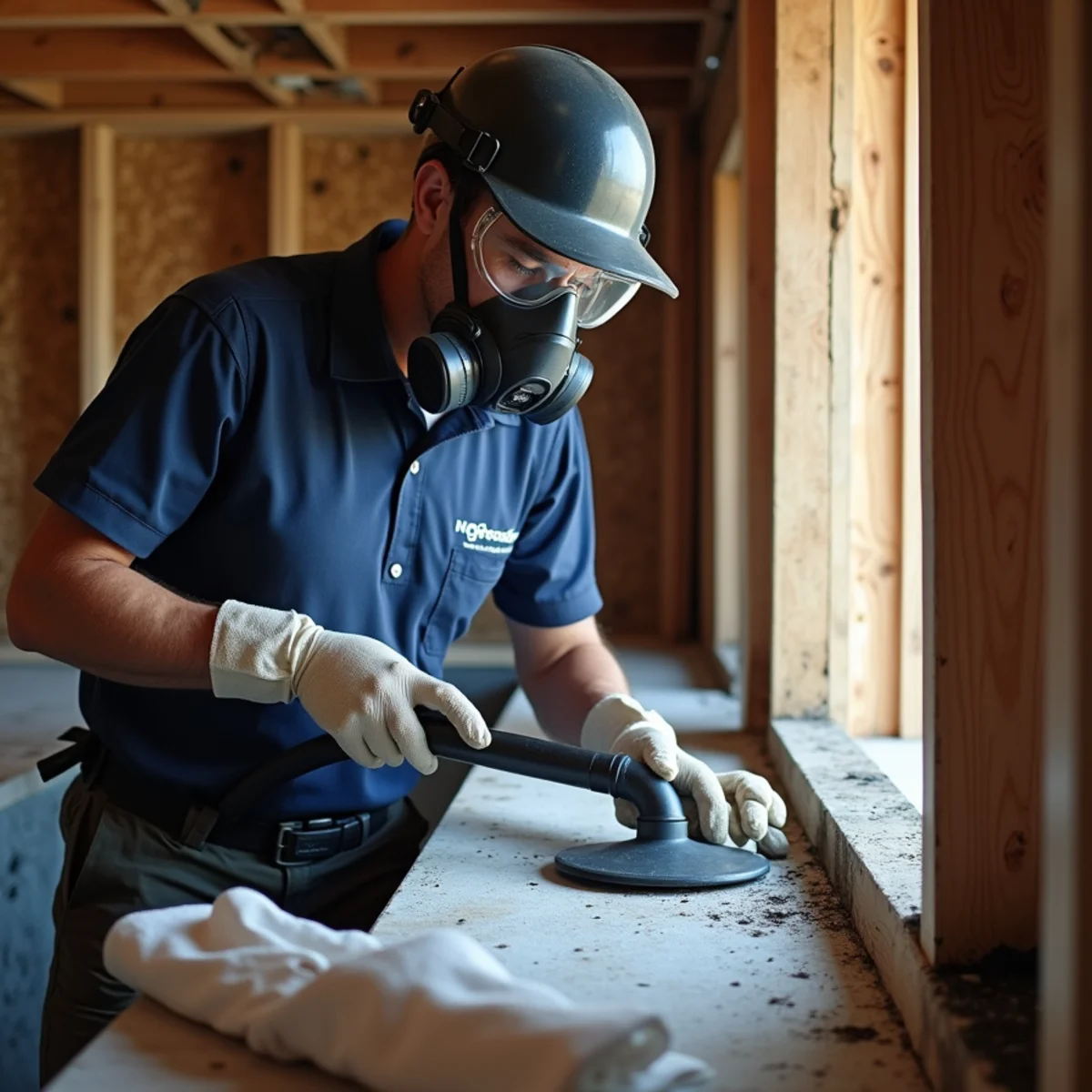
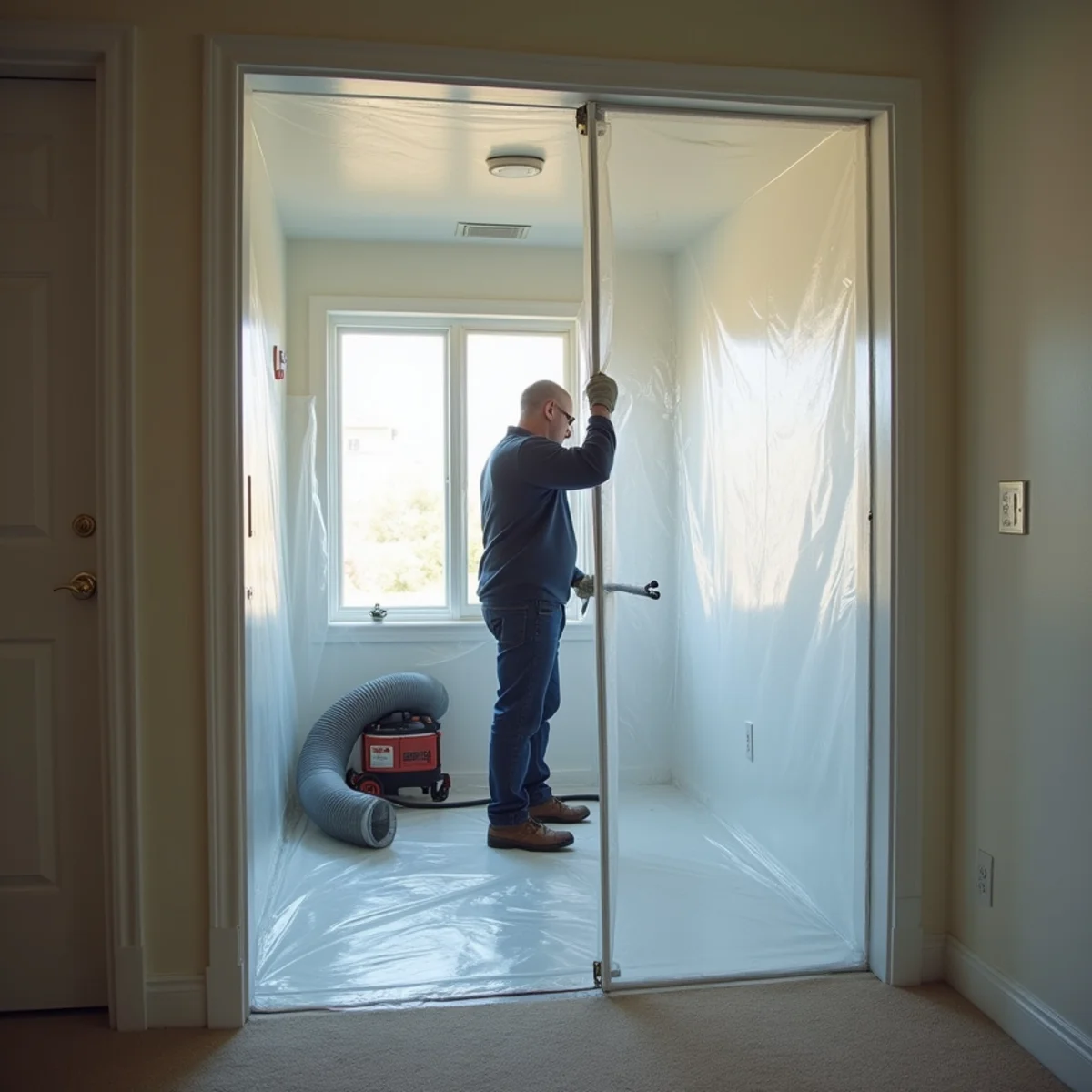
Containment. The work area is sealed with poly barriers and put under negative air pressure with HEPA filtration, so that disturbing the growth doesn't send spores through the rest of the house. This is the single step most often skipped by cheap operators, and skipping it is how a bathroom problem becomes a bedroom problem.
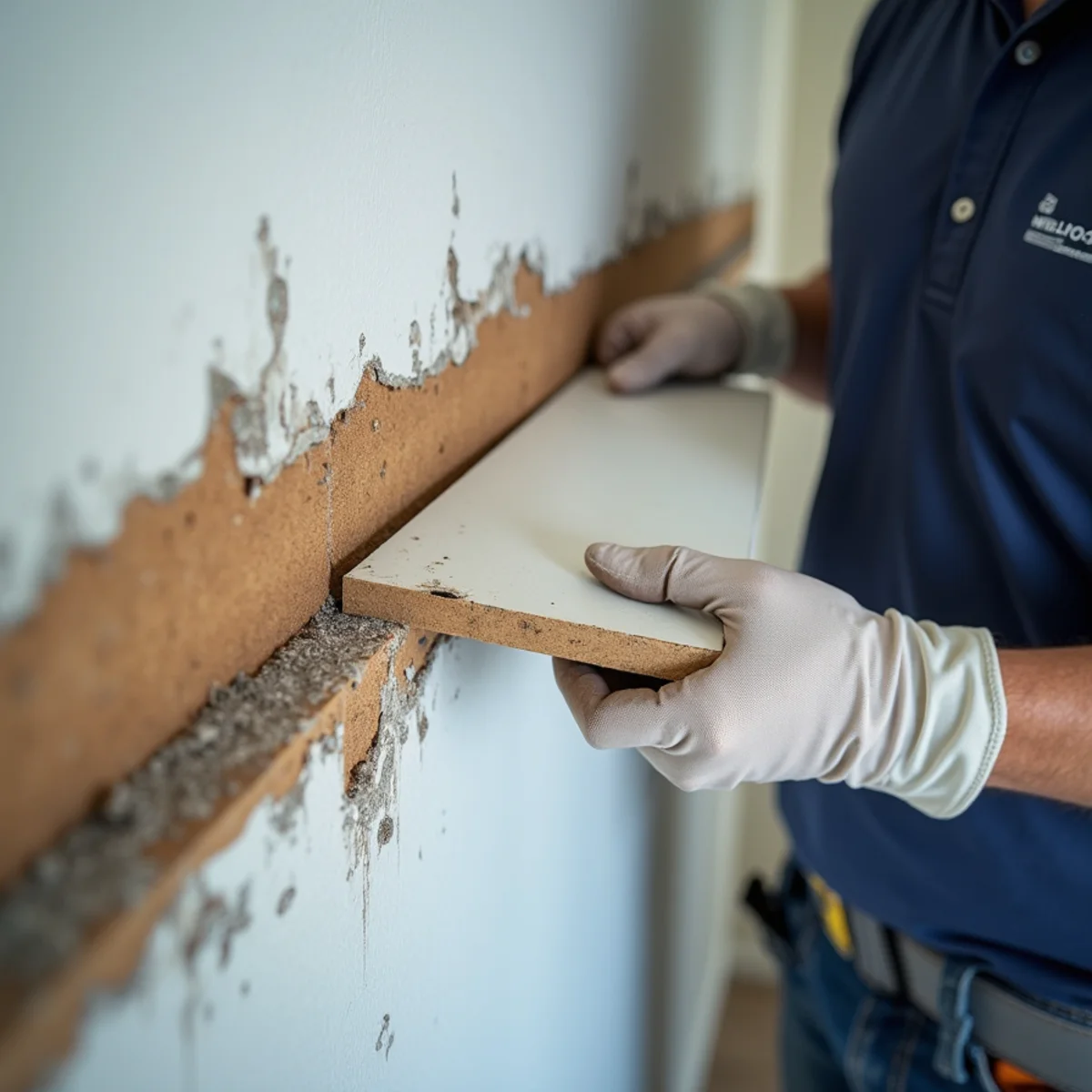
Removal. Contaminated porous materials — drywall, insulation, carpet pad, ceiling tile — are removed and bagged inside containment. Semi-porous framing is HEPA-vacuumed and cleaned rather than automatically replaced.
HEPA cleaning. All surfaces in the work area are HEPA-vacuumed and wiped. Air scrubbers keep running throughout.
Fix the moisture. Whatever was letting water in gets corrected, or we tell you exactly what trade needs to correct it before we rebuild over it.
Verification. Post-remediation verification confirms the area is visibly clean, dry and free of odor. For larger jobs or health-sensitive households, we recommend clearance testing by an independent third-party hygienist — a company that both tests and remediates has an obvious conflict of interest, and we'd rather you get a neutral result.
Rebuild. Drywall, texture, paint, trim and flooring go back.
Why Inland Empire houses get mold despite the dry climate
This surprises people. Rancho Cucamonga averages under 18 inches of rain a year and low ambient humidity, so how do homes here grow mold?
Because mold doesn't care about regional humidity. It cares about the moisture content of the material it's sitting on. The moisture sources we find most often:
- Slab leaks. The city's large stock of 1980s–90s slab-on-grade homes with in-slab copper produces steady pinhole leaks. Water wicks up through the slab into carpet pad and the base of walls, where it sits in the dark for months.
- Water heaters in garages. A slow tank weep behind a strapped heater soaks the drywall behind it long before anyone notices a puddle.
- Under-sink supply and drain leaks. Cabinet bases are particle board, which is essentially engineered to absorb water and hold it.
- AC condensate. A plugged condensate line or a wet air handler platform in a closet or attic feeds growth for entire summers.
- Roof and flashing failures after Santa Ana wind season, which track down inside walls without ever showing a ceiling stain.
Testing: when it's worth it and when it isn't
Straight answer: if you can already see growth, you generally don't need a test to tell you to remove it. Testing is most useful when you can smell or suspect mold but can't locate it, when you need to establish extent for a claim or a real estate transaction, or when you want independent clearance after remediation.
We don't sell air sampling as a routine add-on, and we'd rather refer you to an independent hygienist for clearance than test our own work. If someone quotes you a large remediation off the back of a free test they performed themselves, get a second opinion.
Further reading: how fast mold grows after a leak and black mold vs. mildew.
What a proper clearance looks like, and who should do it
The end of a remediation is a verification step, and it is the part of the process with the clearest conflict of interest in the industry.
Why independence matters. A company that both performs the remediation and certifies its own clearance is grading its own homework. We recommend an independent third-party hygienist or indoor environmental professional for post-remediation verification on every job where testing is warranted, and we are content to be checked by someone we have not hired.
What verification actually involves. A visual inspection of the contained area for remaining growth, settled dust and debris. Moisture readings confirming the assembly reached its dry standard, since remediation without correcting moisture is a repeat visit. And where the scope justifies it, air or surface sampling compared against an outdoor control and an unaffected indoor area — a spore count means nothing without something to compare it to.
When sampling is worth paying for. Where an occupant has a health concern or a physician has asked for it. Where a landlord, a buyer, an insurer or an association requires documentation. Where the affected area was large, or where growth was found in an HVAC system. On a small, obvious, well-contained job with a known cause, the money is usually better spent on the remediation itself.
What you should receive at the end. The clearance report, the final moisture readings, photographs of the contained area before rebuild, and a written statement of what was removed and what was treated. Rebuild should not start until that exists — closing a wall is exactly the wrong moment to discover the verification was never done.
Our process
How mold remediation works, step by step
Inspection and moisture source hunt
We map the growth and find what has been wetting it — the remediation plan is built around the water source, not just the stain.
Containment and negative air
Poly barriers seal the work zone and HEPA-filtered negative pressure ensures spores disturbed during removal don't travel.
Removal of affected material
Contaminated porous materials are cut out and bagged inside containment; salvageable framing is cleaned rather than replaced.
HEPA cleaning and air scrubbing
Every surface in the work area is HEPA-vacuumed and wiped, with air scrubbers running through the entire process.
Correct the moisture problem
The leak, drainage issue or condensation problem is fixed — or clearly specified for the right trade — before anything is closed up.
Verify, then rebuild
Post-remediation verification (independent clearance testing where appropriate), then drywall, texture, paint and flooring go back.
- Documented dry standard
- Bonded & insured
- 24/7 emergency response
What it costs
What moves the price on a job like this
We won't quote your property over the phone — too many variables. Here's what an honest estimate is built from.
- 1
Square footage of affected material
Remediation is priced largely by the area of contaminated material that must be contained, removed and cleaned.
- 2
Location and accessibility
Growth inside a wall cavity, in an attic, or under a crawl space costs more to reach and work in than an exposed bathroom wall.
- 3
Containment requirements
Occupied homes, HVAC involvement and multi-room spread all increase barrier construction and negative-air equipment.
- 4
The underlying moisture repair
Remediation cost is separate from fixing the cause. A slab leak repair, roof repair or drainage correction is its own line item.
- 5
Testing and clearance
Independent pre- and post-testing adds cost but is worth it for large jobs, health-sensitive households and real estate transactions.
The on-site assessment and written estimate are free. See our Rancho Cucamonga, CA cost guide for typical ranges.
Why RC Water Pros
Why Rancho Cucamonga homeowners call us for this
Five things we commit to on every job, before we ever pull into your driveway.
60-minute dispatch, from inside the city
Our crews and equipment stage off 11190 White Birch Dr in Rancho Cucamonga — not a regional hub an hour away. On mold remediation that arrival gap is the difference between drying in place and demolition.
Every job run to the published S500 standard
Every job is run to the published industry standard for water damage restoration, with a documented dry standard established from your own unaffected materials — not a technician's judgement about what feels dry.
Adjuster-ready documentation on every job
Timestamped photos, moisture maps, daily drying logs, equipment run hours and a written scope, delivered in the format carriers expect. We speak to your adjuster directly so you aren't the middleman.
Extraction through rebuild, one contract
We don't dry your property and hand you a list of subcontractors. The crew that dries it puts the drywall, texture, paint, baseboard and flooring back, under one point of contact.
Free assessment and a written estimate
Free on-site assessment and written estimate, no charge to come and look, and a straight answer about whether the job is small enough for you to handle yourself.
FAQ
Mold Remediation questions
Is black mold more dangerous than other mold?
Colour is not a reliable indicator of risk — several species are dark, and the one people mean by 'black mold' (Stachybotrys) is not the only one worth removing. The practical approach is the same regardless of species: contain it, remove the material it's growing on, fix the moisture that fed it, and verify. We don't use species identification as a scare tactic to justify a bigger scope.
Can I just spray bleach on it?
Not on porous materials. Bleach may lighten surface staining on tile or glass, but on drywall or wood it mostly adds water to the material while leaving the root structure behind — you get a clean-looking surface and continued growth underneath. And it does nothing about the leak that caused it.
Will my homeowners insurance cover mold remediation?
Sometimes, and it usually depends on the cause. Mold resulting from a covered sudden water event — a burst pipe you reported promptly — is often covered, frequently with a policy sub-limit. Mold from a long-term leak, poor maintenance or humidity is typically excluded. Many California policies cap mold coverage regardless of cause, so check your declarations page for a specific mold limit.
How long does remediation take?
A contained single-room job is often two to four days including drying and verification. Multi-room, attic or crawl-space work runs longer, and rebuild is scheduled after clearance. We'll give you a day-by-day plan before we start.
Do you do the testing yourselves?
We inspect and moisture-map as part of every assessment, and that's included. For formal clearance testing we recommend an independent third-party hygienist — a company that grades its own homework has an obvious conflict of interest, and an independent result carries more weight with insurers and buyers.
How much does clearance testing cost, and who arranges it?
It is a separate engagement with an independent hygienist and is typically a modest fraction of the remediation cost. We would rather you arranged it directly, so there is no question about whose report it is — we are happy to recommend independent professionals we have worked alongside, and we schedule our work around their availability. On an insured loss the cost is frequently recoverable as part of the claim, which is worth confirming with your adjuster early.
Related services
- Structural DryingAir movers and commercial dehumidifiers placed to a calculated load, with daily moisture readings you get to see.
- Leak DetectionThermal imaging, acoustic listening and moisture meters find the leak before we open anything up.
- Water Damage RestorationEmergency extraction, structural drying and full rebuild — one crew from the first phone call to the final walkthrough.
Further reading
How Restoration Works
How Fast Does Mold Grow After a Leak? Inside the 24–48 Hour Window
The clock that decides whether your loss is a dry-out or a demolition — and what makes it run faster in an Inland Empire house.
5 min read
Cost & Insurance
What Drives Mold Remediation Costs Up (or Down) in an Inland Empire Home
Why the same square footage can cost three times more in a crawl space than a bathroom — and the cost nobody quotes you.
5 min read
Where we work
Mold Remediation across the Inland Empire
Based in Rancho Cucamonga, serving the surrounding cities and neighborhoods 24/7.
Need mold remediation in Rancho Cucamonga?
Free assessment, 60-minute dispatch, and a real person on the phone at any hour.
- Documented dry standard
- Bonded & insured
- 24/7 emergency response