
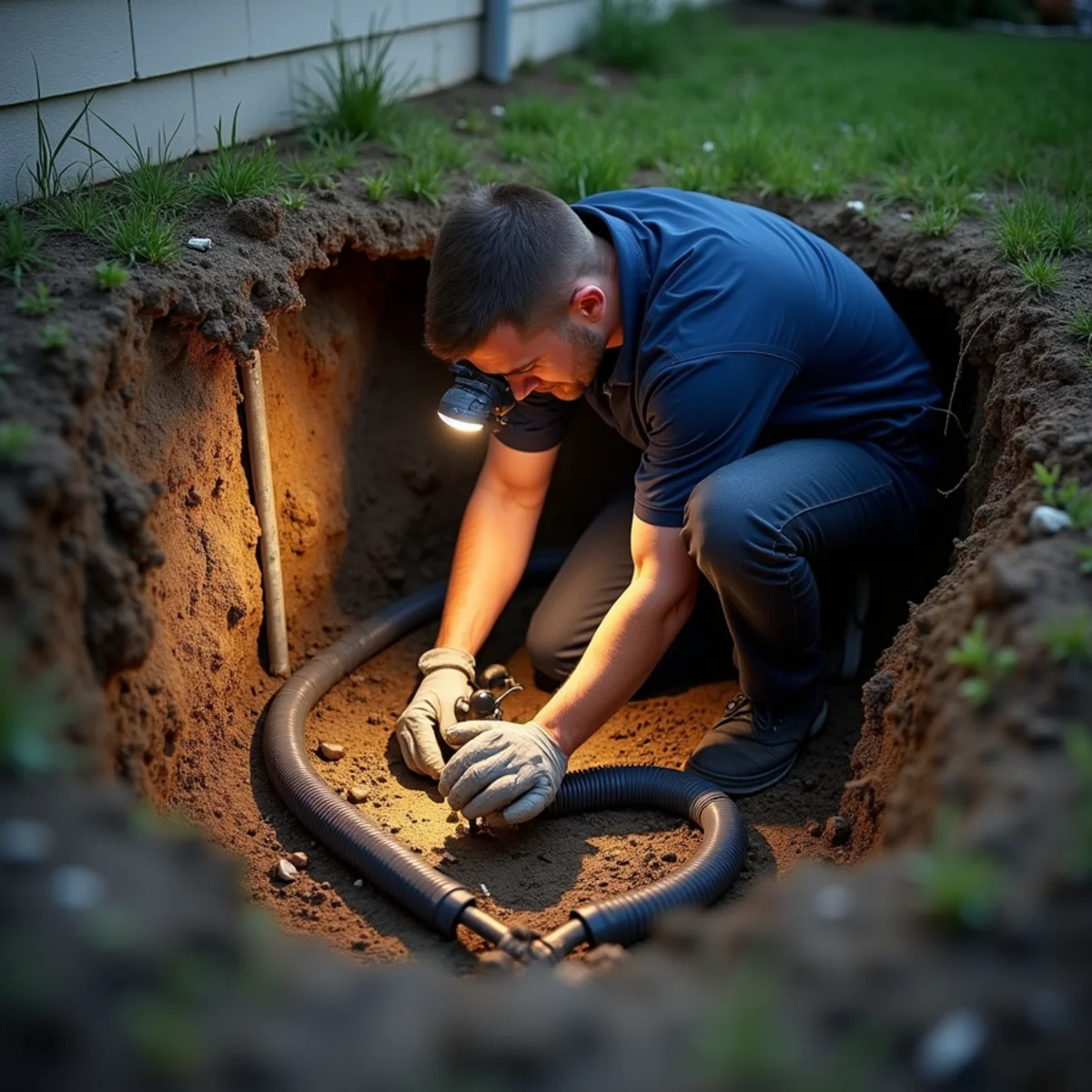
24/7 Emergency Service
Flooded Basement & Crawl Space Cleanup in Rancho Cucamonga, CA
Below-grade water is out of sight and easy to ignore — until the whole house smells. We pump, sanitize and dry it properly.
- Documented dry standard
- Bonded & insured
- 24/7 emergency response
Full basements are rare in Rancho Cucamonga — most of the city is slab-on-grade. What we do see constantly are crawl spaces and sub-areas, and they cause more lingering problems than any other part of the house, because nobody looks in them.
If you've got standing water under your floor or in a below-grade room, call +1 (201) 277-9344. This is one of the few water problems that genuinely gets worse the longer it's ignored.
Water actively spreading? Call now — every hour widens the damage and the bill.
+1 (201) 277-9344Do you need this service?
How a wet crawl space announces itself
You'll usually notice the effect upstairs long before you see the water underneath.
A musty smell that has no obvious source
Air moves upward through a house. Whatever is growing under your floor is being drawn into your living space continuously.
Floors that feel cold, cupped or soft in one area
Moisture coming up from below hits the underside of your subfloor first, so the damage starts where you can't see it.
Rising indoor humidity you can't explain
A wet sub-area evaporates into the house all day. If the AC is running constantly and the house still feels clammy, look down.
Rusting ducts, wet insulation or sagging vapor barrier
Visible from the access hatch. Fallen, wet insulation between the joists is a reliable sign the space has been flooding.
Standing water visible at the crawl space access
If it's holding water, it has probably been holding water for a while — sub-areas drain slowly or not at all.
Water in a below-grade room, garage or basement
In the older and hillside parts of the service area, partial basements and stepped-down garages do exist, and they take runoff first.
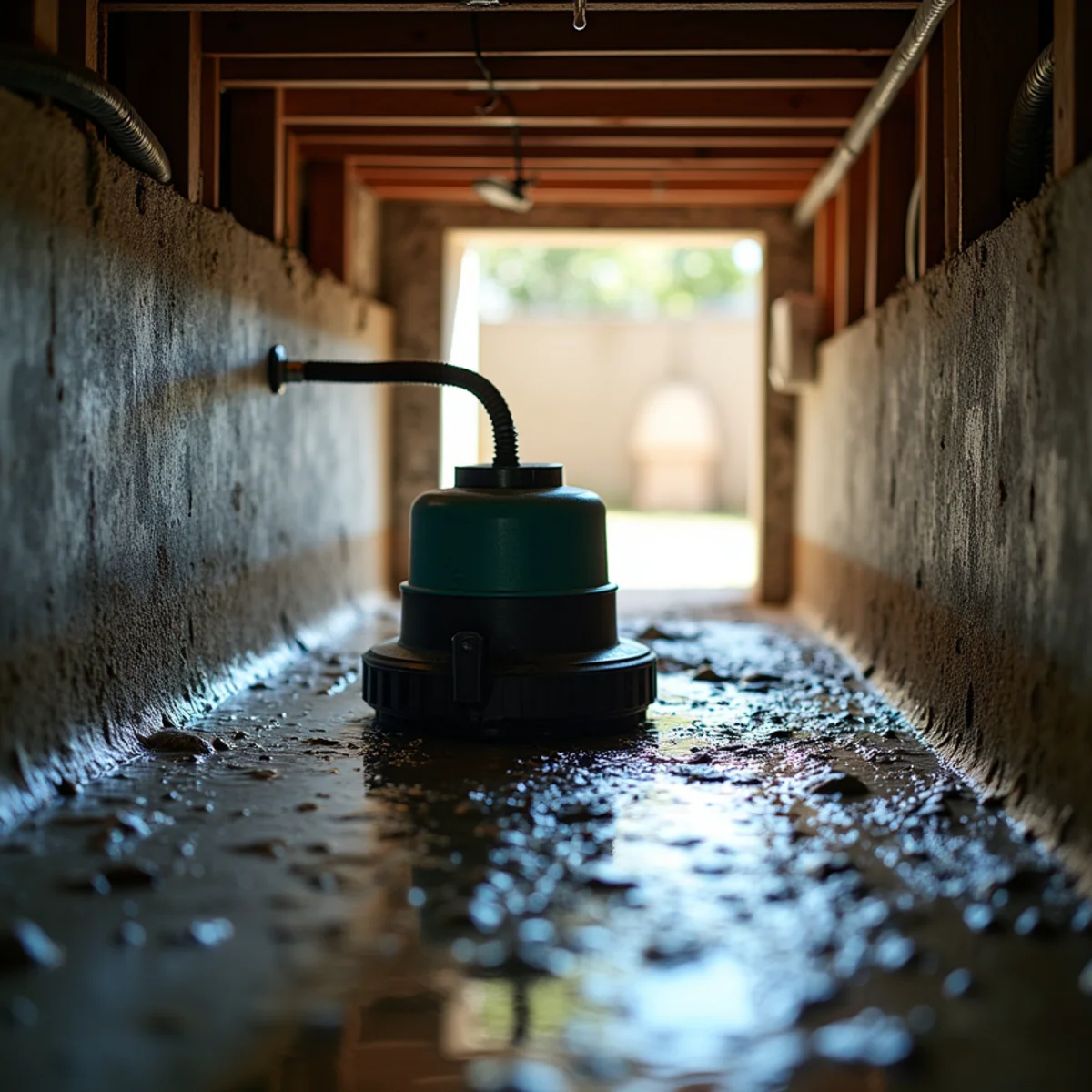
Why below-grade water is different
Three things make a wet crawl space its own problem rather than a smaller version of a flooded room.
It doesn't drain. A crawl space is a bathtub with dirt in the bottom. Water that enters has nowhere to go except into the soil and slowly into the air. Without mechanical removal it can sit for weeks.
It's the lungs of the house. Air rises. Whatever is in that space — moisture, mold spores, soil gas, odor — gets drawn upward through floor penetrations into the rooms you live in. That's why a crawl space problem presents as a whole-house smell.
Nobody checks it. Most homeowners have never been in theirs. We routinely find damage that has been developing for years: rotted joists, sagging insulation, collapsed ducting, and a soil surface that hasn't been dry since the last wet winter.
What puts water down there in the first place
Storm runoff and grading. Rancho Cucamonga sits on an alluvial fan at the base of the San Gabriels, and its rainfall — around 17.7 inches a year — arrives concentrated between November and March, often in bursts. When the ground around your house slopes toward the structure, or when downspouts discharge next to the foundation instead of away from it, that water finds the crawl space.
Foothill runoff. Homes in the upper neighborhoods — North Etiwanda, Deer Creek, Haven View Estates — sit below open slope and the county's debris-basin system. Heavy events bring water and silt down fast.
Plumbing failures. A supply line or drain leak in the sub-area can run for months undetected, because there's no ceiling to stain and no floor to puddle on.
Irrigation. Broken sprinkler lines and over-watered planters against the foundation are a leading cause we find on larger lots in Alta Loma and San Antonio Heights.
Hillside drainage. Sloped lots in Chino Hills, Grand Terrace and North Upland can push subsurface water laterally into a foundation during a wet winter.
Our scope below the floor
Pump out. Standing water is removed with submersible pumps and extraction, including silt and debris.
Remove what's ruined. Saturated batt insulation between the joists comes out — once wet, it never recovers its R-value and it holds moisture against the wood indefinitely. Torn or buried vapor barrier is removed.
Clean and treat. Exposed soil and structural wood are cleaned and treated with an appropriate antimicrobial. If the water was contaminated, this becomes a Category 3 scope — see sewage cleanup.
Dry the space properly. Dedicated dehumidification and directed airflow, monitored with readings taken from the joists and subfloor rather than the air. A crawl space that reads dry in the air can still have 20%+ moisture content in the wood.
Reinstall. New vapor barrier and, where appropriate, new insulation.
Fix why it happened. This is the part that matters. We'll identify what's letting water in — grading, downspouts, a failed sump, missing vents, irrigation — and tell you exactly what needs to change. Drying a crawl space without correcting the cause just books next winter's job.
What insurance typically says
Coverage tends to hinge on the source, and below-grade water is the area where homeowners are most often surprised.
Groundwater and surface water intrusion is generally excluded from a standard California homeowners policy — that's the flood insurance category. Sudden plumbing failures under the house are usually covered, same as anywhere else in the home. Sump pump failure is often excluded unless you carry a water backup and sump overflow endorsement.
Because the cause determines everything, we photograph the entry point and the water line before pumping. If it turns out to be a supply line rather than runoff, that evidence is the claim.
Related: gutters, downspouts and yard drainage checklist and winter storm prep for Inland Empire homes.
The vapor barrier and the ground beneath it
The part of a crawl space job that gets skipped is the ground, and it is why some crawl spaces never really dry.
A crawl space over bare or poorly covered soil is in continuous exchange with the moisture in that soil. On a normal day that is a slow background load the ventilation can cope with. After an intrusion it is not — the soil is saturated, it releases moisture into the space for weeks, and equipment aimed only at the framing is fighting a source that keeps refilling.
What a proper vapor barrier does. Heavy polyethylene laid across the entire soil surface, lapped at the seams and run up the stem walls, separates the space from the ground. Where one already exists and has been flooded, it has water sitting on top of it and contamination underneath it, and it usually has to come up and be replaced rather than dried in place.
What we check while we are down there. Whether the insulation between the joists is saturated and sagging — batt insulation holds water against the subfloor for a very long time and is normally a loss. Whether the ducting has taken water, because a wet duct distributes the problem to every room above. Whether there is standing water in low spots that the grade will not drain. And whether the sub-area vents are blocked, which is common after landscaping work.
Why it matters upstairs. Everything in a crawl space is directly beneath your floor. A space that stays damp shows up months later as cupped hardwood, a musty smell in the rooms above, and growth on the underside of the subfloor — long after everyone considered the job finished.
Our process
How basement & crawl space works, step by step
Access and safety assessment
Confined space entry, standing water near electrical, and structural condition are checked before anyone goes under the house.
Document the source
Entry point, water line and affected structure are photographed before pumping — this is what determines coverage.
Pump and extract
Submersible pumps and extraction clear standing water, silt and debris from the sub-area.
Remove wet insulation and barrier
Saturated batt insulation and damaged vapor barrier are removed and bagged — they never recover once soaked.
Clean, treat and dry
Soil and framing are cleaned and treated, then dried with dedicated equipment and monitored by wood moisture readings.
Reinstall and correct the cause
New vapor barrier and insulation go back, with a written list of the grading, drainage or plumbing fixes needed to keep it dry.
- Documented dry standard
- Bonded & insured
- 24/7 emergency response
What it costs
What moves the price on a job like this
We won't quote your property over the phone — too many variables. Here's what an honest estimate is built from.
- 1
Volume and depth of water
Pump time, disposal and silt removal scale directly with how much came in and how long it sat.
- 2
Height and accessibility
An 18-inch crawl space with a single access hatch takes far longer to work than a stand-up sub-area or a walk-in basement.
- 3
Insulation and vapor barrier replacement
Square footage of soaked batt insulation and torn barrier is one of the largest material line items on these jobs.
- 4
Contamination
Sewage or surface floodwater under the house changes the protocol entirely — PPE, containment and regulated disposal.
- 5
Structural repairs
Long-term wet crawl spaces sometimes reveal rot in joists, sill plates or subfloor. That's carpentry, quoted separately.
The on-site assessment and written estimate are free. See our Rancho Cucamonga, CA cost guide for typical ranges.
Why RC Water Pros
Why Rancho Cucamonga homeowners call us for this
Five things we commit to on every job, before we ever pull into your driveway.
60-minute dispatch, from inside the city
Our crews and equipment stage off 11190 White Birch Dr in Rancho Cucamonga — not a regional hub an hour away. On basement & crawl space that arrival gap is the difference between drying in place and demolition.
Every job run to the published S500 standard
Every job is run to the published industry standard for water damage restoration, with a documented dry standard established from your own unaffected materials — not a technician's judgement about what feels dry.
Adjuster-ready documentation on every job
Timestamped photos, moisture maps, daily drying logs, equipment run hours and a written scope, delivered in the format carriers expect. We speak to your adjuster directly so you aren't the middleman.
Extraction through rebuild, one contract
We don't dry your property and hand you a list of subcontractors. The crew that dries it puts the drywall, texture, paint, baseboard and flooring back, under one point of contact.
Free assessment and a written estimate
Free on-site assessment and written estimate, no charge to come and look, and a straight answer about whether the job is small enough for you to handle yourself.
FAQ
Basement & Crawl Space questions
Do houses in Rancho Cucamonga even have basements?
Very few — the vast majority of the city is slab-on-grade or raised foundation with a crawl space. Below-grade rooms and partial basements do exist in the older and hillside parts of the service area, and stepped-down garages are common. Most of our below-grade work is crawl spaces and sub-areas.
Can I just let a crawl space dry out on its own?
Usually not. A sub-area has almost no ventilation and no drainage, so standing water evaporates into the house rather than out of it — and wet insulation holds moisture against your floor framing for months. Left alone, it's the most common cause of a persistent musty smell in an otherwise clean house.
How do I know if my crawl space has water in it if I've never been down there?
The reliable proxies are a musty smell with no source, indoor humidity that doesn't respond to the AC, cold or cupping floors in one area, and visible sagging insulation at the access hatch. If any of those apply, it's worth an inspection — we can look and tell you in one visit.
Will you fix the drainage that caused it?
We identify it and specify exactly what needs to change — grading, downspout extensions, a French drain, sump installation, vent corrections. Restoration and drying we handle directly; significant exterior drainage work is done by a landscape or drainage contractor, and we'll coordinate so the fix happens before the next rainy season.
Is a wet crawl space actually dangerous, or just unpleasant?
It's a genuine building problem, not just a smell. Air moves upward through a house, so whatever is growing under your floor is drawn continuously into the rooms you live in — which is why a crawl space issue usually presents as a whole-house musty smell. Sustained moisture also rots joists, sill plates and subfloor, rusts ducting, and destroys insulation's R-value. Left alone it gets structurally expensive, not just uncomfortable.
Should we encapsulate the crawl space while it is open?
It is worth pricing at that moment, because access and clearing are most of the cost and the space is already stripped. Encapsulation — a sealed liner across the soil and up the walls, usually with conditioned or dehumidified air — genuinely changes the moisture behaviour of a house on damp ground. Whether it is the right spend depends on your soil, your drainage and how the space performed before, and we would rather tell you what we found down there than sell you a system you may not need.
Related services
- Flood CleanupStorm and runoff flooding brings contaminated water. We pump, strip, sanitize and dry — then document it for your carrier.
- Structural DryingAir movers and commercial dehumidifiers placed to a calculated load, with daily moisture readings you get to see.
- Mold RemediationContainment, HEPA filtration, source removal and moisture correction — remediation that fixes the cause, not just the stain.
Further reading
Prevention & Maintenance
Gutters, Downspouts, and Yard Drainage: A Pre-Rainy-Season Checklist for Foothill Homes
Hillside water has momentum and a direction. Here's how to make sure yours goes somewhere other than your foundation.
5 min read

Prevention & Maintenance
Winter Storm Prep Checklist for Inland Empire Homes (Do These Before the November Rains)
Gutters, grading, drains, roof, thresholds and sandbags. The whole list, in the order that matters.
5 min read
Where we work
Basement & Crawl Space across the Inland Empire
Based in Rancho Cucamonga, serving the surrounding cities and neighborhoods 24/7.
Need basement & crawl space in Rancho Cucamonga?
Free assessment, 60-minute dispatch, and a real person on the phone at any hour.
- Documented dry standard
- Bonded & insured
- 24/7 emergency response