Free Written Estimate
Leak Detection Services in Rancho Cucamonga, CA
Thermal imaging, acoustic listening and moisture meters find the leak before we open anything up.
- Documented dry standard
- Bonded & insured
- 24/7 emergency response
The cheapest leak is the one found early. The expensive one is the leak that ran behind a wall for three months and turned into a rebuild plus mold remediation.
We locate leaks without demolishing your house first — thermal imaging, acoustic equipment and moisture mapping tell us where to open, so you get one patchable hole instead of an exploratory wall. Call +1 (201) 277-9344.
Water actively spreading? Call now — every hour widens the damage and the bill.
+1 (201) 277-9344Do you need this service?
Symptoms of a leak you can't see
Hidden leaks announce themselves indirectly. Any one of these is worth a call.
Your water bill jumped with no change in usage
The most reliable early indicator there is. A running slab leak can add thousands of gallons a month before anything shows on the floor.
A warm spot on the floor
Classic hot-side slab leak. Hot water escaping under the concrete heats the slab above it — often noticed barefoot in a hallway.
You hear running water when everything is off
Turn off every fixture, stand still, and listen. A faint hiss or trickle in the walls or floor means pressurised water is escaping somewhere.
The water meter dial moves with all fixtures off
Shut everything down and watch the leak indicator on your meter. Movement means water is leaving the system.
Damp patches, staining or a musty smell in one spot
Localised discoloration on drywall, a soft baseboard, or an area of carpet that never quite dries out.
A wet or unusually green patch in the yard
A service line or irrigation main leak. Grass over a leak grows greener and faster than everything around it.
How we find leaks without tearing your house apart
There are three main tools, and the skill is in knowing which combination the situation calls for.
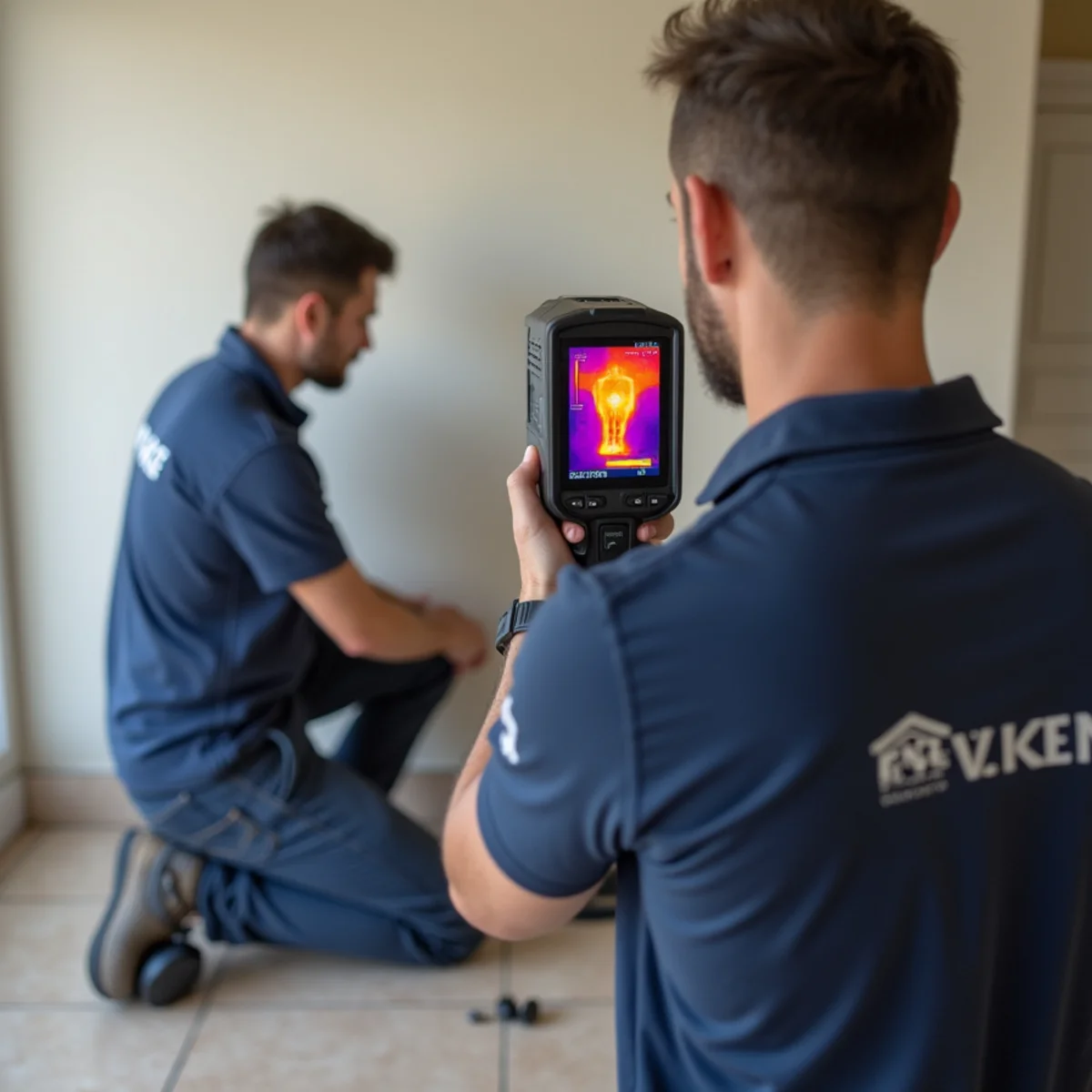
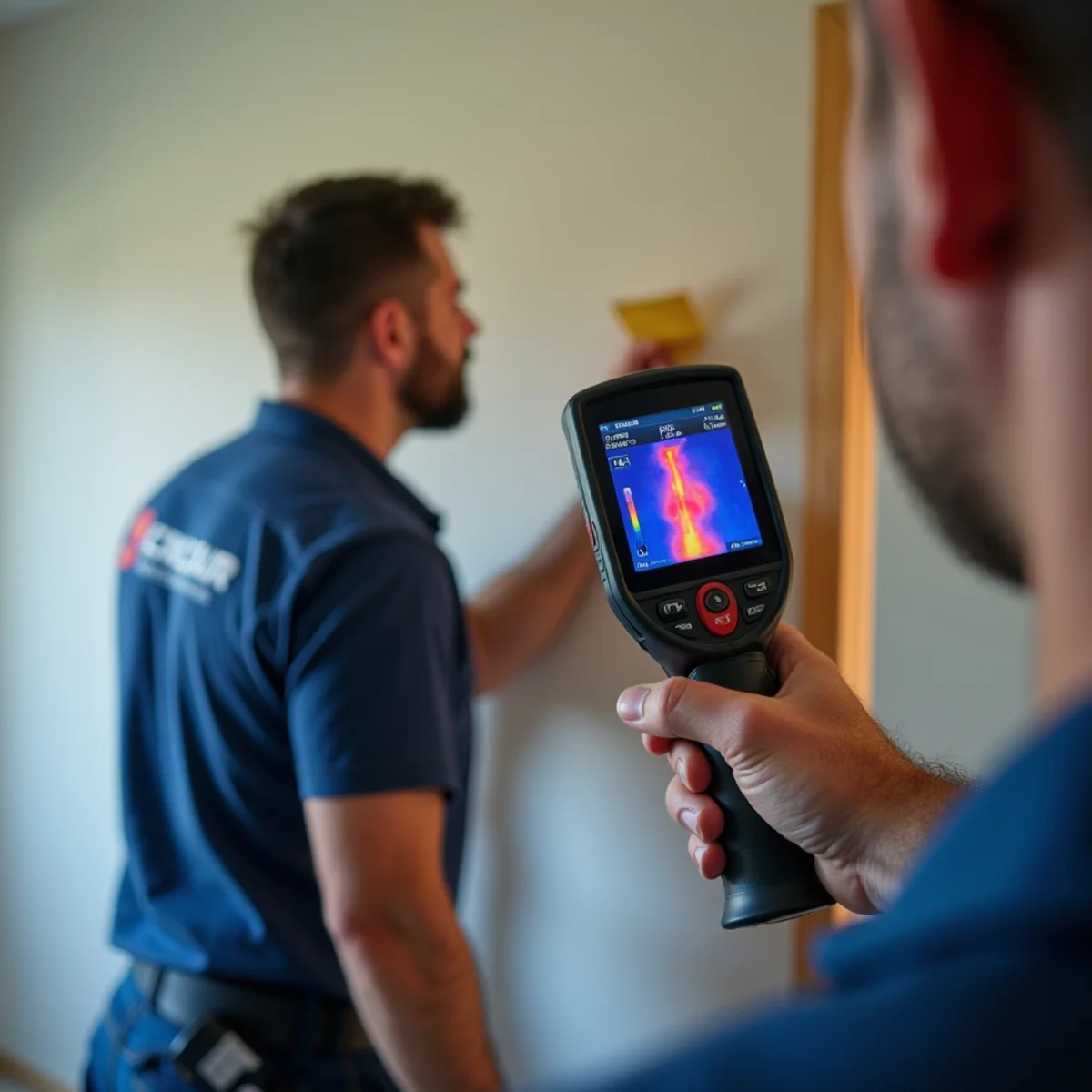
Thermal imaging. An infrared camera reads surface temperature differences. Escaping hot water produces a warm signature through a slab or wall; evaporative cooling from a cold-water leak produces a cool one. It doesn't see water — it sees temperature — which is why it's a targeting tool rather than a verdict.
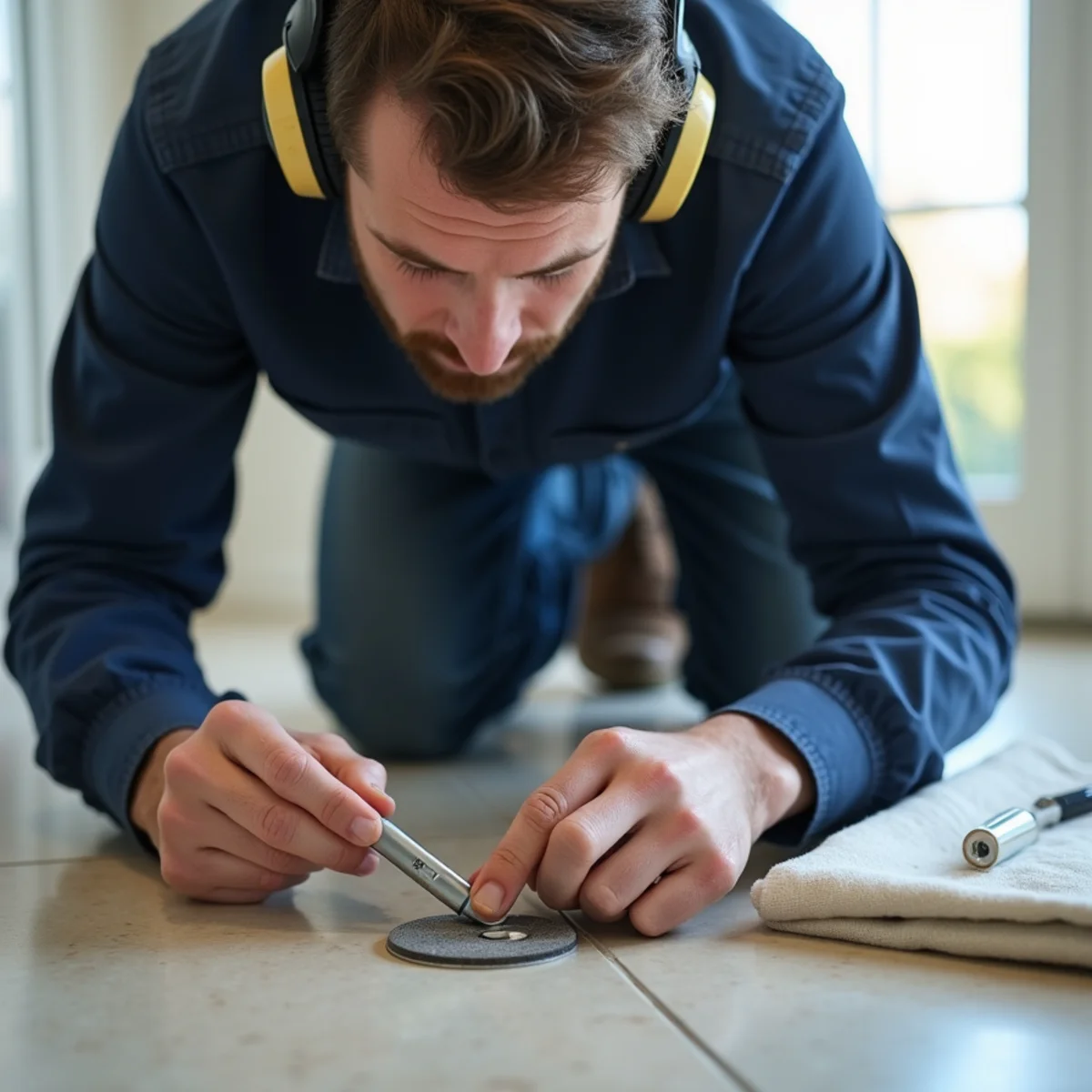
Acoustic listening. Pressurised water escaping through a small breach makes a specific sound. Ground microphones and amplified listening equipment let a trained operator trace that sound to a point, which is how in-slab and buried line leaks get pinpointed.
Moisture meters. Pin and pinless meters give the actual moisture content of a material. This is what confirms the extent of what's wet and, later, what proves it got dry.
Pressure testing and isolation. Isolating sections of the system and watching for pressure loss tells us which line is failing — supply versus drain, hot versus cold — before anyone opens a wall.
Used together, these narrow a leak from "somewhere in the house" to a specific area, so the access opening is small, planned and patchable.
The Rancho Cucamonga leak profile
Where we find leaks in this city follows the housing stock closely.
In-slab copper. Roughly two-thirds of Rancho Cucamonga's owner-occupied housing was built between 1980 and 1999, largely slab-on-grade with copper supply lines routed through or under the slab. That copper is now decades old and living in aggressive water. Pinhole failures on the hot side are the single most common serious leak we find. Neighborhoods like Rochester, Terra Vista and Windrows sit squarely in this window.
Hard water damage. Inland Empire water is hard, and hard water is unkind to copper, water heater tanks, angle stops and flex connectors. Mineral buildup and internal pitting shorten the life of every component it passes through.
Aging galvanized in the older cities. Downtown Upland, Downtown Ontario, Pomona and Historic Cucamonga hold pre-1960 homes where original galvanized steel has been corroding from the inside for decades. Those fail as pinholes first and splits later.
Irrigation and service lines. Large lots, mature landscaping and long service runs mean yard leaks that never show up inside the house — just on the bill.
What happens after we find it
Finding a leak is diagnosis, not the cure. Here's how we handle the handoff.
We coordinate the repair. We are a restoration company, not a plumbing contractor, and we'd rather be honest about that than pretend otherwise. We work with licensed plumbers routinely, and we'll coordinate access, sequencing and scheduling so you aren't project-managing two trades in the middle of a mess.
We handle everything the water damaged. That is our lane, and it starts the moment the leak is stopped: extraction, structural drying, removing anything that's beyond drying, remediating growth if there is any, and rebuilding the finishes.
We document for your claim. This matters more with hidden leaks than almost any other loss type, because carriers scrutinise them hardest. In California, sudden and accidental discharge is generally covered; gradual seepage generally isn't. Establishing when the failure occurred, and showing you acted promptly once it was discoverable, is what a well-documented file does for you. Note that many policies cover the resulting water damage but exclude the cost of the pipe repair itself — worth knowing before you're surprised by it.
What detection can and cannot tell you
Worth being straight about the limits, because they shape what a realistic appointment achieves.
What locates reliably. A hot-side slab leak under pressure is the easiest category — it produces both an acoustic signature and a thermal one, and those two methods cross-check each other. Supply leaks inside walls, under cabinets and beneath tile or hardwood locate well for the same reason. A pressurised system that is losing water will almost always give itself away to the right instrument.
What is harder. A cold-side leak with very low flow makes little noise and no heat, so there is nothing for either primary method to find. Dense flooring over a deep slab attenuates the signal further. In those cases the sequence moves to pressure isolation — closing off sections to establish which line is losing — and on difficult locates, charging the line with a tracer gas that permeates up through the floor.
What detection does not cover. Drain-side leaks are not pressurised, so they only leak when something is running, and finding them means a camera survey of the line rather than acoustic work. Intermittent leaks that depend on a specific fixture running, and leaks that have already stopped because a valve seized closed, may not present at all on the day.
What you get either way. A written finding: what we tested, what we ruled out, and either a marked location or a clear statement of what remains unresolved and what the next step would be. We would rather hand over an honest partial result than an expensive guess that sends a plumber to the wrong part of the floor.
Read more: signs of a hidden water leak and how pros find slab leaks.
Our process
How leak detection works, step by step
Meter and isolation check
We verify a leak actually exists and narrow it to supply, drain or irrigation before hunting for a location.
Thermal survey
Infrared imaging across floors, walls and ceilings identifies temperature anomalies that point to escaping water.
Acoustic pinpointing
Ground microphones and amplified listening trace pressurised leaks to a specific point through slab, wall or soil.
Moisture mapping
Meters establish exactly how far the water has already travelled through building materials — the real scope of the damage.
Minimal access
One small, planned opening at the located point instead of exploratory demolition across a room.
Repair coordination and restoration
We line up a licensed plumber for the repair, then handle drying, remediation and rebuild of everything the water touched.
- Documented dry standard
- Bonded & insured
- 24/7 emergency response
What it costs
What moves the price on a job like this
We won't quote your property over the phone — too many variables. Here's what an honest estimate is built from.
- 1
Type of leak
A supply line inside an accessible wall is a fast locate. An in-slab or buried yard-line leak takes more equipment and more time.
- 2
Size of the search area
If you can point to one room, the job is short. 'Somewhere in a 3,000 sq ft single story' means a full survey.
- 3
Access
Furniture, fixed cabinetry, tile flooring and finished ceilings all add time to reach the point of interest.
- 4
Whether damage already exists
Detection alone is one cost. If water has been running long enough to wet materials, drying and repair become their own scope.
- 5
Repair path
Spot repair, rerouting a line overhead, or a partial repipe are decisions made with your plumber — and the cost gap between them is large.
The on-site assessment and written estimate are free. See our Rancho Cucamonga, CA cost guide for typical ranges.
Why RC Water Pros
Why Rancho Cucamonga homeowners call us for this
Five things we commit to on every job, before we ever pull into your driveway.
60-minute dispatch, from inside the city
Our crews and equipment stage off 11190 White Birch Dr in Rancho Cucamonga — not a regional hub an hour away. On leak detection that arrival gap is the difference between drying in place and demolition.
Every job run to the published S500 standard
Every job is run to the published industry standard for water damage restoration, with a documented dry standard established from your own unaffected materials — not a technician's judgement about what feels dry.
Adjuster-ready documentation on every job
Timestamped photos, moisture maps, daily drying logs, equipment run hours and a written scope, delivered in the format carriers expect. We speak to your adjuster directly so you aren't the middleman.
Extraction through rebuild, one contract
We don't dry your property and hand you a list of subcontractors. The crew that dries it puts the drywall, texture, paint, baseboard and flooring back, under one point of contact.
Free assessment and a written estimate
Free on-site assessment and written estimate, no charge to come and look, and a straight answer about whether the job is small enough for you to handle yourself.
FAQ
Leak Detection questions
How do I know if I have a slab leak?
The strongest signs are a warm spot on the floor, the sound of running water with everything shut off, an unexplained jump in your water bill, and a water meter that keeps moving after you close every fixture. Any two of those together and it's worth having it located before it surfaces through your flooring.
Do you have to break the concrete to find it?
No. Locating is non-invasive — thermal imaging, acoustic listening and pressure isolation. Concrete only gets opened at the pinpointed location if a spot repair is the chosen path, and sometimes the better answer is rerouting the line overhead instead of opening the slab at all.
Does insurance cover leak detection?
Many California policies cover the cost of accessing and locating the leak plus the resulting water damage, while excluding the repair of the failed pipe itself. Coverage also hinges on whether the failure was sudden rather than long-term seepage. We document the discovery timeline carefully because that's what the determination turns on.
Can you fix the leak too?
We handle the detection and all the restoration — extraction, drying, mold work and rebuild. The pipe repair itself is done by a licensed plumbing contractor, and we coordinate that so you aren't scheduling two trades around each other.
Can you find a leak under tile or hardwood without lifting it?
Usually yes. Acoustic listening works through tile, stone and hardwood — it's tracing the sound of escaping pressurised water rather than looking at the surface. Dense flooring and a very small leak can make it harder, which is when we isolate the system by pressure and, on difficult locates, charge the line with tracer gas that permeates up through the floor. The point of all of it is to avoid lifting an expensive floor to go looking.
How long does a detection appointment take?
Most run one to two hours. That covers the meter and isolation checks, a thermal survey of the suspect area, acoustic pinpointing and moisture mapping to establish how far any damage has already spread. Difficult locates — a low-flow cold-side leak, or a large search area on a big single-story home — can take longer, and we will tell you at the point it becomes clear rather than at the end.
Related services
- Slab Leak DamageThe most common serious leak in Rancho Cucamonga's 1980s–90s tract homes. Detection, drying and full restoration.
- Water Damage RestorationEmergency extraction, structural drying and full rebuild — one crew from the first phone call to the final walkthrough.
- Mold RemediationContainment, HEPA filtration, source removal and moisture correction — remediation that fixes the cause, not just the stain.
Further reading
How Restoration Works
Hidden Leak Symptoms: Warm Floor Spots, High Water Bills, and the Sound of Running Water
Hidden leaks announce themselves indirectly. Here are the signals worth acting on, and the meter test that settles it.
5 min read
How Restoration Works
How Pros Find Slab Leaks Without Tearing Up Your Whole Floor
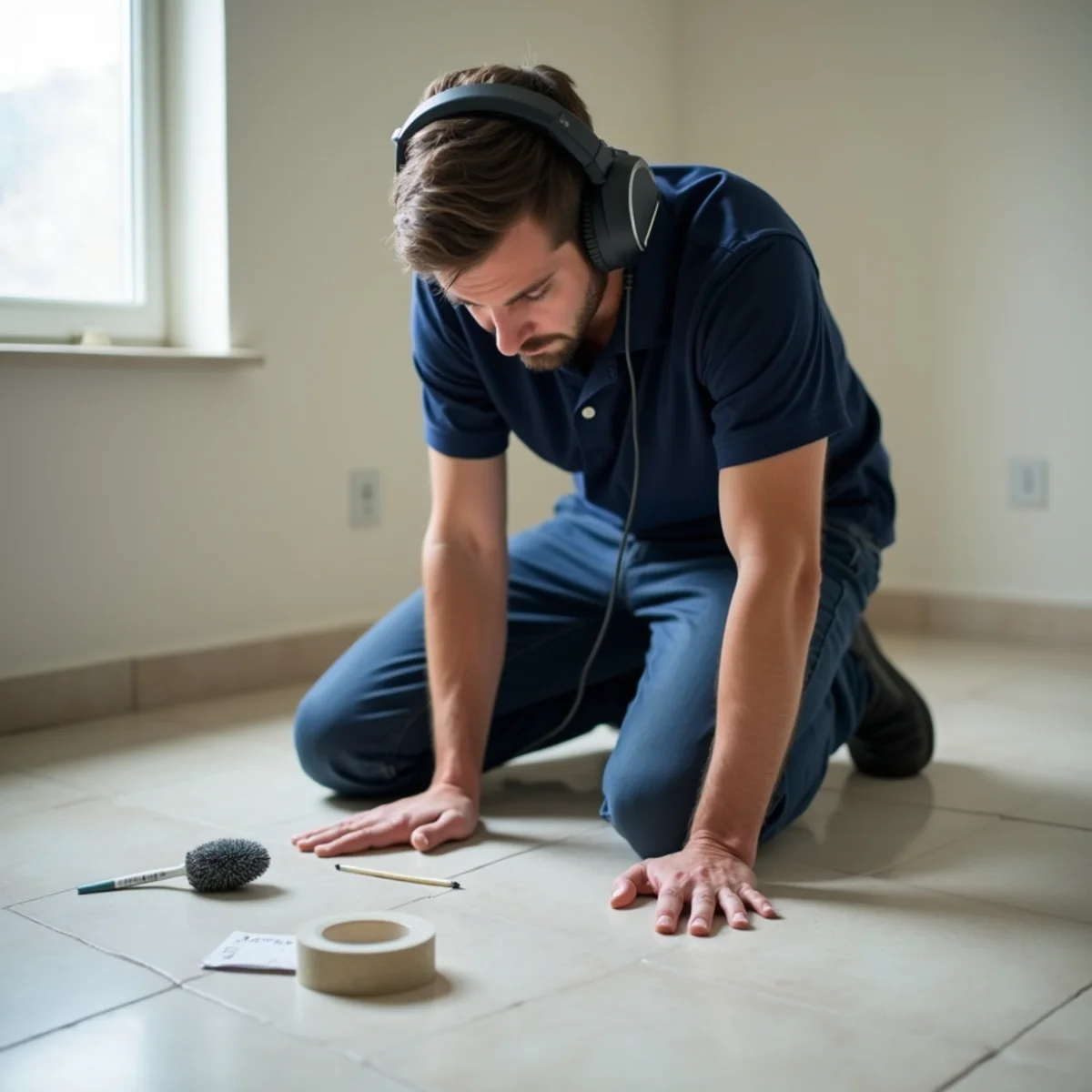
Four techniques that turn 'somewhere under the west half of the house' into a marked spot on your floor.
5 min read
Where we work
Leak Detection across the Inland Empire
Based in Rancho Cucamonga, serving the surrounding cities and neighborhoods 24/7.
Need leak detection in Rancho Cucamonga?
Free assessment, 60-minute dispatch, and a real person on the phone at any hour.
- Documented dry standard
- Bonded & insured
- 24/7 emergency response