
How Restoration Works
How Pros Find Slab Leaks Without Tearing Up Your Whole Floor
Dealing with this right now? We answer 24/7 and dispatch across Rancho Cucamonga in 60 minutes.
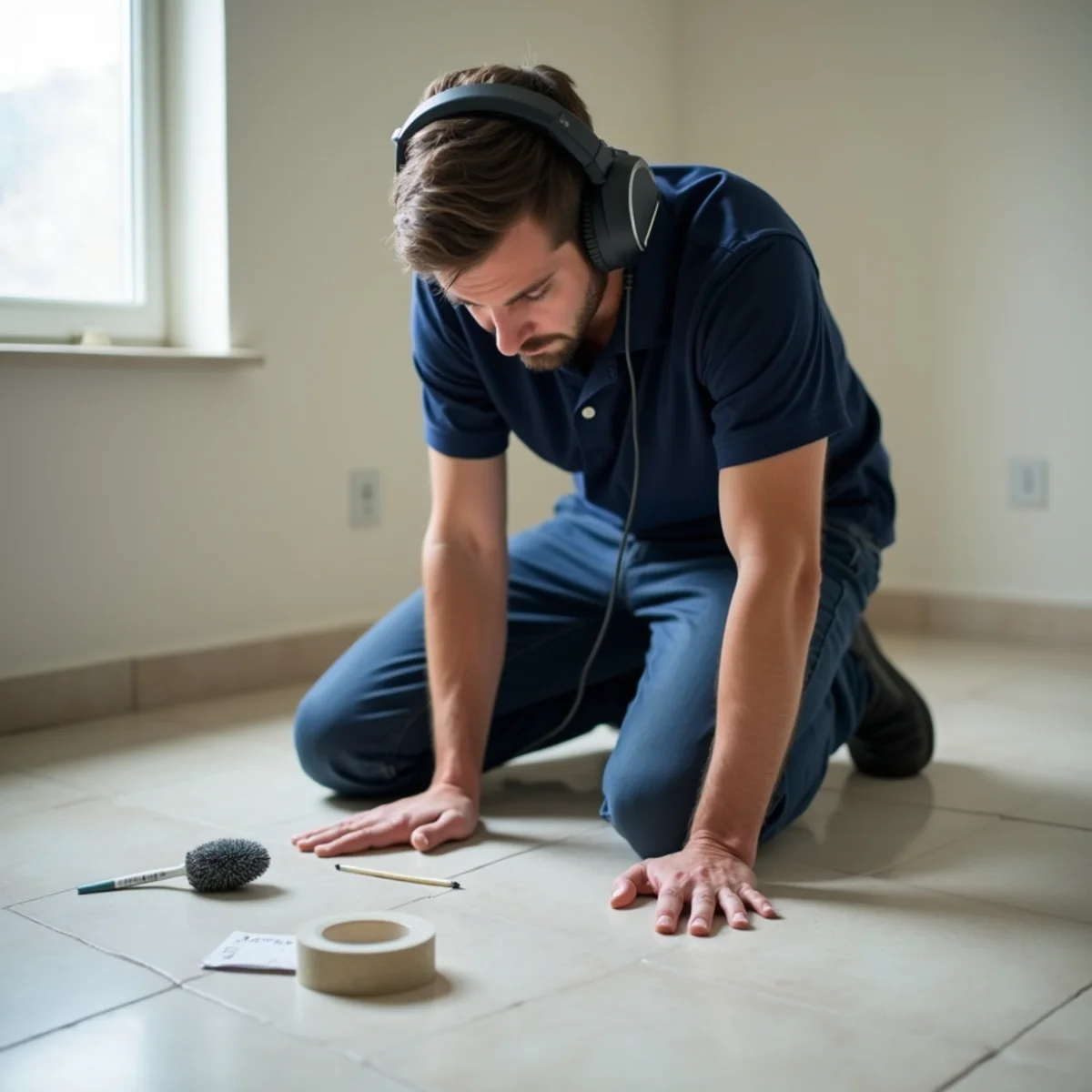
+1 (201) 277-9344A slab leak is water escaping from a pipe running through or beneath your concrete foundation. The pipe is invisible, the water is invisible, and the first symptom often appears in a different room from the failure.
Here's how it gets found without opening your floor to look.
What to have ready before the technician arrives — it measurably shortens the appointment:
- Your last two or three water bills, so the change in consumption is visible.
- Where the main shut-off is, and whether it turns.
- Which room the warm spot or damp flooring is in, and when you first noticed it.
- Any history: previous leaks, a repipe, or a repair someone else has already made.
Step 1: Confirm there's actually a leak
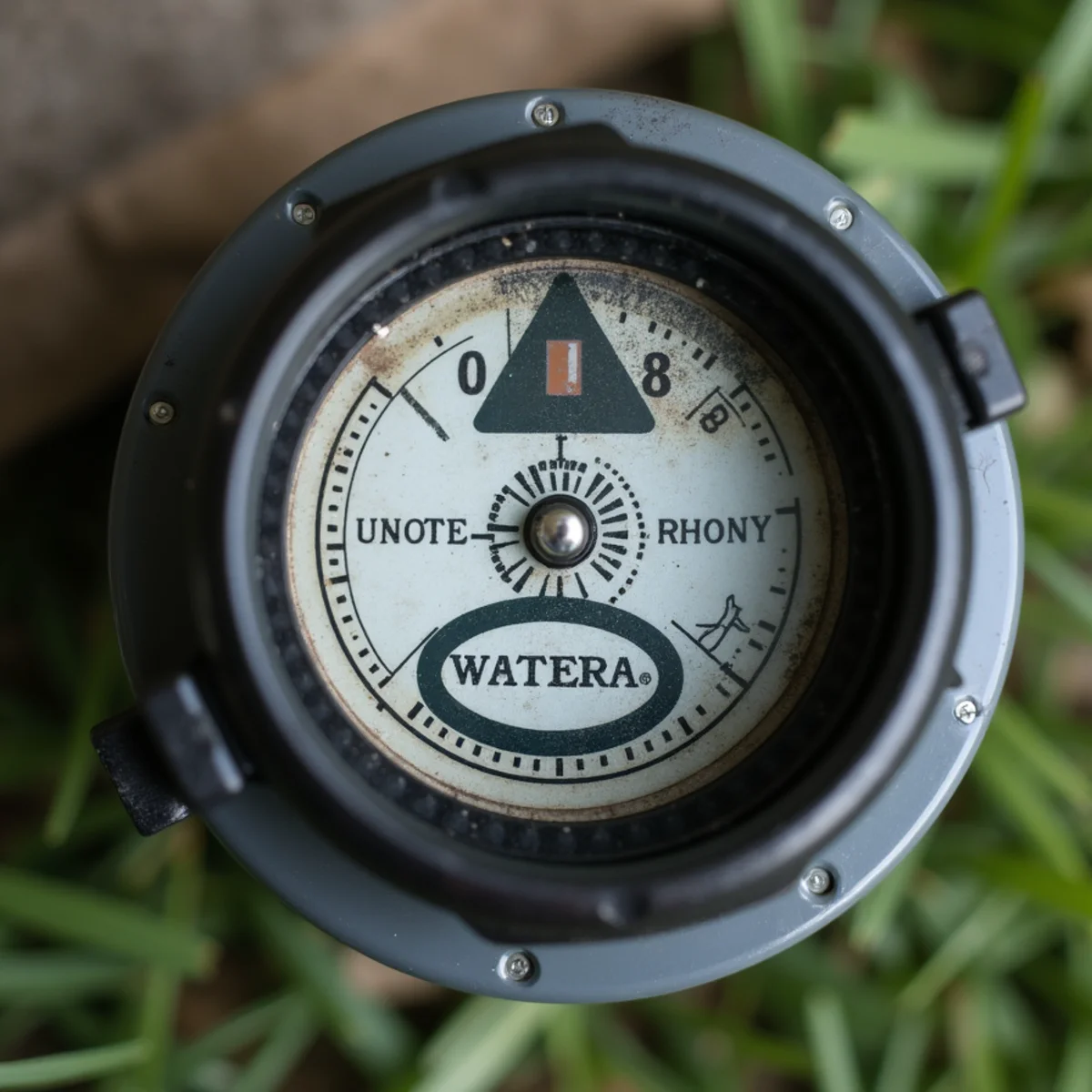
Before any equipment comes out, we establish that water is leaving the system.
Meter test. Every fixture off, then watch the meter's leak indicator. Movement means flow.
Isolation. Closing the main at the house separates a leak inside the structure from one in the service line. Isolating the water heater separates hot side from cold side.
Pressure test. The supply system is isolated and pressurised, then monitored. Pressure loss confirms a supply leak and tells you which line.
This stage costs nothing but time and it prevents a great deal of pointless searching. It also occasionally reveals that the problem isn't a slab leak at all — a running toilet flapper produces a moving meter and a high bill too.
Step 2: Thermal imaging
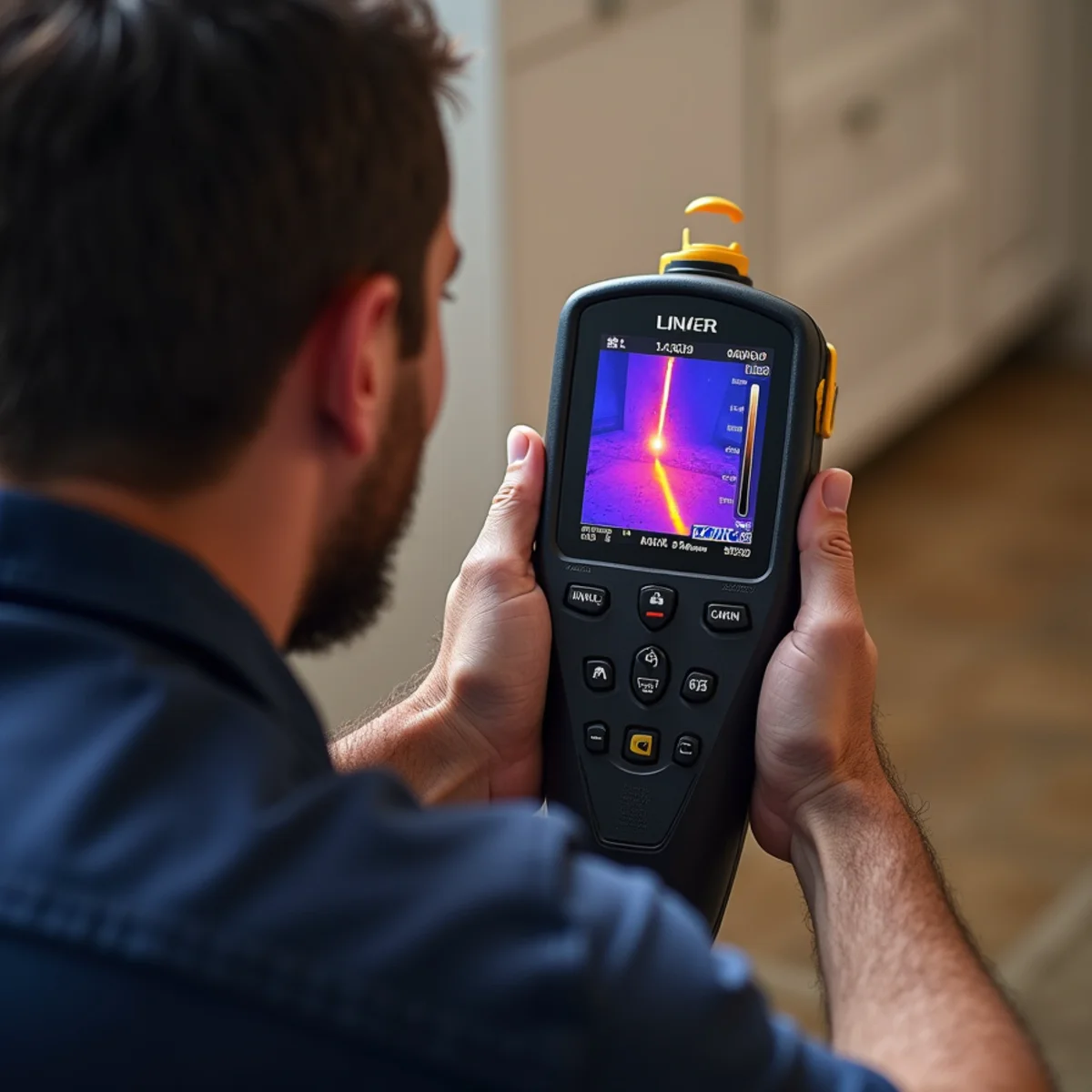
An infrared camera reads surface temperature, not water.
A hot-side leak under a slab heats the concrete above it, producing a distinctive warm plume that's visible on camera long before you'd feel it underfoot. A cold-side leak often produces the opposite — a cool area from evaporative cooling as moisture moves through the slab.
Thermal is a targeting tool. It narrows the search from a whole house to a few square metres, quickly and without touching anything. It doesn't pinpoint, and it can be misled by underfloor heating, ducting, sun through windows and recent appliance use — which is why it's never used alone.
Step 3: Acoustic listening
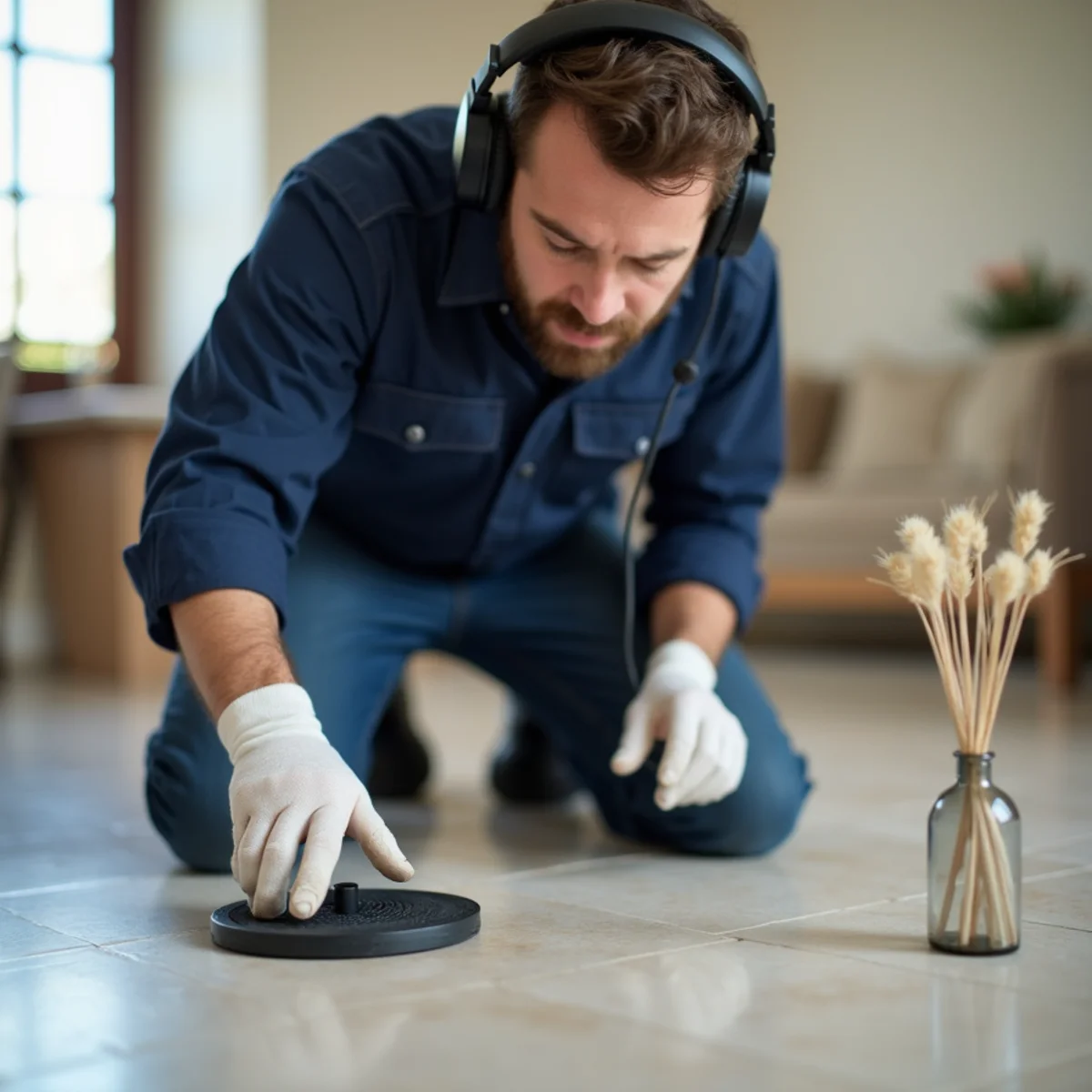
This is the pinpointing method.
Water escaping a pressurised pipe through a small breach makes a specific sound — a hiss whose frequency characteristics relate to pipe material, pressure and the size of the opening. Ground microphones and amplified listening equipment let a trained operator hear that sound through concrete and trace it to its loudest point.
It's a skill as much as a technology. The operator is filtering out HVAC, traffic, appliances, refrigerator compressors and the neighbour's pool pump to isolate one continuous signal. Best results come at night or with the house quiet.
For difficult locates, tracer gas is an option: the line is drained and charged with an inert gas mixture, which escapes through the breach and permeates up through the slab to be detected at the surface. It's used when acoustic conditions are poor — a noisy environment, a very small leak, or thick flooring over the slab.
Step 4: Moisture mapping

Once the leak is located, meters establish how far the water has already travelled through the flooring, the slab and the wall bases.
That map matters for two reasons: it defines the drying scope, and it becomes evidence for your insurance claim.
What you get at the end
A marked point on your floor and a written report. Not a room, not a wall — a point.
The difference between "somewhere under the west half of the house" and a marked spot is measured in thousands of dollars of flooring, which is why the detection is worth doing properly before anyone picks up a jackhammer.
Then: the repair decision
Three paths, and detection informs which makes sense.
Spot repair — open the slab at the located point, repair, patch. Cheapest per incident, opens your floor, leaves the rest of the same-age pipe in place.
Overhead reroute — abandon the failed line in the slab, run new pipe through the attic and down walls. The concrete is never opened. Usually our recommendation on an older home, because it protects the flooring and permanently removes that line from the slab.
Whole-house repipe — replace the supply system. The right answer after a second or third failure, and the one insurance almost never covers.
More detail in slab leak repair vs. repipe.
Why this is such a common job here
Roughly two-thirds of Rancho Cucamonga's owner-occupied homes were built 1980–1999, overwhelmingly slab-on-grade with copper routed through the concrete. That copper is 35–45 years old in hard Inland Empire water that pits it from the inside.
Older neighborhoods are further along. The 1970s ranch housing in Hermosa Park and the long-owned homes across Alta Loma are at 45 to 55 years — the point where a first leak is less surprising than a system that hasn't had one.
What it costs and why the consumer tools disappoint
Leak detection is normally priced as its own service, separate from any repair, and it is worth understanding what you are buying.
You are paying for equipment and for the interpretation of what it produces. Acoustic gear amplifies the sound of water escaping under pressure through concrete, and the raw signal is genuinely difficult to read — pressure, pipe depth, soil type, flooring material and the ambient noise of a house all change what it sounds like. Thermal imaging shows temperature difference rather than water, so an experienced operator is distinguishing a hot-side leak from a sun-warmed floor, a heating duct or a fridge compressor.
That is why the inexpensive listening devices sold online tend to disappoint. The hardware is not the difficult part; the interpretation is, and a false location means concrete opened in the wrong place.
Most detection appointments run a couple of hours. Where a leak cannot be pinpointed acoustically — a cold-side leak with low flow is the usual culprit — the next steps are pressure isolation to identify which line is failing, and occasionally a tracer gas.
The number that matters is not the detection fee. It is how many holes get made in your floor, and precision is what keeps that at one.
What we handle after detection
The plumbing repair itself is a licensed plumber's work and we coordinate it. Everything the water damaged is ours: extraction, drying the slab (slower than anything above it, because concrete releases moisture reluctantly), remediating growth under the flooring if there is any, and rebuilding.
Suspect a slab leak? Free detection assessment: +1 (201) 277-9344.
FAQ
Questions people also ask
Can a slab leak be found without breaking the concrete?
Yes — that's the whole point of professional detection. Pressure isolation, thermal imaging and acoustic listening locate the leak to a specific point without opening anything. Concrete is only opened afterwards if a spot repair is the chosen path, and sometimes an overhead reroute means it never gets opened at all.
How accurate is acoustic leak detection?
Accurate enough to mark a point on your floor rather than a room, in the hands of a trained operator with reasonable conditions. It works best in a quiet house with appliances off. Where conditions are poor — heavy flooring, very small leak, noisy environment — tracer gas is used as an alternative.
Does thermal imaging see water?
No — it reads surface temperature. A hot-side slab leak heats the concrete above it and shows as a warm plume; a cold-side leak can show as a cool area from evaporative cooling. It's a targeting tool that narrows the search fast, then acoustic listening does the pinpointing.
What should I have ready before the technician arrives?
Your last two or three water bills so the change in consumption is visible, the location of the main shut-off and whether it turns, which room the warm spot or damp flooring is in and when you first noticed it, and any history — previous leaks, a repipe, or a repair somebody else has already made. It measurably shortens the appointment and occasionally changes where we start looking.
Services mentioned
- Leak DetectionThermal imaging, acoustic listening and moisture meters find the leak before we open anything up.
- Slab Leak DamageThe most common serious leak in Rancho Cucamonga's 1980s–90s tract homes. Detection, drying and full restoration.
- Structural DryingAir movers and commercial dehumidifiers placed to a calculated load, with daily moisture readings you get to see.
Keep reading
How Restoration Works
Hidden Leak Symptoms: Warm Floor Spots, High Water Bills, and the Sound of Running Water
Hidden leaks announce themselves indirectly. Here are the signals worth acting on, and the meter test that settles it.
5 min read
How Restoration Works
Black Mold vs. Mildew: How to Tell the Difference and When to Call a Pro
One wipes off a shower tile. The other is growing in the material. Here's how to tell which you have without a lab.
5 min read
How Restoration Works
How Fast Does Mold Grow After a Leak? Inside the 24–48 Hour Window
The clock that decides whether your loss is a dry-out or a demolition — and what makes it run faster in an Inland Empire house.
5 min read