60-Minute Dispatch · 24/7
Water Damage Restoration in Etiwanda, Rancho Cucamonga, CA
Foothill elevation of 1,500–2,500 ft in a Very High Fire Hazard / WUI zone, with the city's strongest Santa Ana wind exposure.
- Documented dry standard
- Bonded & insured
- 24/7 emergency response
Etiwanda occupies the northeast corner of Rancho Cucamonga, climbing from the valley floor up toward the mountains. It has the city's highest elevations, its strongest winds, and its most direct exposure to the wildland interface.
We're twelve to eighteen minutes out depending on how far up you are. Water damage here is overwhelmingly weather-driven.
Local risk profile
Why homes in Etiwanda take water damage the way they do
Etiwanda sits between roughly 1,500 and 2,500 feet, in a designated Very High Fire Hazard Severity Zone at the wildland-urban interface. That geography drives three distinct risks.
Wind. The Cajon Pass funnels Santa Ana events across this corner of the city between October and March, and Etiwanda catches them first and hardest. Gusts don't need to remove roofing to cause a leak — lifting tile, bending flashing or cracking a vent boot is enough. The opening then sits unnoticed through a dry autumn until the December storms find it.
Fire and its aftermath. Burn scars above the community strip out the vegetation that absorbs rainfall, and debris-flow potential stays elevated for years afterward. A storm that would have been routine before a fire can produce serious runoff after one.
Elevation. Clear winter nights up here reach temperatures the valley floor doesn't. Exposed exterior lines, hose bibs, pool equipment and anything in an unheated space can freeze.
The housing spans a wide range — from historic properties along the original Etiwanda Avenue corridor, one of the oldest settled parts of the city, to 1990s and 2000s tract development further south and west. That mix means the plumbing profile varies house by house in a way it doesn't in a uniformly-built tract.
On the ground
What our Etiwanda jobs actually look like
The Etiwanda pattern is delayed. A wind event in October, then a leak in December, and the homeowner doesn't connect the two.
Our work here is mostly above the ceiling: tarp the roof so the intrusion stops that night, trace the water back through the attic to the actual entry point, remove saturated insulation, dry the sheathing and framing directly, and check for growth if it's run through more than one storm.
For the historic properties along Etiwanda Avenue — the area around the Chaffey-Garcia House is genuinely old by Inland Empire standards — the approach shifts to preservation: drying original material rather than replacing it, and keeping access openings small.
Our standing advice for this neighborhood: get the roof inspected after a significant wind event, not after the first rain. A lifted tile found in November is a service call. Found in January, it's an attic.
We work around
- Etiwanda High School
- Etiwanda Avenue historic corridor
- Chaffey-Garcia House
- Day Creek Boulevard
- North Etiwanda Preserve
Why Etiwanda
Why Etiwanda residents call us
We treat a wind event as the start of the clock, not the end of it. The October gust that lifts a tile does not leak until December, and by then most homeowners have stopped connecting the two. We know the sequence, we look for it, and we write it down in a way an adjuster can follow.
We get a real tarp on before dark. After a Santa Ana event the roofing trade in this valley is booked solid, so the temporary cover is doing weeks of work rather than days. Battened to the deck and lapped over the ridge — not a sheet of plastic under a few sandbags that the next gust takes off.
We work from the attic down. Up here the entry point is almost never above the stain. Water tracks along truss chords and sheathing before it drops, so we follow it back to the actual opening, pull the saturated blown-in insulation and meter the framing directly.
We treat post-fire runoff as the different problem it is. Where there is burn scar above the community, storm water arriving at a house is carrying ash, silt and debris — that is a contaminated-water cleanup with its own protocol and disposal, not a clean-water dry-out. Getting that call right at hour one changes what can be saved and what has to go.
What we do here
Services we run most in Etiwanda
Chosen from what this area's housing and geography actually produce — not a generic list.
Roof Leak Damage
Wind lifts the tile in October, the December storm finds the gap. We tarp, strip wet insulation and dry the structure.
Learn moreStorm Damage Cleanup
Emergency tarping, water extraction and full interior restoration after Santa Ana winds and winter atmospheric rivers.
Learn moreCeiling Water Damage Repair
Find the actual leak, dry the cavity above, then repair and texture-match — not just paint over the stain.
Learn moreBurst Pipe Cleanup
A failed supply line can put hundreds of gallons into your house in an hour. We stop it, pull it out and dry it.
Learn moreMold Remediation
Containment, HEPA filtration, source removal and moisture correction — remediation that fixes the cause, not just the stain.
Learn more
- Documented dry standard
- Bonded & insured
- 24/7 emergency response
FAQ
Water damage questions from Etiwanda
Why does Etiwanda get so much more wind damage than the rest of the city?
Geography. The Cajon Pass funnels offshore winds down and across the northeast corner of the valley, and Etiwanda's elevation puts it directly in that path. The same Santa Ana event that's noticeable in south Rancho Cucamonga can be genuinely destructive up here.
Do pipes freeze in Etiwanda?
At the higher elevations, occasionally — clear winter nights up here get colder than the valley floor. The vulnerable points are exposed exterior lines, hose bibs, pool and spa equipment and anything in an unheated space. Foam hose bib covers cost a few dollars and prevent an expensive morning.
There was a fire above us. Does that affect our water risk?
Yes, and for years rather than one season. The vegetation on the slope is what absorbs rainfall; once it's burned off, the same storm produces far more runoff and it carries debris. Pre-season drainage clearing and, in some cases, sandbagging vulnerable openings matter much more after a burn than before one.
We are up the hill. Does that slow your response?
Twelve to eighteen minutes covers most Etiwanda addresses, with the higher ones at the top of that range. The real variable is weather — during an active storm or a wind event, calls across the whole foothill line stack up at once. Calling when you first see water rather than waiting to see whether it worsens is what protects your place in the queue.
What should we check before the first storm?
Roof after wind rather than after rain, gutters and downspouts cleared and discharging away from the foundation, yard drains and swales flushed out after eight dry months, and the grade beside the house checked for settlement. That short list is the cause of most of the storm-season water we pump out of foothill homes.
Further reading
Useful for Etiwanda homeowners
Local Risk & Rancho Cucamonga
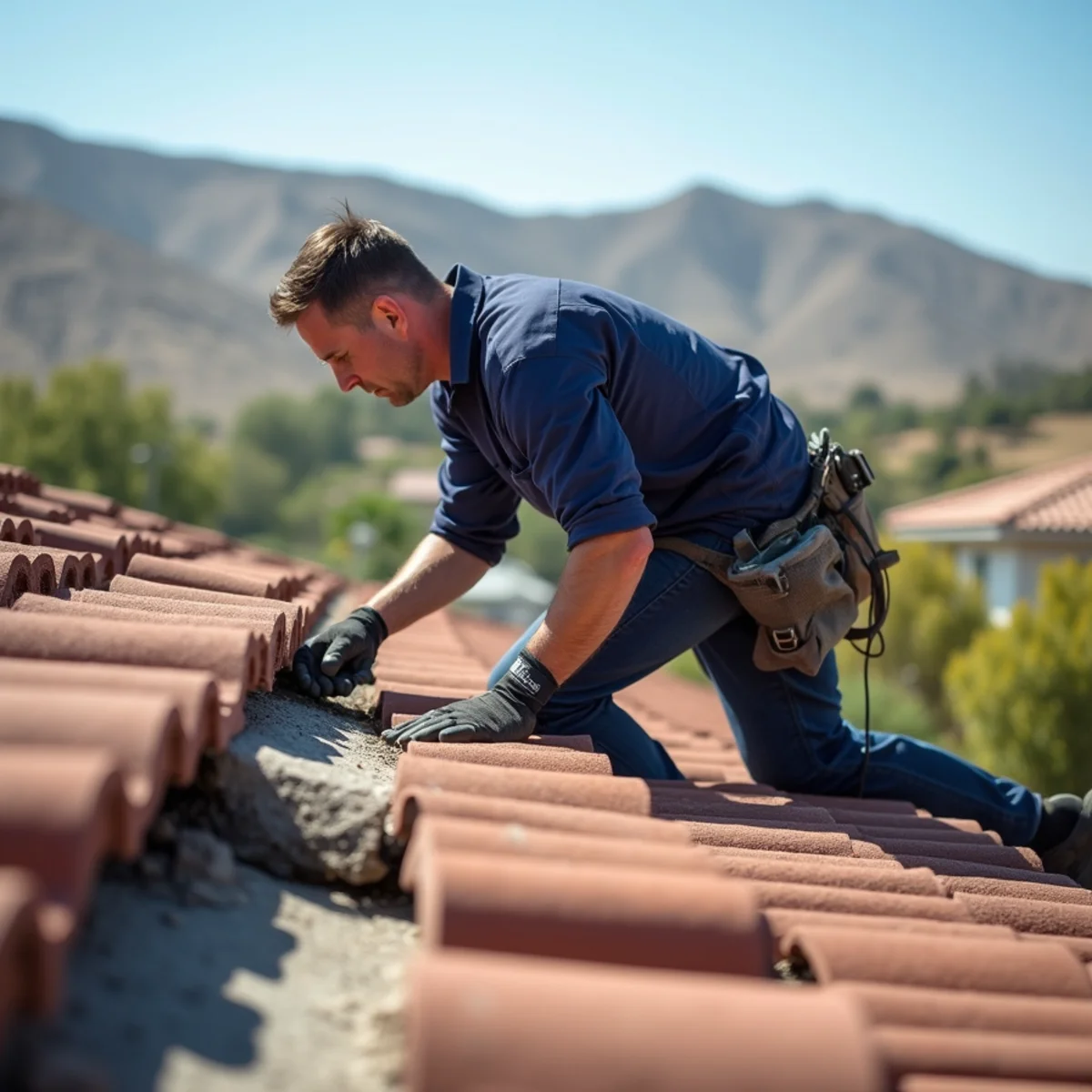
Santa Ana Wind Season (Oct–Mar): How Cajon Pass Gusts Turn Into Roof Leaks in Etiwanda and North Fontana
Gusts don't have to remove a roof to cause a leak. They only have to lift it — and the leak shows up two months later.
5 min read
Emergency Guides
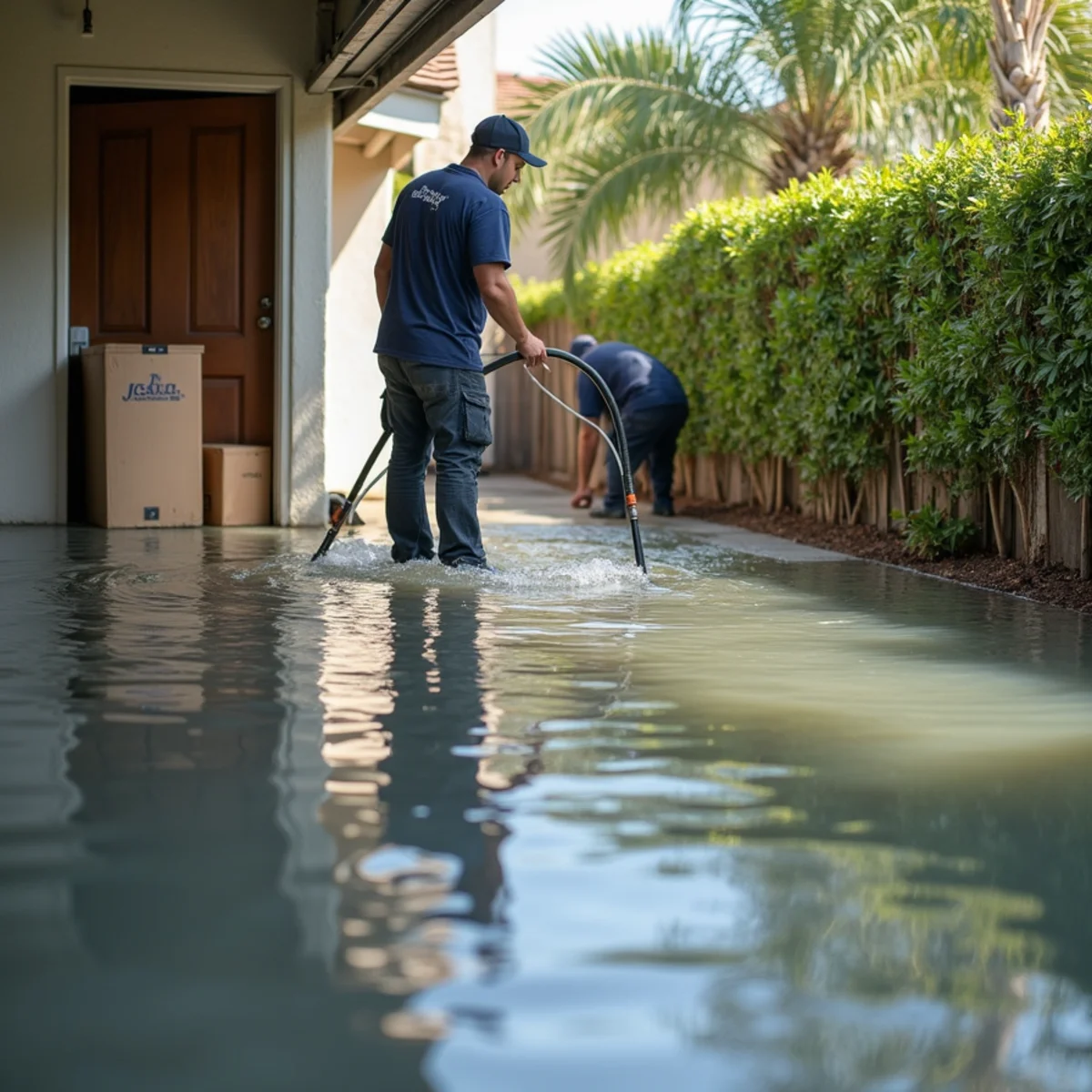
Water Heater Flooded the Garage: Emergency Steps Before Help Arrives
Forty to eighty gallons across a garage slab that often drains toward the house. Shut-down sequence, what to save, and what not to touch.
5 min read
Nearby
Other areas we serve close to here
Same crews, same response, same documentation.
Get in touch
Serving Etiwanda, Rancho Cucamonga from our Rancho Cucamonga base
RC Water Pros
Water Damage Restoration · Rancho Cucamonga, CA
- 11190 White Birch Dr
Rancho Cucamonga, CA 91730 - +1 (201) 277-9344
- Emergency response 24 hours a day, 7 days a week
Office & estimates: Mon–Sat, 7:00 AM – 7:00 PM
Water damage in Etiwanda? We're already close.
Twelve to eighteen minutes northeast, depending how far up the hill you are. Free assessment, 24/7 dispatch, and we handle your insurance documentation.
- Documented dry standard
- Bonded & insured
- 24/7 emergency response