
Cost & Insurance
Flood Insurance vs. Homeowners Insurance: Why Storm Flooding Usually Isn't Covered
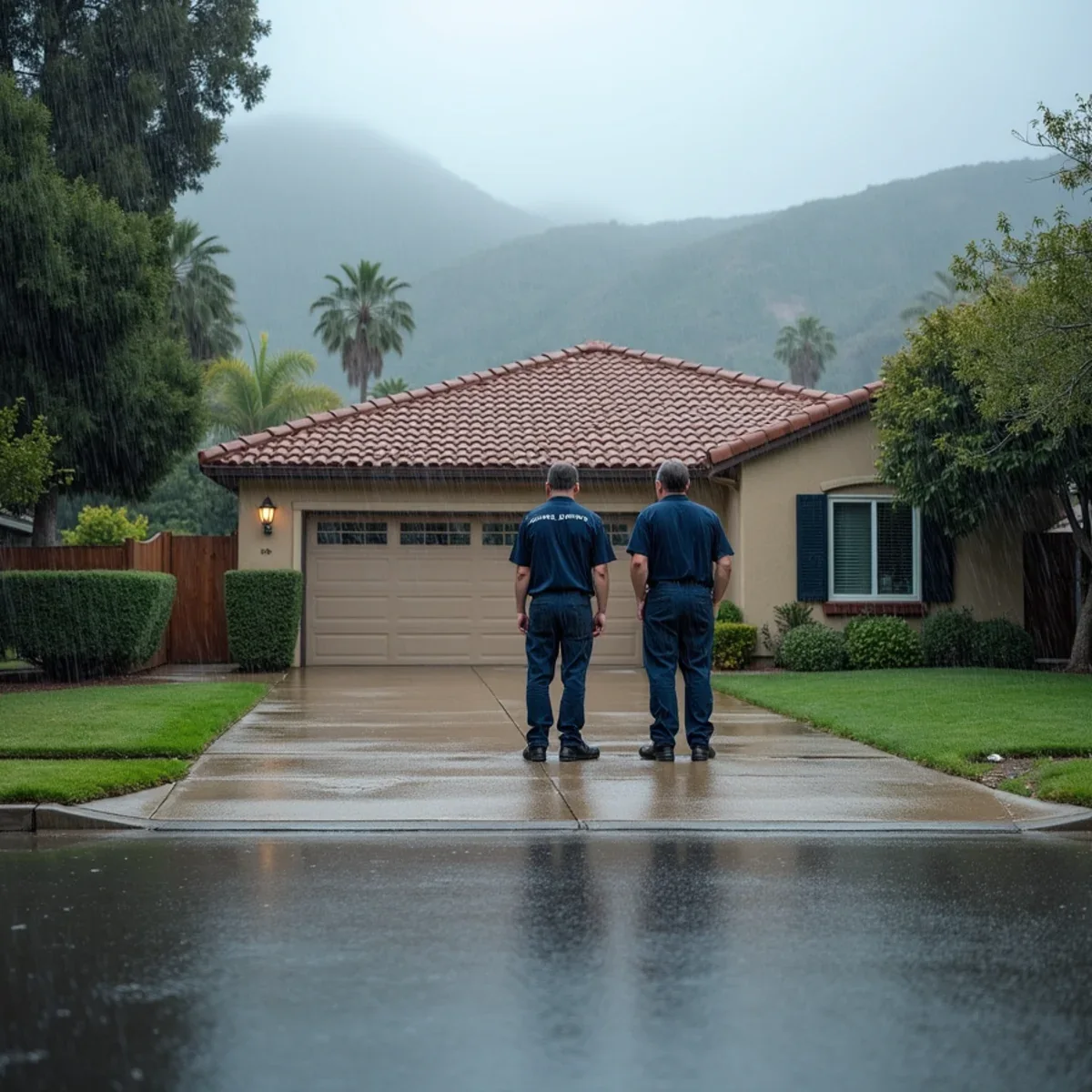
Dealing with this right now? We answer 24/7 and dispatch across Rancho Cucamonga in 60 minutes.
+1 (201) 277-9344Every winter we take calls that go the same way. A homeowner has storm water through the house, we start work, and a few days later they discover their homeowners policy doesn't cover any of it.
It's the most consequential misunderstanding in property insurance, so here's the distinction plainly.
The line
Homeowners insurance covers water that comes from inside your home's systems — a burst pipe, a failed appliance, a water heater, a roof leak caused by wind damage. Sudden and accidental discharge.
Flood insurance covers water that comes from outside, across the ground — surface runoff, a creek or channel overflow, rising groundwater, mudflow.
Standard California homeowners policies exclude flood entirely. Not partially, not with a sub-limit. Excluded. There is no argument that gets you coverage after the fact.
What counts as a "flood"
The NFIP's definition is broader than most people assume. It covers a temporary condition of partial or complete inundation of normally dry land from:
- Overflow of inland or tidal waters
- Unusual and rapid accumulation or runoff of surface water — this is the one that matters here
- Mudflow
That middle point covers exactly what happens in the Inland Empire: a heavy winter storm hits ground that's been baked hard for eight months, the water runs instead of soaking, and it finds the lowest opening in your house.
That is a flood, regardless of whether there's a river anywhere near you.
Why this catches Inland Empire homeowners specifically
Rancho Cucamonga averages roughly 17.7 inches of rain a year, and nearly all of it falls between November and March.
It doesn't arrive gently. An atmospheric river can drop several inches in a day onto an alluvial fan at the base of a steep mountain range. Tropical Storm Hilary in August 2023 demonstrated the extreme version: over a foot in parts of San Bernardino County and flooding in places that had never taken water.
Then there are burn scars. After a fire in the San Gabriels, the slope loses the vegetation that absorbed rainfall, and runoff and debris-flow potential stay elevated for years. Storms that were previously routine become consequential.
Because most of the region is far from any mapped floodplain, homeowners reasonably conclude they don't need flood insurance. The runoff exclusion doesn't care about that reasoning.
Who should seriously consider it
Anyone below a burn scar. This is the clearest case. Post-fire runoff behaves entirely differently, and the elevated risk lasts years.
Anyone near a wash, creek or channel. North Etiwanda near the debris basins, homes near City Creek in Highland, properties along the Cucamonga Creek corridor, San Dimas Canyon.
Anyone on the receiving end of a slope. Hillside neighborhoods where your house sits downhill of a lot of hardscape.
Anyone in a low-lying area where water pools during heavy rain, even if it's never come inside.
Anyone with a below-grade room or a garage that steps down.
Being outside a FEMA-mapped high-risk zone doesn't mean low risk — it means you're eligible for cheaper preferred-risk coverage. A substantial share of flood claims nationally come from outside mapped high-risk zones.
What flood insurance actually covers
Two separate coverages, purchased together or separately:
Building coverage — the structure, foundation, electrical and plumbing systems, HVAC, water heaters, built-in appliances, permanently installed cabinets and flooring.
Contents coverage — furniture, clothing, electronics, portable appliances. This is separate and it is not automatic. Buying building coverage alone leaves your belongings uncovered.
Not covered: landscaping, decks, swimming pools, most below-grade finished space (basement finishing and contents are heavily restricted), vehicles (that's comprehensive auto), and — importantly — additional living expenses under a standard NFIP policy. Some private flood policies do include ALE.
Waiting period: NFIP policies generally have a 30-day waiting period before coverage takes effect. You cannot buy it when a storm is forecast. This is the single most important practical fact on this page.
The grey areas that do get covered by homeowners
Not everything storm-related is excluded. These generally are covered by a standard policy:
Wind-driven rain through a wind-created opening. Wind damages your roof, rain enters through the hole. Covered as a consequence of the wind damage.
A roof leak from storm damage, same logic.
A tree falling on your house in a storm.
Which is why we photograph the entry point and the causal sequence on every storm loss before any cleanup begins. If water came through a wind-damaged roof, that's a covered claim. If the identical water came under the garage door, it isn't. The determination is made on evidence gathered at the time.
What we do either way
Coverage doesn't change the work. Storm water that crossed the ground is Category 3 — contaminated — which means full PPE, containment, removal of porous materials below the water line rather than drying them, cleaning before disinfecting, and proper disposal. See flood cleanup for the detail.
What we can do is document meticulously so that whatever portion of your loss is covered gets recognised, and so that if the cause turns out to be a covered peril, you have the evidence.
We work storm losses across the county, from the foothill neighborhoods down through San Bernardino and the valley cities.
The waiting period nobody mentions
Flood policies typically do not take effect the day you buy them. A standard NFIP policy carries a thirty-day waiting period from purchase to effective date, with narrow exceptions — which means the decision has to be made in the dry season, not when a storm is on the forecast.
That single detail catches people out every winter. An atmospheric river appears in the ten-day outlook, the homeowner looks into flood cover, and discovers the policy will not be in force for the event they are worried about.
The practical version: if you are in a burn-scar runout, at a canyon mouth, on the low side of a drainage corridor, or below a slope that has changed since the last fire, price flood cover in September rather than in January. Quotes are free and the waiting period is the same whether you buy or not.
It is also worth asking your agent specifically about coverage for mudflow, which is treated differently from other forms of earth movement and is one of the few places a flood policy reaches where a homeowners policy does not.
The action item
Call your agent before November and ask two questions: am I exposed to surface runoff here, and what would flood coverage cost me?
For most inland properties outside mapped zones it's inexpensive. The 30-day waiting period means the only useful time to ask is well before you need it.
Storm water in your house now? Call +1 (201) 277-9344.
General information about how these policies commonly work, not coverage advice. Your policy language governs.
FAQ
Questions people also ask
Is storm runoff into my house covered by homeowners insurance?
No. Water that runs across the ground and into your home is a flood by definition, and standard California homeowners policies exclude flood entirely. That requires a separate NFIP or private flood policy — and there's no way to obtain coverage after the loss.
I'm not in a flood zone. Do I still need flood insurance?
Possibly. Being outside a FEMA high-risk zone means you qualify for cheaper preferred-risk coverage, not that you're safe — a large share of flood claims nationally come from outside mapped zones. If you're below a burn scar, near a wash or channel, downhill of a lot of hardscape, or have a below-grade room, it's worth pricing.
How quickly can I get flood insurance?
NFIP policies generally have a 30-day waiting period before coverage takes effect, so you cannot buy it when a storm is forecast. If you're considering it, the useful time to call your agent is well before the November–March rainy season.
Does flood insurance cover my belongings too?
Building cover and contents cover are separate purchases under a standard flood policy, and buying only the building is a common and expensive mistake. Contents cover is also typically settled on actual cash value rather than replacement cost, which surprises people. If you are buying flood cover at all, price both parts and read how contents are valued before you decide.
Services mentioned
- Flood CleanupStorm and runoff flooding brings contaminated water. We pump, strip, sanitize and dry — then document it for your carrier.
- Storm Damage CleanupEmergency tarping, water extraction and full interior restoration after Santa Ana winds and winter atmospheric rivers.
- Basement & Crawl SpaceBelow-grade water is out of sight and easy to ignore — until the whole house smells. We pump, sanitize and dry it properly.
Keep reading

Cost & Insurance
Sewage Backup Cleanup Costs — and Whether Your Insurance Will Actually Pay
The endorsement most people don't have, the material that has to come out regardless, and where the money actually goes.
5 min read
Cost & Insurance
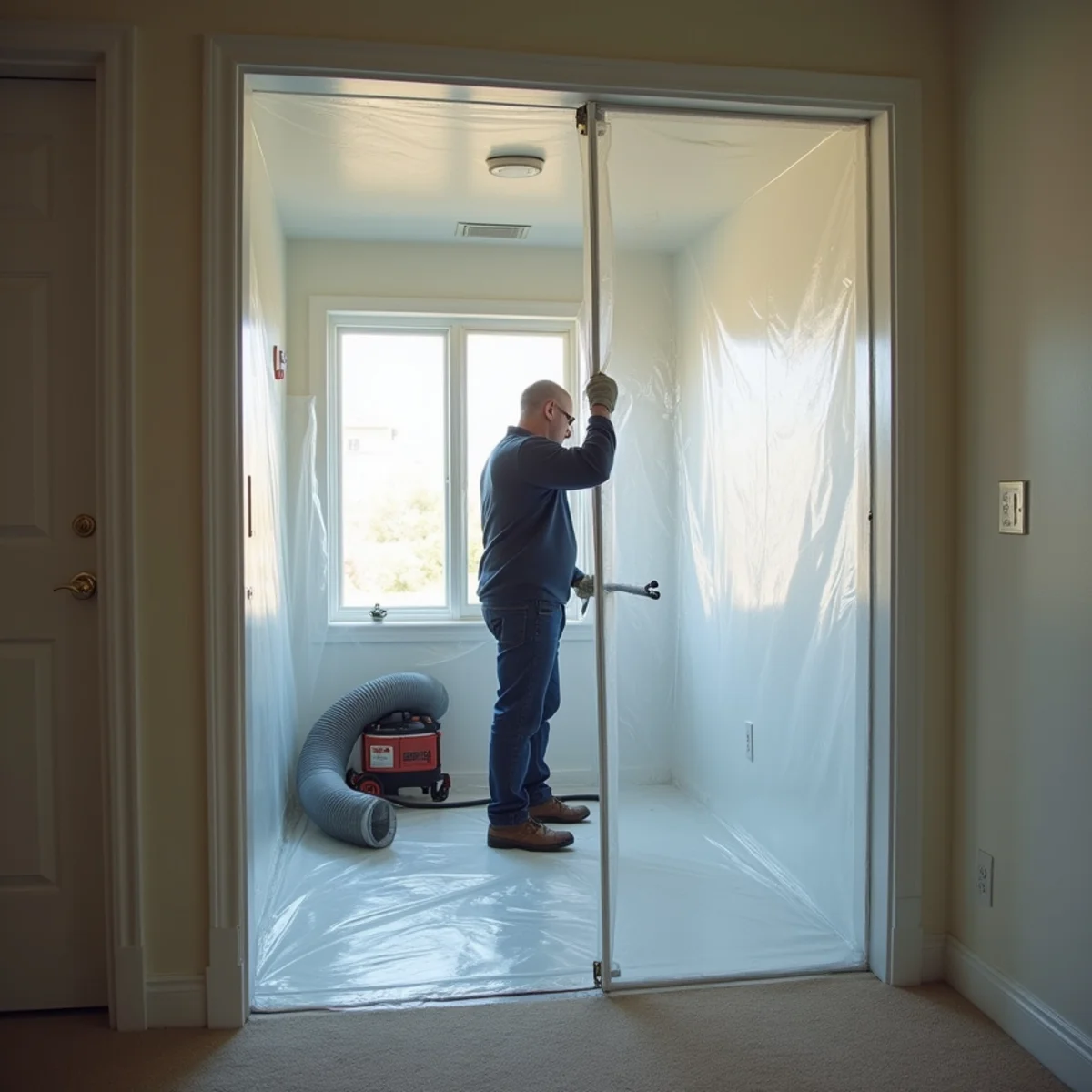
What Drives Mold Remediation Costs Up (or Down) in an Inland Empire Home
Why the same square footage can cost three times more in a crawl space than a bathroom — and the cost nobody quotes you.
5 min read

Cost & Insurance
How to Document Water Damage for an Insurance Claim (Photo & Receipt Checklist)
Claims are paid from evidence, not recollection. Here's exactly what to capture, in what order, before anything gets cleaned up.
5 min read