How Restoration Works
Why Shop-Vaccing a Flooded Carpet Isn't Enough (What Professional Extraction Pulls Out)
Dealing with this right now? We answer 24/7 and dispatch across Rancho Cucamonga in 60 minutes.
+1 (201) 277-9344If you own a wet/dry vacuum, use it. In the first ten minutes after a leak, pulling surface water off hard flooring genuinely helps.
What it won't do is dry your carpet, and understanding why explains most of what professional extraction is for.
The carpet is not the problem
A carpet face holds relatively little water. It feels soaked because you're standing on it, but the fibres release moisture reasonably well.
The pad underneath is a different material entirely. Bonded urethane foam pad — the speckled multicolour stuff in most homes — is designed to compress and rebound, which means it's full of open cells. It behaves like a sponge with a lid on it: it takes on an enormous volume of water and it will not give it up to gravity or to airflow across the carpet above.
A shop vac drawn across the carpet surface pulls water from the top of the pile. The pad below stays loaded.
What weighted extraction actually does
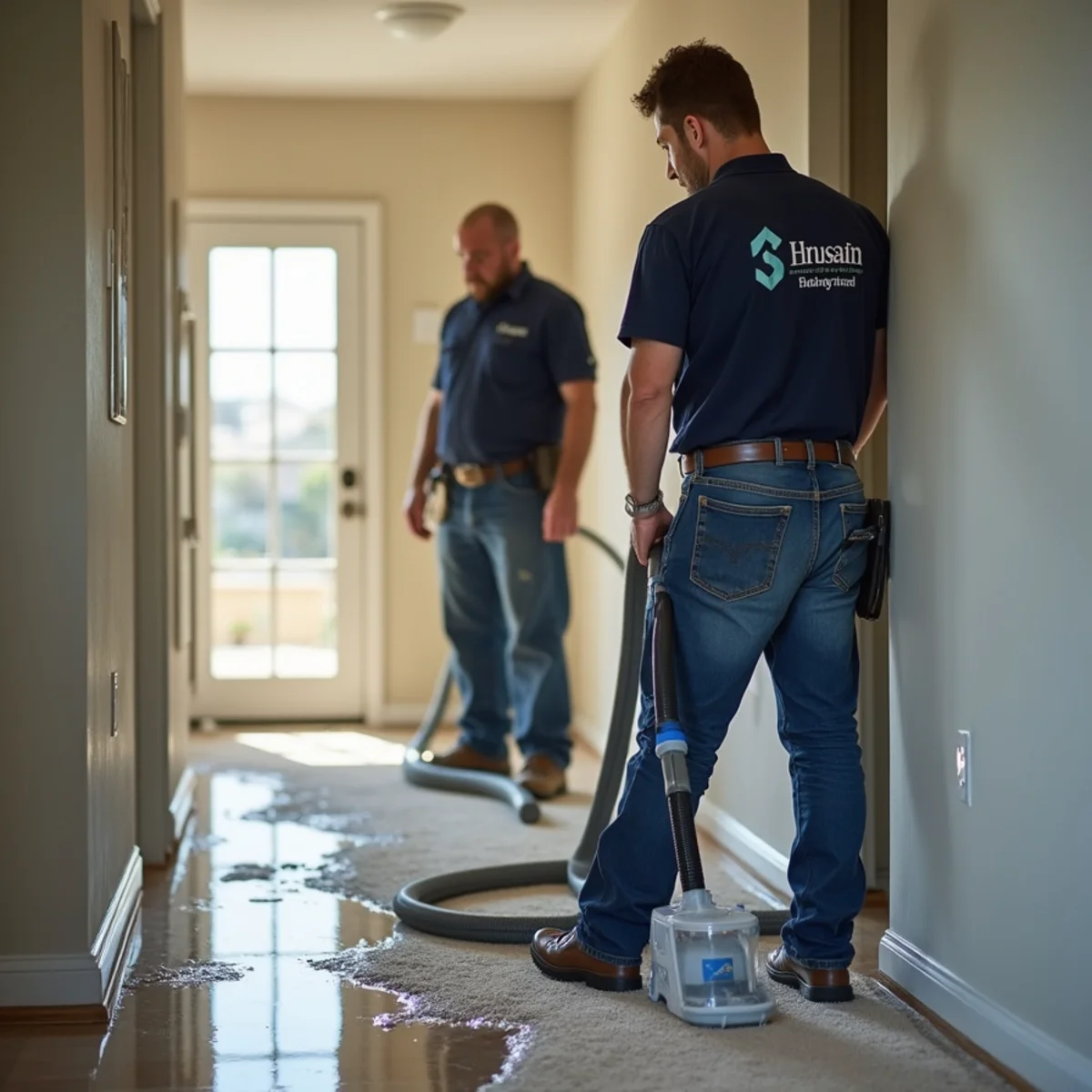
Professional sub-surface extraction tools work on a simple principle: compression plus vacuum, simultaneously.
The operator stands on the tool, or the tool carries its own weight. That compression squeezes the pad — physically forcing the water up out of the cells — while high-lift vacuum pulls it through the carpet and out.
The difference in recovery is not marginal. On a moderate loss, surface extraction might recover a fraction of the water; weighted sub-surface passes recover the large majority. And the water that comes out during extraction is water that doesn't have to be evaporated later — which is the slow, expensive part of the job.
The other difference is capacity. A truck-mounted unit carries far greater vacuum lift and a far larger waste tank than any portable, so extraction runs continuously rather than stopping every four gallons.
Why it matters more than it sounds
Every gallon left in the pad has to leave by evaporation. Evaporation requires airflow, dehumidification capacity, and time — which means equipment days on your invoice.
More importantly, it means the material stays wet longer. Mold begins growing in wet materials within roughly 24 to 48 hours, and a pad that's still loaded on day three is well past that.
This is the single reason we tell homeowners not to try the dry-it-yourself approach on carpet: not because it's impossible in principle, but because a partially extracted pad reliably produces a mold problem in a warm house.
When the pad comes out anyway
Sometimes extraction isn't the answer and removal is. The pad is removed and replaced when:
- The water was Category 2 or 3 — contaminated. It's not cleanable in place, regardless of how well it extracts.
- It's been wet more than about 48 hours.
- It's already showing growth or odor.
- The carpet is coming out anyway.
Pad is inexpensive. Carpet often isn't, and the goal is usually to save the carpet by removing and replacing the pad beneath it.
Can the carpet be saved?
Frequently, on a Category 1 loss with a fast response. The carpet gets extracted, the pad is removed, the carpet is floated — lifted and dried with air directed underneath — and then re-laid over new pad and re-stretched.
It generally cannot be saved if the water was Category 3, if delamination has started (the backing separating from the face), or if it's been wet long enough for growth.
What you should not do is pull the carpet up yourself. Lifting it wrong stretches and delaminates the backing, and a carpet that could have been floated and saved becomes a replacement. It's one of the most common well-intentioned mistakes we see.
What happens under the carpet matters too
The pad and carpet are the visible layer. Underneath:
Over a slab — the concrete itself absorbs moisture and releases it slowly. It has to be metered and dried directly, and it takes longer than anything above it. Pulling equipment when the carpet reads dry but the slab doesn't is how mold ends up under brand-new flooring.
Over a wood subfloor — plywood and OSB absorb and hold water, and OSB in particular swells and loses integrity. It gets metered and dried from below where there's access.
Tack strip and baseboard — water wicks up the baseboard and into the drywall behind it. Wall bases get metered on every job, and where they're wet, the base gets released and dried from behind.
Area rugs are a separate job
Anything loose-laid on top of the carpet or the hard flooring should come out of the room within the first hour, and it needs handling differently from the carpet underneath it.
Two reasons. First, a wet rug sitting on a wet floor keeps both of them wet — it acts as a lid, blocking evaporation from the surface beneath while holding a large volume of water against it. Second, and more expensive: dye transfer. Wool and many natural-fibre rugs will release colour into whatever they are sitting on within hours, and a dye stain in a carpet or a hardwood floor is permanent in a way the water damage itself frequently is not.
Roll the rug from the edges toward the middle, get it off the floor, and lay it flat somewhere it can dry with air on both faces — over sawhorses or a rail rather than folded over itself.
Valuable rugs are better dried off site by a specialist. Hanging a saturated wool rug on a line will stretch and distort it permanently under its own weight.
The practical version
If you have a wet carpet right now:
- Shop-vac the hard surfaces around it if you like
- Lift furniture off it onto blocks or foil so legs don't bleed stain
- Don't pull the carpet up
- Don't run the HVAC to dry the room
- Call before the 24-hour mark, not after
For newer homes across Eastvale and the Day Creek corridor where appliance failures are the dominant loss type, this is usually a same-day, save-the-carpet job — provided the call comes early.
Water extraction and drying: +1 (201) 277-9344.
FAQ
Questions people also ask
Can I dry a wet carpet myself with fans?
Not reliably. Fans move air across the carpet face but do nothing for the pad underneath, which holds most of the water and won't release it without compression and vacuum. Household fans also provide no dehumidification, so you're relocating moisture rather than removing it — and a partially dried pad in a warm house grows mold.
Does the carpet pad always have to be replaced?
Not always, but often. On a fast Category 1 loss the pad can sometimes be extracted and saved. It comes out if the water was contaminated, if it's been wet more than about 48 hours, or if there's already odor or growth. Pad is inexpensive — the goal is usually to sacrifice the pad to save the carpet.
Should I pull the carpet up myself to help it dry?
Please don't. Lifting carpet incorrectly stretches and delaminates the backing, turning a carpet that could have been floated and saved into a replacement. Leave it, and let the crew lift it properly at the tack strip.
What about area rugs on top of the carpet?
Get them out of the room within the first hour and dry them flat with air on both faces, over a rail or sawhorses rather than folded over themselves. Two reasons: a wet rug acts as a lid, blocking evaporation from whatever is beneath it, and wool and natural-fibre rugs release dye into carpet and hardwood within hours. Dye transfer is permanent in a way the water damage frequently is not.
Services mentioned
- Water ExtractionTruck-mounted units pull standing and sub-surface water out in hours — the step that decides whether your floors survive.
- Structural DryingAir movers and commercial dehumidifiers placed to a calculated load, with daily moisture readings you get to see.
- Mold RemediationContainment, HEPA filtration, source removal and moisture correction — remediation that fixes the cause, not just the stain.
Keep reading
How Restoration Works
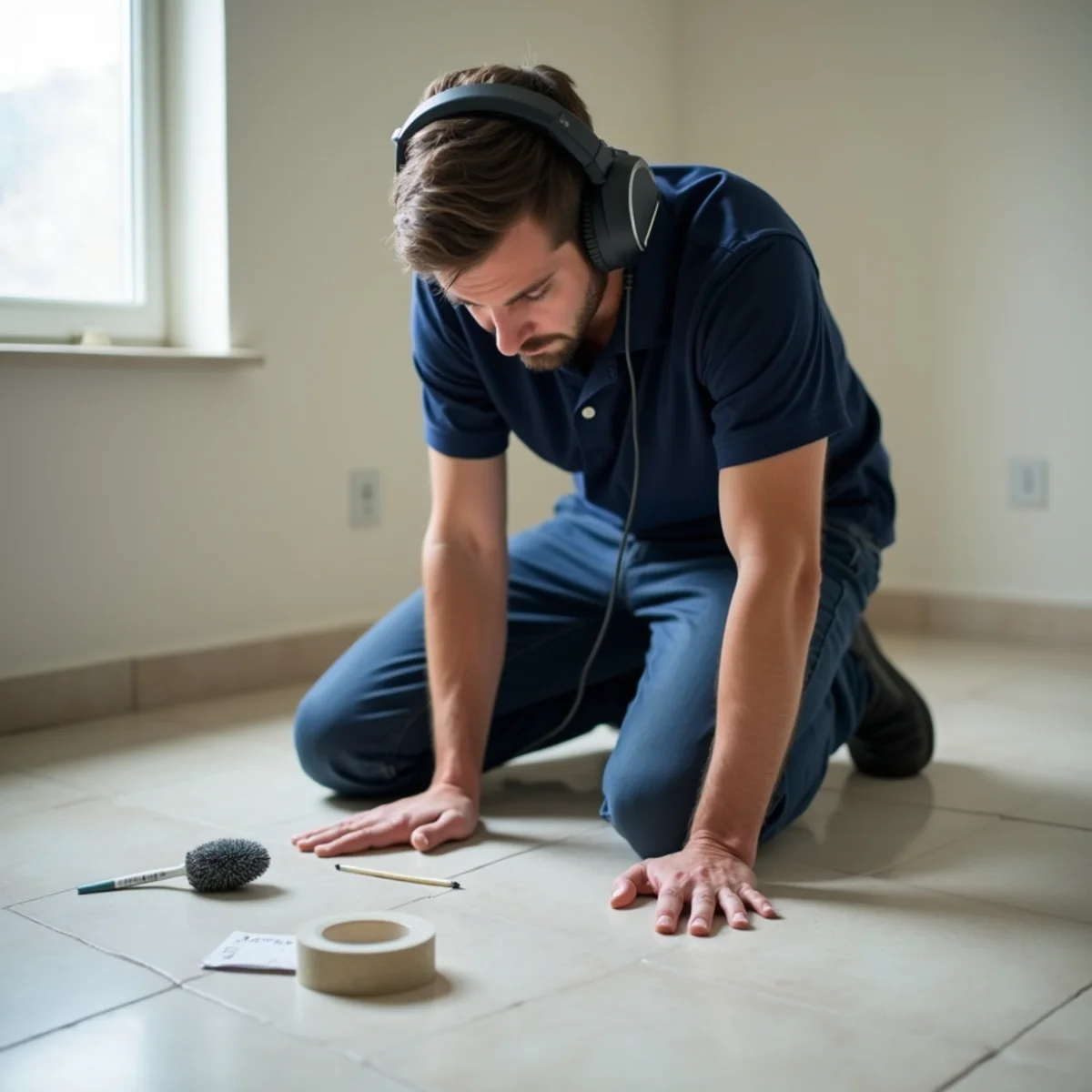
How Pros Find Slab Leaks Without Tearing Up Your Whole Floor
Four techniques that turn 'somewhere under the west half of the house' into a marked spot on your floor.
5 min read
How Restoration Works
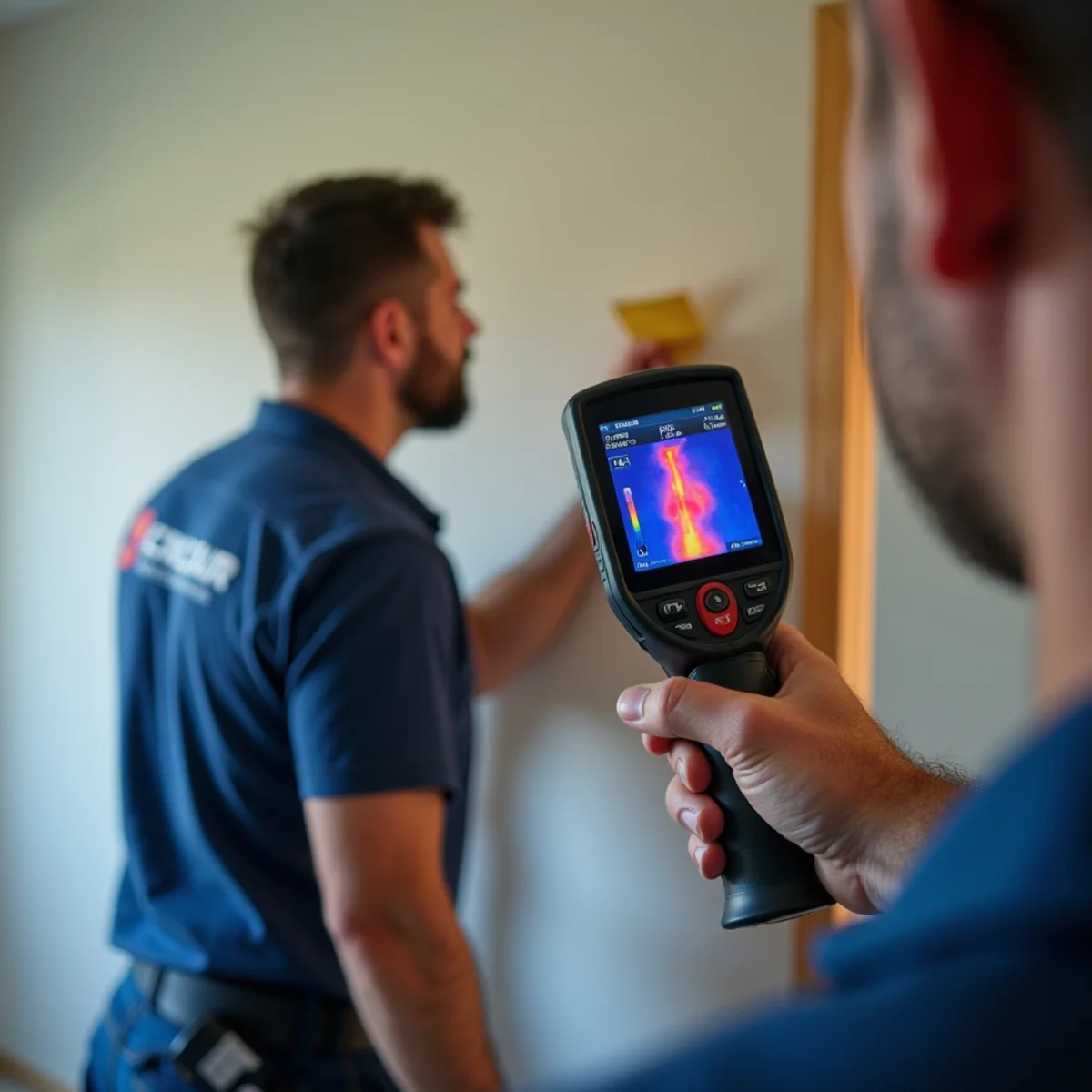
Hidden Leak Symptoms: Warm Floor Spots, High Water Bills, and the Sound of Running Water
Hidden leaks announce themselves indirectly. Here are the signals worth acting on, and the meter test that settles it.
5 min read
How Restoration Works
Black Mold vs. Mildew: How to Tell the Difference and When to Call a Pro
One wipes off a shower tile. The other is growing in the material. Here's how to tell which you have without a lab.
5 min read