How Restoration Works
Stormwater Got Inside: What's Salvageable After a Flood and What Isn't
Dealing with this right now? We answer 24/7 and dispatch across Rancho Cucamonga in 60 minutes.
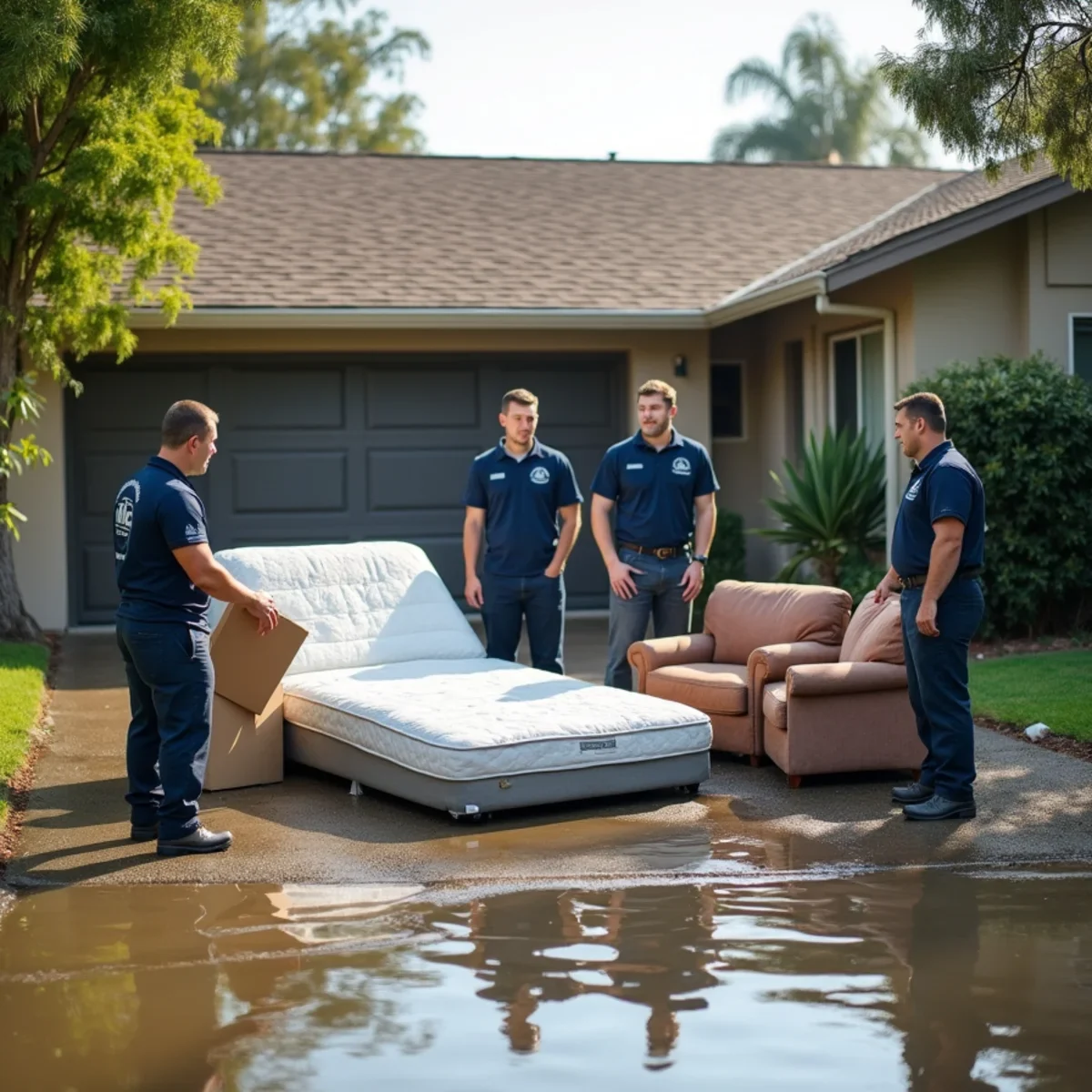
+1 (201) 277-9344Water that came in across the ground is Category 3 — grossly contaminated — no matter how clear it looked. It crossed roads, yards, and possibly an overwhelmed storm system on its way to your door.
That single fact drives every keep-or-discard decision below.
The principle: porosity
Non-porous materials have no internal structure for contamination to enter. They can be cleaned and disinfected on the surface, and they come back.
Porous materials absorb the contamination internally. You cannot disinfect the inside of a mattress or a sheet of particle board. They go.
Semi-porous materials are the judgement calls — solid wood, plywood, some finished surfaces — where cleaning and evaluation determine the outcome.
Generally keep
- Glass, metal, ceramic and hard plastic
- Sealed hard surfaces, tile, stone countertops
- Solid wood furniture, after cleaning and evaluation — check for delaminating veneer and swollen joints
- Jewellery and durable non-porous valuables
- Dishes, cookware and utensils, after washing and sanitising
- Appliances that were not submerged — anything that was needs assessing by a technician before it's powered up
Generally discard
- Mattresses, box springs and pillows. No exceptions.
- Upholstered furniture that was in contact with floodwater.
- Carpet pad. Always.
- Particle board and MDF furniture and cabinetry that got wet — it swells and delaminates and never recovers.
- Insulation of any kind that was saturated.
- Drywall below the water line, plus the wicking allowance above it.
- Food, including sealed packaging, that contacted floodwater. Canned goods can sometimes be salvaged after thorough disinfection of the can, but discard anything with a screw top, a pull tab, or a compromised seal.
- Medicines and cosmetics that got wet.
- Baby bottles, pacifiers and children's toys that are porous or can't be thoroughly sanitised.
- Anything that was submerged and cannot be washed at 60°C or dry-cleaned.
The judgement calls
Carpet. Discard after Category 3 floodwater. It can sometimes be saved after a fast clean-water loss, but not this.
Clothing and textiles. Washable items can often be saved with hot washing and proper detergent. Anything that can't take a hot wash, and anything that was in contact for an extended period, goes.
Books, documents and photographs. Ordinary books usually go. Irreplaceable documents and photographs have specialist recovery options — freezing them stops deterioration and buys time for professional treatment. Tell your restoration company on day one, not day four. This is genuinely worth doing for anything you can't replace.
Electronics. Anything submerged should be assessed rather than tested. Don't power it up to see if it works — that's how a possibly-recoverable device becomes definitely dead.
Solid wood flooring. Sometimes saved with mat drying if the water was clean and the response fast. After Category 3 floodwater, usually not.
Before anything goes to the curb
This is the part that costs people money.
Photograph every item individually. Not one photo of a pile.
Record for each: what it is, brand and model, roughly when you bought it, what you paid or what it costs now.
Find proof of purchase where you can — email receipts, card statements, retailer order histories, warranty registrations. Photos of the room from before the loss are legitimate evidence too.
Your personal property claim is paid from this inventory. Items binned before documentation are, in practice, items you paid for twice.
If health considerations force immediate removal, photograph thoroughly first and get written documentation from the restoration company recording what was removed and why.
Appliances and electronics: don't test them
The instinct after a flood is to plug something in and see whether it survived. Resist it.
Anything that was submerged should be assessed before it's powered up, not after. Water inside a motor housing, a compressor or a circuit board doesn't announce itself, and applying power to a wet device is how a possibly-recoverable item becomes definitely dead — and occasionally how a fire starts.
For gas appliances that got wet, the control valve and the burner assembly both need checking by a qualified technician. For HVAC equipment, a flooded air handler or furnace is a specific hazard: not only is the unit damaged, but running it distributes whatever contamination reached it through the entire house.
Refrigerators and freezers are worth separating out. The unit itself may be fine if the water stayed below the compartment, but food that was inside during a power outage of more than about four hours is a loss regardless of whether floodwater reached it.
Handling it safely
Gloves, eye protection, an N95 or better, and boots. Wash hands thoroughly and often. Keep children and pets out entirely. Don't eat, drink or smoke in the affected area.
If anyone in the household is immunocompromised, pregnant, elderly or very young, they should not be in there at all.
Ventilate to the outside where you safely can — but do not run the HVAC system to do it. That moves contaminated air into rooms the water never reached.
What professional flood cleanup involves
Pump and extract standing water, silt and debris. Document before demolition — the entry point and water line determine your coverage. Remove contaminated porous materials to a documented cut line under containment with HEPA filtration. Clean first, then disinfect — sequence matters, because disinfectant applied over mud does nothing. Dry to a documented standard. Rebuild.
See flood cleanup for the full process.
Documents, photographs and the things you cannot replace
Paper is porous, so the general rule says discard — but the general rule assumes the item is replaceable, and much of what is in a filing cabinet or a photo box is not.
For wet documents and photographs, the enemy is not the water itself but what happens over the next forty-eight hours as they dry unevenly and stick together, or as growth starts in the paper.
The technique that buys time is freezing. Separate what you can, put the rest into bags or containers without trying to peel photographs apart, and freeze them. Frozen material stops deteriorating, and it can be worked on later — air dried slowly, or sent to a document recovery specialist for vacuum freeze drying.
For anything that came into contact with Category 3 water, handle it with gloves and accept that some of it will not be salvageable regardless of technique. Records of legal or financial significance can usually be reissued; the photographs cannot, which is why they are worth the freezer space.
The thing worth doing before next winter
Anyone below a burn scar or near a drainage — the North Etiwanda foothills, the canyon-adjacent parts of Glendora, homes near a wash — should be doing a proper October drainage walk, and should know whether they carry flood insurance, because standard homeowners policies exclude this entirely.
Storm water in the house? +1 (201) 277-9344.
FAQ
Questions people also ask
Can I keep furniture that got flooded?
Solid wood furniture can often be cleaned and saved after evaluation. Upholstered furniture that contacted floodwater cannot — the contamination is inside the padding and fabric. Particle board and MDF pieces swell and delaminate and don't recover. Mattresses and box springs always go.
What about photographs and documents?
Don't discard them. Specialist recovery exists for water-damaged photographs and documents, and freezing them stops deterioration while you arrange it. Tell your restoration company on day one — the window for successful recovery narrows quickly.
Is canned food safe after a flood?
Undamaged metal cans can sometimes be salvaged after thoroughly disinfecting the outside and removing the labels. Discard anything with a screw top, a pull tab, a crimped seal, or any dent or compromise — and discard all food in porous or paper packaging regardless of how it looks.
What about the HVAC system and the ducts?
Have it inspected before you run it, and do not switch it on to help the house dry. If floodwater reached the ducting, the furnace base or the air handler, running the system distributes contamination through every room it serves. Ductwork that took contaminated water usually needs cleaning or replacement, and that assessment belongs to an HVAC contractor rather than a restoration crew.
Services mentioned
- Flood CleanupStorm and runoff flooding brings contaminated water. We pump, strip, sanitize and dry — then document it for your carrier.
- Sewage CleanupCategory 3 black water handled properly: PPE, containment, removal of contaminated material, disinfection and odor control.
- Mold RemediationContainment, HEPA filtration, source removal and moisture correction — remediation that fixes the cause, not just the stain.
Keep reading
How Restoration Works
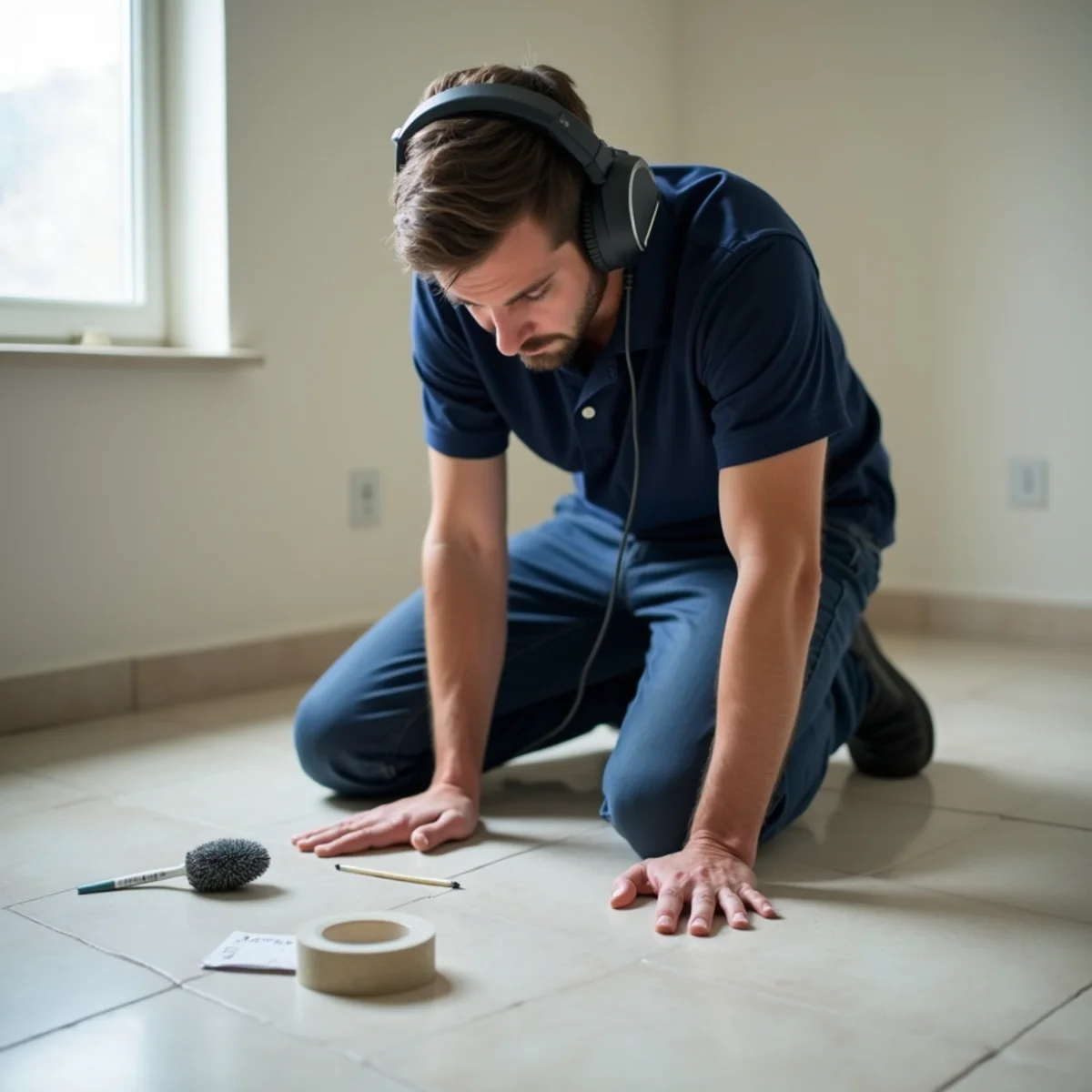
How Pros Find Slab Leaks Without Tearing Up Your Whole Floor
Four techniques that turn 'somewhere under the west half of the house' into a marked spot on your floor.
5 min read
How Restoration Works
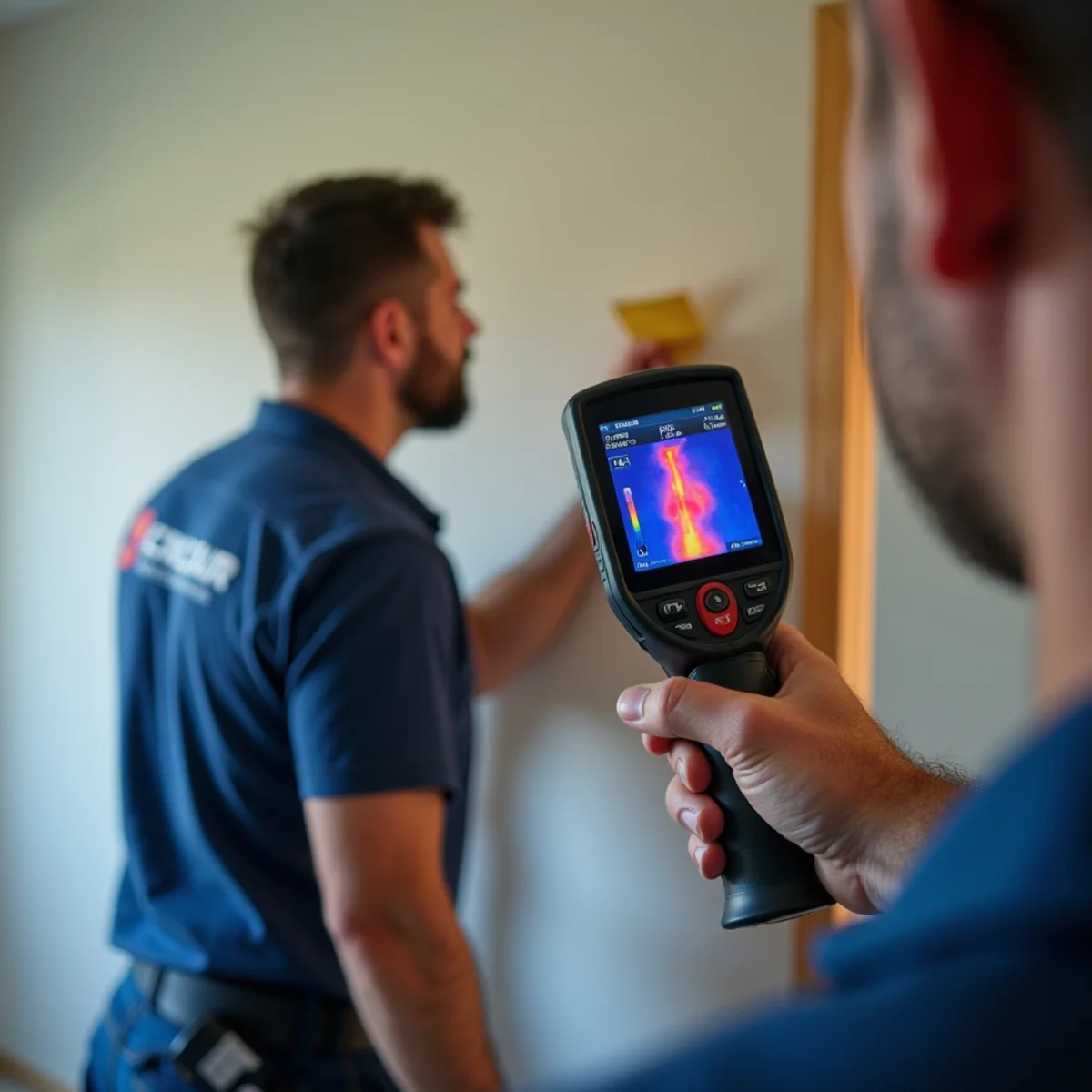
Hidden Leak Symptoms: Warm Floor Spots, High Water Bills, and the Sound of Running Water
Hidden leaks announce themselves indirectly. Here are the signals worth acting on, and the meter test that settles it.
5 min read
How Restoration Works
Black Mold vs. Mildew: How to Tell the Difference and When to Call a Pro
One wipes off a shower tile. The other is growing in the material. Here's how to tell which you have without a lab.
5 min read