
Emergency Guides
Washing Machine Supply Line Burst: 5 Steps to Limit the Damage
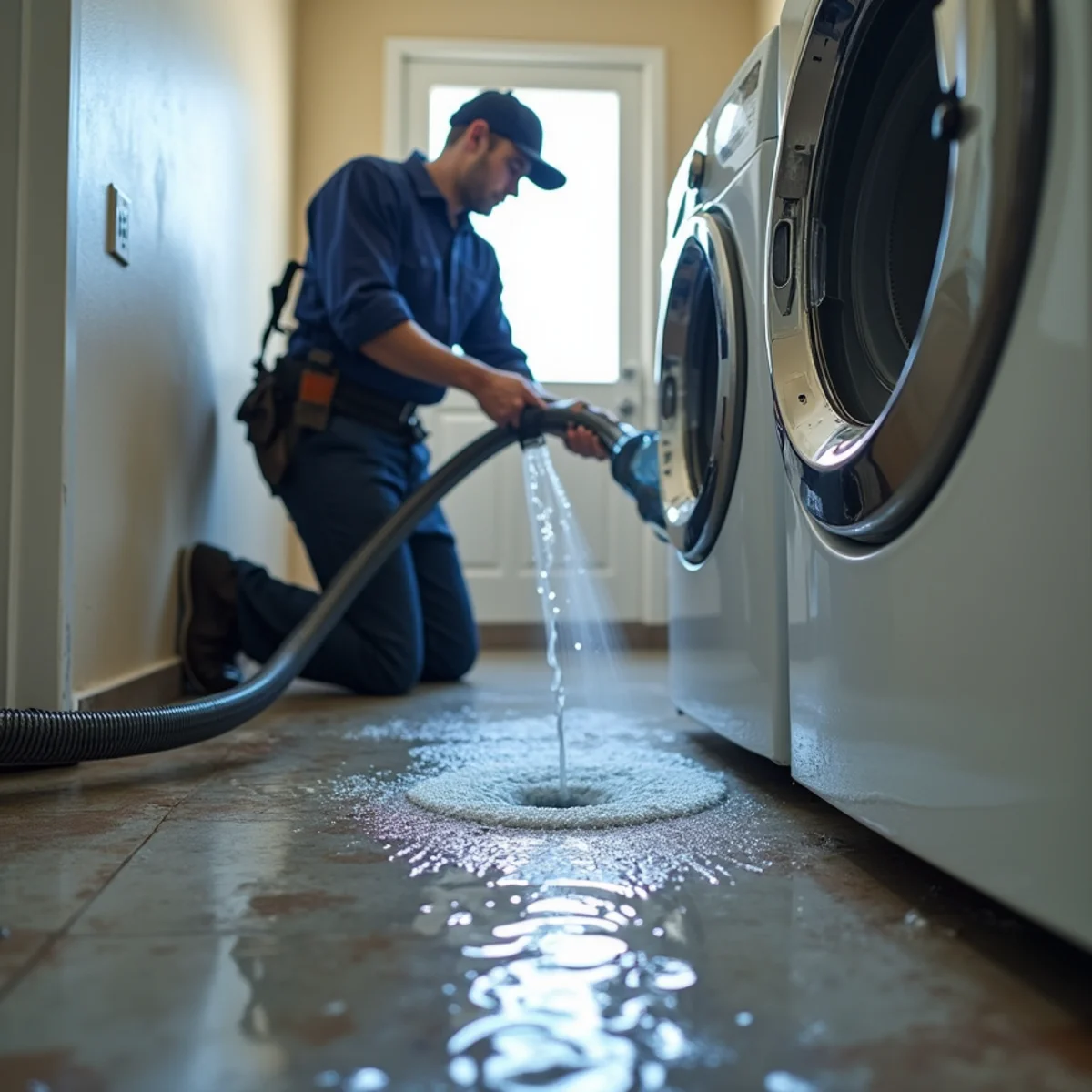
Dealing with this right now? We answer 24/7 and dispatch across Rancho Cucamonga in 60 minutes.
+1 (201) 277-9344A washing machine supply hose is under mains pressure every minute of every day, whether the machine is running or not. When one lets go, it delivers water at full pressure until somebody closes a valve.
At a typical residential flow rate, that's several hundred gallons an hour. If it happens while you're at work, it runs for eight of them.
Step 1: Close the valves behind the machine
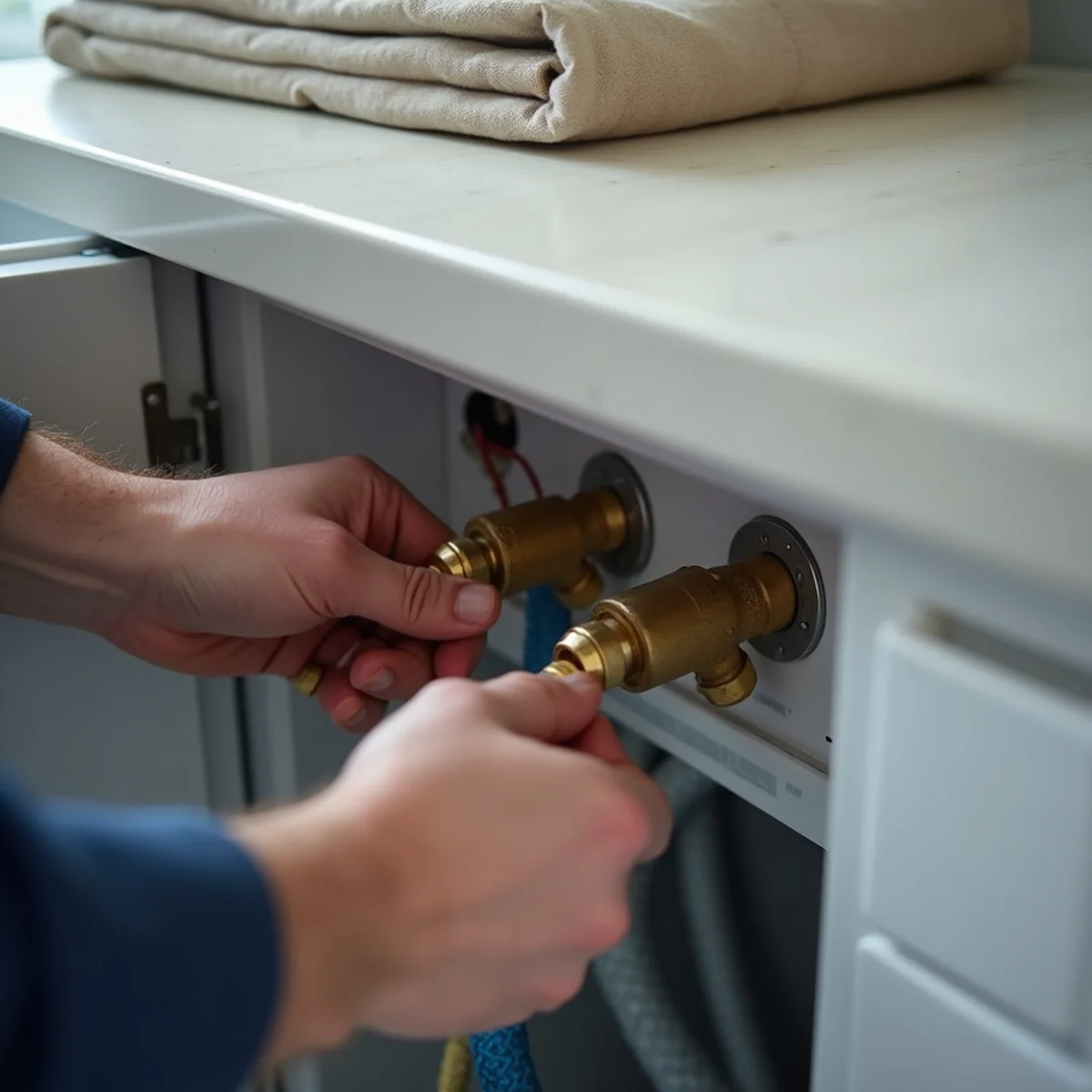
There are two, hot and cold, on the wall behind the washer — either separate handles or a single lever box. Close both.
If they won't turn — and on valves that haven't moved in fifteen years, they often won't — go to your main shut-off. In most local homes that's a meter box at the street, near the front hose bib, or on the garage wall.
Don't force a corroded valve hard enough to snap it. That turns one problem into two.
Step 2: Kill the power
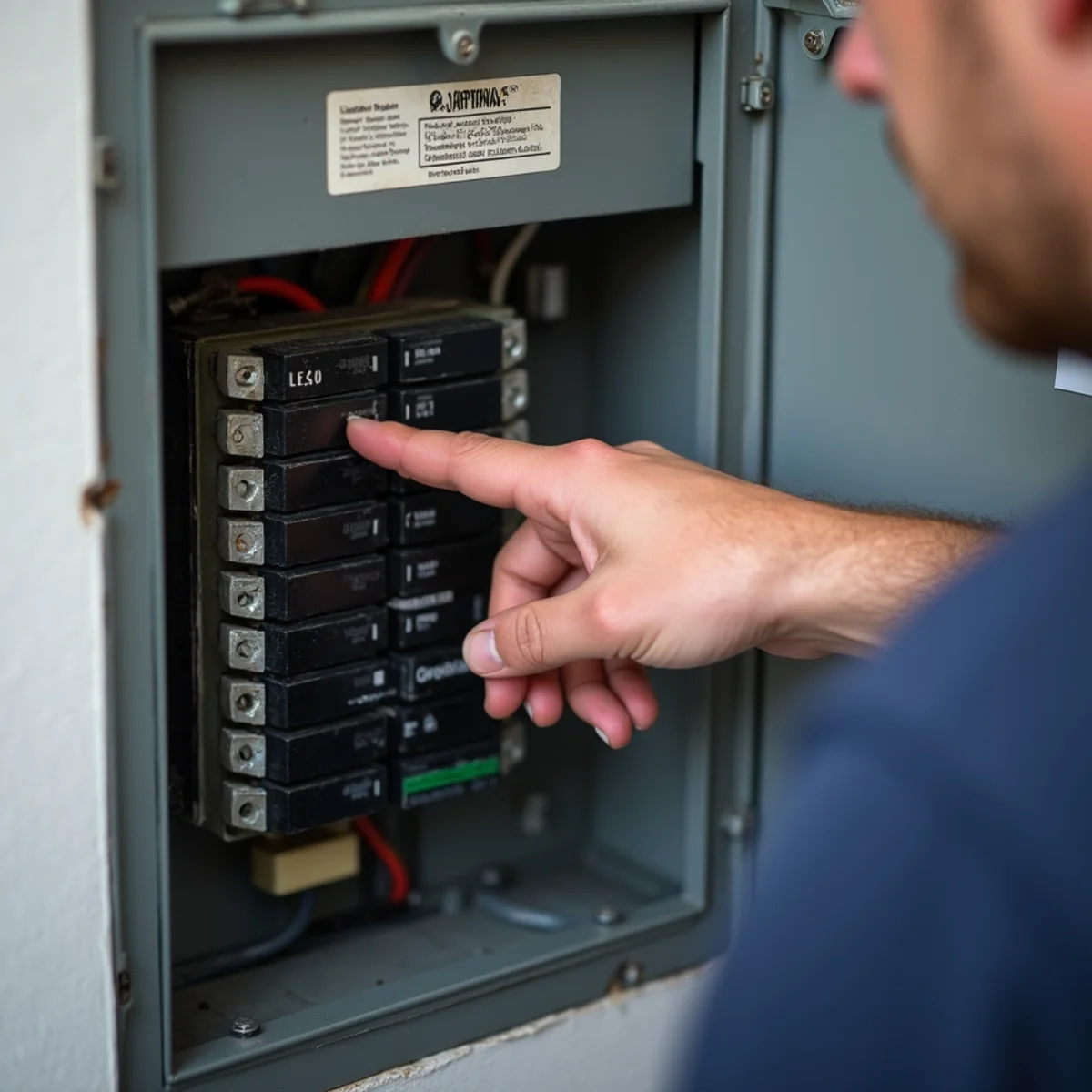
The washer, the dryer, and anything else plugged in nearby. If the laundry is in the garage, that likely includes a freezer and whatever else is on that circuit.
Approach the panel from a dry route. If you can't, leave it and keep everyone out.
Step 3: Follow the water — it went further than you think

This is where people underestimate the job.
Laundry rooms are almost always adjacent to something absorbent. Check, in this order:
- Under and behind the machines. Pull them forward if you can. The wall behind is usually already wet.
- The adjoining room's flooring. Water crosses a threshold in seconds and carpet wicks it several feet under the surface without showing on top.
- Cabinet toe-kicks and vanity bases. Particle board absorbs water and holds it indefinitely.
- The ceiling below, if your laundry is upstairs. Water finds the joist bay and travels.
- Anywhere the floor slopes. Garage laundries frequently drain toward the house.
Press a hand flat on the carpet a few feet out from the visible edge. If it's cool and damp, the water is further than it looks.
Step 4: Document before you clean
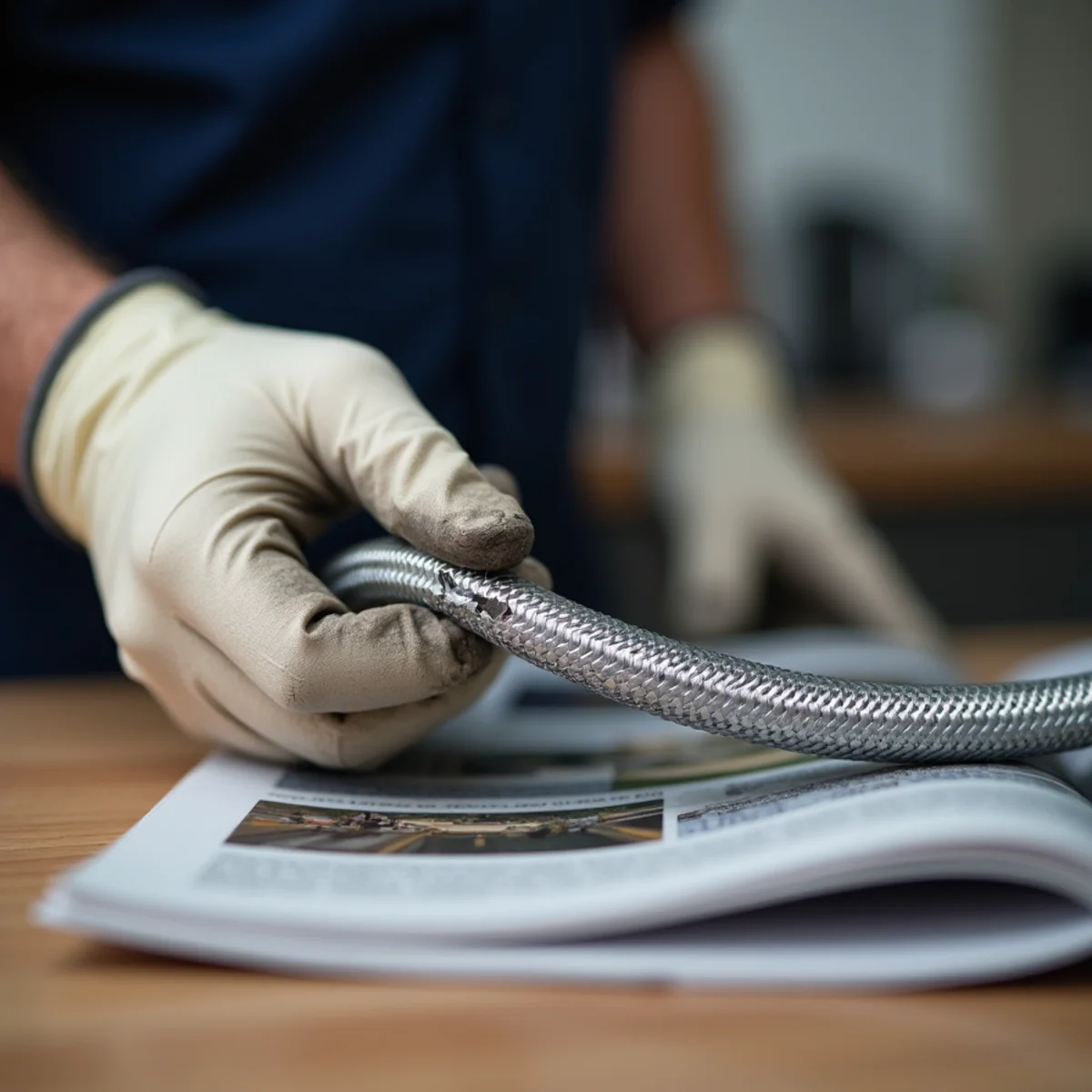
Photograph everything before anything moves:
- The failed hose, before it's replaced — keep it
- The water line on the wall and the baseboard
- Every affected room, wide and close
- Everything wet: flooring, furniture, stored items, the machines themselves
That photograph of the split hose is what tells your adjuster this was a sudden failure rather than a slow drip that ran for months. It's the difference between a paid claim and a denied one.
Step 5: Limit the spread, safely
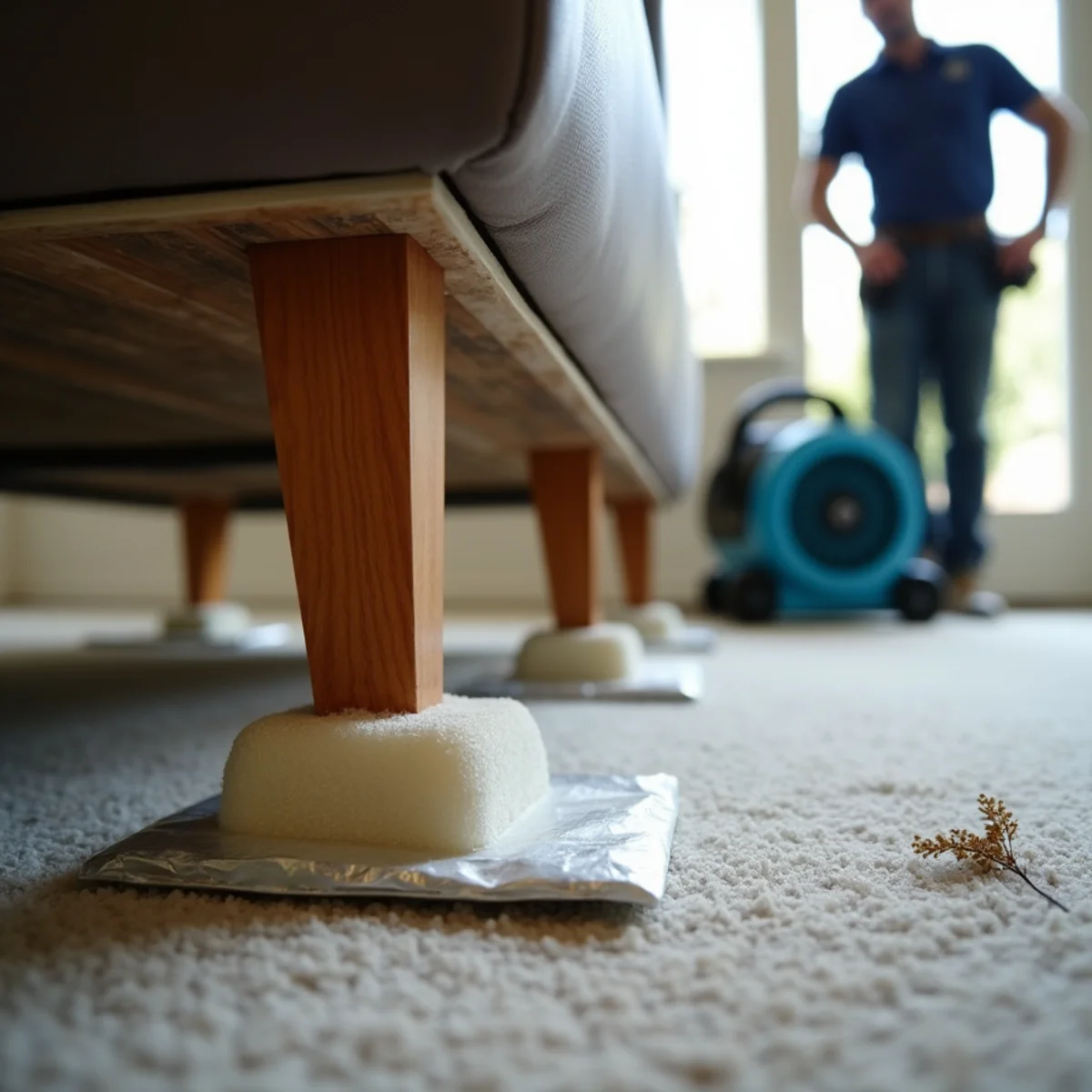
Move belongings up and out. Lift furniture onto blocks or foil. Squeegee or shop-vac what you can reach on hard surfaces.
Then stop, and don't do these:
Don't run the HVAC or house fans. You'll push moisture into rooms that are still dry.
Don't lift the wet carpet. Pulling it wrong delaminates the backing and turns a salvageable carpet into a replacement.
Don't throw the ruined items away before they're photographed and inventoried.
Why this happens when nobody's home
Two reasons, and both are worth understanding.
The first is simple exposure: the hoses are pressurised 24 hours a day, so failures are distributed randomly across the day and most of your day is spent elsewhere.
The second is that the failure often starts small. A pinhole in a rubber hose sprays a fine mist that soaks the wall behind the machine for days before the hose gives way completely. By the time it becomes obvious, the drywall behind has been wet for a week.
That's why we frequently find growth behind laundry walls on jobs where the homeowner believes the flood happened this morning.
The fifteen-dollar fix
Rubber washing machine hoses have a service life of roughly three to five years. Most people never replace them. We routinely find original hoses on twenty-year-old machines.
Replace them with braided stainless steel hoses. They cost about fifteen dollars each, they take ten minutes to fit, and they are dramatically more resistant to the failure mode above.
While you're there, two more things worth doing:
Turn the valves off when you go away for more than a couple of days. Or better, fit a single-lever shut-off box so it's one motion rather than two stiff valves.
Put a leak sensor on the floor behind the machine. They cost very little, run on a battery for a year or more, and they alert you at the point where a slow failure is still a small problem.
For anyone in the newer two-story housing across Chino and Eastvale, where second-floor laundry rooms are standard, that sensor is genuinely one of the highest-value purchases you can make for your house. A second-floor hose failure damages the upper floor, the joist cavity and the downstairs ceiling.
What restoration involves
Extraction of standing and sub-surface water from flooring, carpet and pad. Removal of soaked carpet pad — it holds enormous volume and rarely justifies drying. Opening and drying the wall cavity behind the machine, which is nearly always wet. Then structural drying against daily moisture readings, and rebuild of whatever came out.
If your laundry is upstairs, add the joist cavity between floors and the ceiling below — three assemblies from one hose.
The drain hose version, which fails differently
Supply lines burst under pressure and flood fast. The drain hose fails quietly, and in a front-loading machine it is arguably the more common problem.
Two things go wrong. The hose works its way out of the standpipe during a spin cycle — the vibration walks it loose — and the machine then pumps its entire drain volume onto the floor on every wash. Or the standpipe itself backs up because of lint accumulation, and the water overflows at the top of the pipe rather than going down it.
Both produce the same picture: a puddle that appears during a wash and is gone by the time anyone looks properly, repeated weekly until the flooring or the wall behind the machine gives it away. In a second-floor laundry that means weeks of water into the joist cavity before anyone notices a ceiling stain downstairs.
Two fixes, both free. Secure the drain hose to the standpipe with a zip tie so vibration cannot walk it out. And if the machine ever overflows at the standpipe, treat it as a blocked drain rather than a one-off.
Insurance
A burst supply hose is sudden and accidental discharge — a standard covered peril. Expect the water damage to be covered and the hose itself not to be, which is fine, because the hose costs fifteen dollars.
The claim risk is the slow-failure scenario: a hose that had been misting for weeks reads as gradual damage. Photograph the failed hose, keep it, and report promptly.
Flooded right now? Call +1 (201) 277-9344.
FAQ
Questions people also ask
How often should washing machine hoses be replaced?
Rubber hoses every three to five years. Better still, replace them once with braided stainless steel — about fifteen dollars each and ten minutes to fit. We routinely find original rubber hoses on twenty-year-old machines, and they're one of the most common causes of home flooding we respond to.
The water only looks like it covered the laundry room. Is that the whole job?
Usually not. Carpet in an adjoining room wicks water several feet under the surface without showing on top, cabinet toe-kicks absorb it, and if the laundry is upstairs the water travels through the joist bay to the ceiling below. Press a hand flat on the carpet a few feet out from the visible edge — cool and damp means it's further than it looks.
Will insurance cover a burst washer hose?
The resulting water damage, yes — it's sudden and accidental discharge, a standard covered peril. The hose itself won't be covered, which hardly matters. What can cause problems is a hose that had been misting for weeks before it split, since that reads as gradual damage. Photograph the failed hose and keep it.
Does the machine itself need replacing?
Often not. A supply hose failure is external to the appliance, so the machine is usually fine once it has been checked over — the exception is if water got into the control board or the motor, which is more likely on a front loader sitting in standing water. Have it inspected before you run it, and do not test it just to see whether it works.
Services mentioned
- Water ExtractionTruck-mounted units pull standing and sub-surface water out in hours — the step that decides whether your floors survive.
- Emergency Water RemovalOne number, answered by a person, any hour of any day — with a truck rolling before the call ends.
- Structural DryingAir movers and commercial dehumidifiers placed to a calculated load, with daily moisture readings you get to see.
Keep reading
Emergency Guides
Dishwasher Leaked Overnight and Flooded the Kitchen — Now What?
The visible puddle is the least of it. Water under cabinets and beneath floating floors is where dishwasher leaks actually do damage.
6 min read
Emergency Guides
Standing Water in the House: Is It Safe to Stay, and Who Do You Call First?
Three questions decide it: is the electricity safe, what's in the water, and is the structure sound. Work through them in order.
5 min read

Emergency Guides
How to Find and Shut Off Your Home's Main Water Valve (Before You Ever Need To)
Do this on a Saturday afternoon in daylight, not at 2 a.m. in the dark with water rising. Here's exactly where to look.
4 min read