
Local Risk & Rancho Cucamonga
What Tropical Storm Hilary Taught San Bernardino County About Flash Flooding
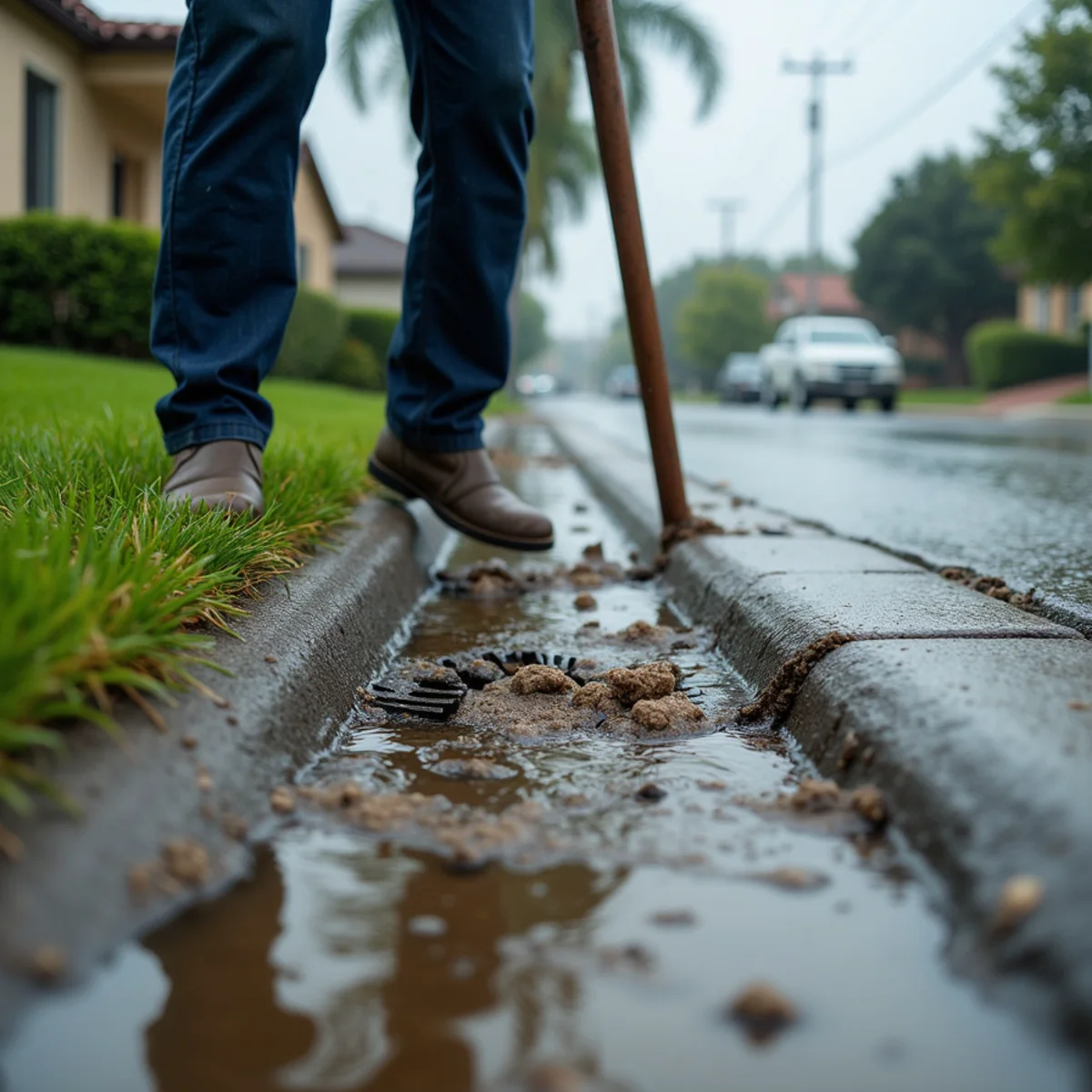
Dealing with this right now? We answer 24/7 and dispatch across Rancho Cucamonga in 60 minutes.
+1 (201) 277-9344In August 2023, Tropical Storm Hilary moved north into Southern California and delivered rainfall totals that parts of San Bernardino County had never recorded — over a foot in some mountain locations, with flash flooding, debris flows and road closures across the region.
It was unusual in timing, in origin and in intensity. It was also a useful stress test, and it exposed four things worth acting on.
Lesson 1: The dry season is not a safe season
Regional flood planning assumes the rain falls November through March. Rancho Cucamonga averages roughly 17.7 inches a year and nearly all of it arrives in that window.
Hilary arrived in August, onto ground that had been baking for months and infrastructure that was in its dry-season state — drains full of eight months of accumulated debris, gutters that hadn't been cleared since spring, sandbags not yet bought.
The practical consequence: drainage maintenance shouldn't be seasonal. A yard drain full of leaves is just as blocked in August as in January.
Lesson 2: Ground that has been dry for months sheds water
This is counterintuitive, and it's the single most important physical fact about flooding here.
Dry soil, particularly the hardpan and decomposed granite common on an alluvial fan, doesn't absorb rainfall readily after a long dry period. Water beads and runs rather than soaking in.
So a summer storm — or the first real storm of the season — produces disproportionate runoff compared with the same rainfall in February onto already-wet ground.
Which is why the first significant storm of the season is often the most damaging, and why the pre-season drainage check matters more than the mid-season one.
Lesson 3: Homes with no flood history flooded
The properties affected in 2023 weren't limited to mapped floodplains. Water reached houses that had never taken water, because it wasn't behaving like a river — it was behaving like sheet flow, finding low points, blocked drains, and openings at ground level.
The consequences for homeowners:
Being outside a FEMA high-risk zone doesn't mean low risk. It means you qualify for cheaper preferred-risk flood coverage. A substantial share of flood claims nationally come from outside mapped zones.
Standard homeowners insurance excludes all of this. Surface runoff into your home is a flood by definition, and there is no way to obtain coverage after the fact. NFIP policies also carry a 30-day waiting period, so buying when a storm is forecast doesn't work.
Garage doors, sliders and low thresholds are the entry points. Not windows, not the roof. The lowest opening in the building.
Lesson 4: Burn scars change everything downhill
The compounding factor across San Bernardino County is fire history.
After a burn in the San Gabriels or the San Bernardinos, the slope loses the vegetation that absorbed rainfall and held soil. Runoff increases dramatically, and it carries rock, ash and debris. That elevated risk persists for years while vegetation re-establishes.
Communities below burn scars — the foothill neighborhoods, Highland along City Creek, Glendora below the Dalton canyons — face a genuinely different risk profile from the valley floor, and it's one that changes with fire history rather than staying constant.
The county's flood control system — the debris dams above Rancho Cucamonga, the channels, the spreading grounds — exists precisely for this and it does its job. What it can't manage is water on your own lot.
What to actually do
Before the season, every year:
- Clear gutters and confirm downspouts discharge well clear of the foundation, not beside it
- Flush every yard drain, area drain and swale — eight dry months fills them
- Check that grading still falls away from the house on all sides; it settles over years
- Check retaining wall weep holes for blockage
- Know where your low openings are: garage thresholds, sliders, lower-level doors
If you're below a burn scar, add:
- Sandbags bought and stored before a storm is forecast, not during
- A plan for deflecting flow away from vulnerable openings
- A conversation with your agent about flood coverage, well ahead of the 30-day waiting period
When a storm is forecast:
- Move vehicles and valuables out of low garages and lower levels
- Deploy sandbags at known entry points
- Don't drive through flowing water. It's the leading cause of flood deaths and it applies to a foot of water on Baseline as much as anywhere else.
What to have ready before the next one
The useful output of an event like this is a short list of things that are easier to sort in advance than during a warning.
Know your shut-off. Not roughly — actually locate the main, confirm it turns, and make sure the tool it needs lives beside it. Photograph it and put the picture where the rest of the household can find it.
Have sandbags before they are gone. Fire stations and city yards frequently offer them ahead of storms, and they are unobtainable once a warning is issued. A dozen bags and a roll of plastic sheeting stored in the garage covers the doors and low openings that let water in.
Photograph the house dry. A walk through every room with a phone, twice a year, is the cheapest insurance documentation available. It settles the question of what condition things were in beforehand.
Check the policy in September. Flood cover normally carries a thirty-day waiting period, so the decision belongs in the dry season.
Clear the drains in October. Yard drains, area drains and downspouts hold eight months of debris by the time the first storm arrives.
If it gets in
Water that crossed the ground is Category 3 — contaminated regardless of appearance. Porous materials below the water line come out rather than being dried, surfaces are cleaned before they're disinfected, and the work is done under containment.
Photograph the entry point and water line before anything moves. With flood versus wind-driven water being the difference between an uncovered and a covered loss, that evidence decides the claim.
We work storm losses across San Bernardino County and dispatch 24/7 — though during a genuine regional event, every restoration company in the Inland Empire is working the same night. Calling early matters.
FAQ
Questions people also ask
Why does the first storm of the season cause the most damage?
Because ground that's been dry for months sheds water rather than absorbing it, and because drainage infrastructure is full of a season's accumulated debris. The same rainfall in February, onto already-wet ground with clear drains, produces far less runoff than it does in November.
I'm not in a flood zone. Was Hilary relevant to me?
Very much. Many of the properties affected in 2023 had no flood history and sat outside mapped high-risk zones — the water was sheet flow finding low points and blocked drains rather than a river overtopping. Being outside a mapped zone means cheaper flood coverage, not an absence of risk.
How long does burn-scar flood risk last?
Years, not a single season. Vegetation on the slope is what absorbs rainfall and holds soil, and it takes considerably longer to re-establish than people expect. Storms that were previously unremarkable can produce serious runoff and debris flow for several winters after a fire.
What should we have ready before the next one?
Sandbags obtained early — they are unobtainable once a warning is issued. A main shut-off you have actually located and turned, photographed for the rest of the household. A dry walk-through of every room on your phone, twice a year. Yard drains and downspouts cleared in October. And flood cover priced in September, because those policies commonly carry a thirty-day waiting period.
Services mentioned
- Flood CleanupStorm and runoff flooding brings contaminated water. We pump, strip, sanitize and dry — then document it for your carrier.
- Storm Damage CleanupEmergency tarping, water extraction and full interior restoration after Santa Ana winds and winter atmospheric rivers.
- Water ExtractionTruck-mounted units pull standing and sub-surface water out in hours — the step that decides whether your floors survive.
Keep reading
Local Risk & Rancho Cucamonga
Spike in Your Cucamonga Valley Water District Bill? You Might Have a Hidden Leak
A slab leak runs 24 hours a day. Your bill notices long before your floor does — if you're reading it.
5 min read
Local Risk & Rancho Cucamonga
Do Pipes Really Freeze in Rancho Cucamonga? Foothill Freeze Nights in Alta Loma and Etiwanda
Interior plumbing is fine. Hose bibs, pool equipment and irrigation backflow are the ones that split at 3 a.m. in January.
5 min read
Local Risk & Rancho Cucamonga
South Fontana's Expansive Clay Soils: Why Slabs Crack, Walls Shift, and Pipes Shear
A slab leak wets the soil, the soil swells, the slab moves, the movement stresses the pipe. Here's how to break the loop.
5 min read