Local Risk & Rancho Cucamonga
Spike in Your Cucamonga Valley Water District Bill? You Might Have a Hidden Leak
Dealing with this right now? We answer 24/7 and dispatch across Rancho Cucamonga in 60 minutes.
+1 (201) 277-9344Cucamonga Valley Water District serves most of Rancho Cucamonga, and for a lot of households the bill arrives, gets paid, and gets forgotten.
That's a missed opportunity, because an unexplained increase is frequently the earliest sign of a hidden leak — well before anything appears on a floor.
Why the bill notices first
A pinhole in a pressurised line runs continuously. Not when you use water — always. Twenty-four hours a day, seven days a week.
Even a small leak adds up fast at that duty cycle. Bills commonly double while the only visible evidence is a slightly damp patch of carpet that hasn't been noticed yet, or nothing at all.
Meanwhile a slab leak has nowhere to surface. There's no crawl space; the water works its way up through the concrete slowly, and it can take weeks to reach the flooring in any noticeable way.
So the bill is the early warning system. It's just one most people don't read.
Before you assume a leak: the ordinary explanations
Rule these out first.
Irrigation. By far the most common non-leak cause. A controller reset after a power outage, a season change, a broken sprinkler head, or a valve that isn't closing fully. Irrigation is usually the largest single use on a Rancho Cucamonga property.
Seasonal change. Summer usage is materially higher than winter. Compare to the same month last year, not to last month.
Household changes. Guests, a new appliance, filling a pool, a teenager discovering long showers.
Billing period length. Not all periods contain the same number of days.
A running toilet. The single most common indoor waster. A flapper that doesn't seat can pass a surprising volume continuously and silently. Test it: a few drops of food colouring in the tank, wait fifteen minutes without flushing, and check whether colour appears in the bowl. If it does, the flapper is leaking — a cheap part and a ten-minute fix.
The two-minute test that settles it
If the ordinary explanations don't account for it, confirm it yourself. No equipment needed.
- Turn off everything that uses water. Every tap, the ice maker, the irrigation controller, the pool auto-fill, any water treatment system in a regeneration cycle.
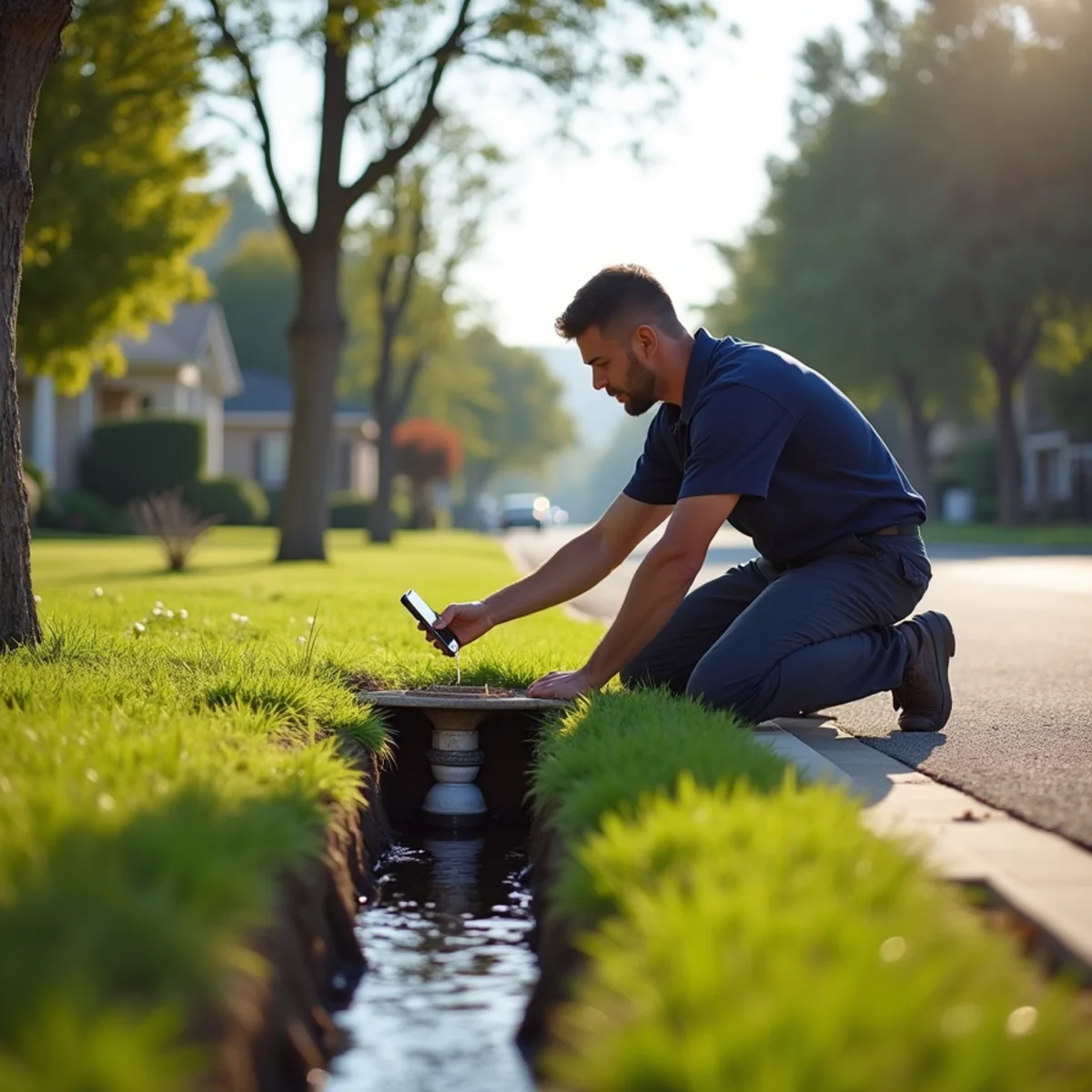
- Find your meter — usually in a box near the street.
- Look for the leak indicator — a small triangle, star or dial that spins with even minimal flow.
- Watch it for two minutes. Any movement means water is leaving the system.
To narrow it down: close the main shut-off valve at the house.
- Indicator stops → the leak is inside or under the house.
- Indicator keeps moving → the leak is in the service line between the meter and the house, or in irrigation upstream of the house.
That single step separates a plumbing job from a yard excavation before anyone quotes you anything.
You can also record the meter reading last thing at night and again before anyone uses water in the morning. A difference means a leak.
What it usually turns out to be here
Given the housing stock, the outcomes cluster.
An in-slab pinhole leak. The most common serious finding. Roughly two-thirds of the city's owner-occupied housing was built 1980–1999, slab-on-grade with copper through the concrete, now 35–45 years old in hard water. The classic presentation is a raised bill plus a warm spot on the floor.
An irrigation main or lateral. Common on larger lots with mature landscaping. Invisible except for the bill and, sometimes, an unusually green strip of grass.
The service line between meter and house. Also invisible, and it's the homeowner's responsibility, not the district's.
A running toilet or a failed fill valve. The cheapest possible answer, which is why it's worth testing first.
What to do next
Call the district. CVWD can confirm whether your meter is reading correctly and can often help interpret consumption data. Many utilities also offer leak adjustments on a bill where a genuine leak has been found and repaired — worth asking about, and worth keeping the repair invoice for.
Then get it located. Leak detection is non-invasive — thermal imaging, acoustic listening and pressure isolation narrow it to a point rather than a room, which means the access opening is small and planned.
Why acting on the bill saves money twice
Obviously it stops the wasted water.
Less obviously, it catches the damage early. A slab leak found in week one is detection, repair or reroute, slab drying and some flooring. The same leak found in month three is all of that plus wet wall bases, plus growth under the flooring, plus a containment and mold remediation phase, plus a longer rebuild.
The bill is your chance to be in the first category.
Ask about a leak adjustment
Once a leak is repaired, it is worth asking your water provider whether any adjustment is available for the wasted volume. Many California water agencies operate some form of one-time leak allowance, and the ones that do rarely advertise it.
The terms vary by provider, so ask rather than assume. What these programmes tend to have in common is worth knowing in advance, because it shapes what you should keep:
Proof of repair. A plumber's invoice describing what failed, where it was and when it was fixed. Keep it even for a small repair.
A timeframe. Adjustments are commonly limited to a billing period or two around the leak, and there is usually a deadline for applying after the repair.
A once-only limit. Most programmes allow one adjustment per property in a given period, which is a reason to save it for a genuinely large bill rather than a minor one.
A partial credit. These typically rebate a portion of the excess consumption rather than the whole thing.
The call takes a few minutes. On a bill that has doubled because an irrigation main ran underground for two months, it is time well spent.
The habit
Look at the consumption figure on every bill, and compare it to the same period last year. If it's up and you can't explain it, do the meter test. Two minutes.
We locate leaks across the district daily, from the newer housing around Victoria Gardens to the slab-era tracts near Central Park.
Free detection assessment: +1 (201) 277-9344.
FAQ
Questions people also ask
How much can a hidden leak add to a water bill?
Enough to be obvious, because it runs continuously rather than only when you use water. Bills commonly double while the only physical evidence is a slightly damp patch nobody has noticed. That continuous duty cycle is exactly why the bill is a more sensitive early detector than your floor.
How do I check for a leak myself?
Turn off every fixture and appliance that uses water, including irrigation and the ice maker, then watch the leak indicator on your water meter — the small triangle or dial that spins with any flow. Movement means a leak. Then close the main at the house: if it stops, the leak is inside; if it keeps moving, it's in the service line or irrigation.
Will the water district adjust my bill if I had a leak?
Many utilities offer some form of leak adjustment where a genuine leak has been found and repaired, and it's worth asking about directly. Keep the repair invoice and the detection report — those are usually what's required to support the request.
Can we get the bill adjusted after we fix the leak?
Ask — many California water agencies operate some form of one-time leak allowance and they rarely advertise it. Terms vary by provider, but they generally want proof of repair in the form of a plumber's invoice describing what failed and when, they limit it to a billing period or two around the leak, they allow it once per property in a given period, and they credit a portion of the excess rather than all of it.
Services mentioned
- Leak DetectionThermal imaging, acoustic listening and moisture meters find the leak before we open anything up.
- Slab Leak DamageThe most common serious leak in Rancho Cucamonga's 1980s–90s tract homes. Detection, drying and full restoration.
- Water Damage RestorationEmergency extraction, structural drying and full rebuild — one crew from the first phone call to the final walkthrough.
Keep reading
Local Risk & Rancho Cucamonga
Do Pipes Really Freeze in Rancho Cucamonga? Foothill Freeze Nights in Alta Loma and Etiwanda
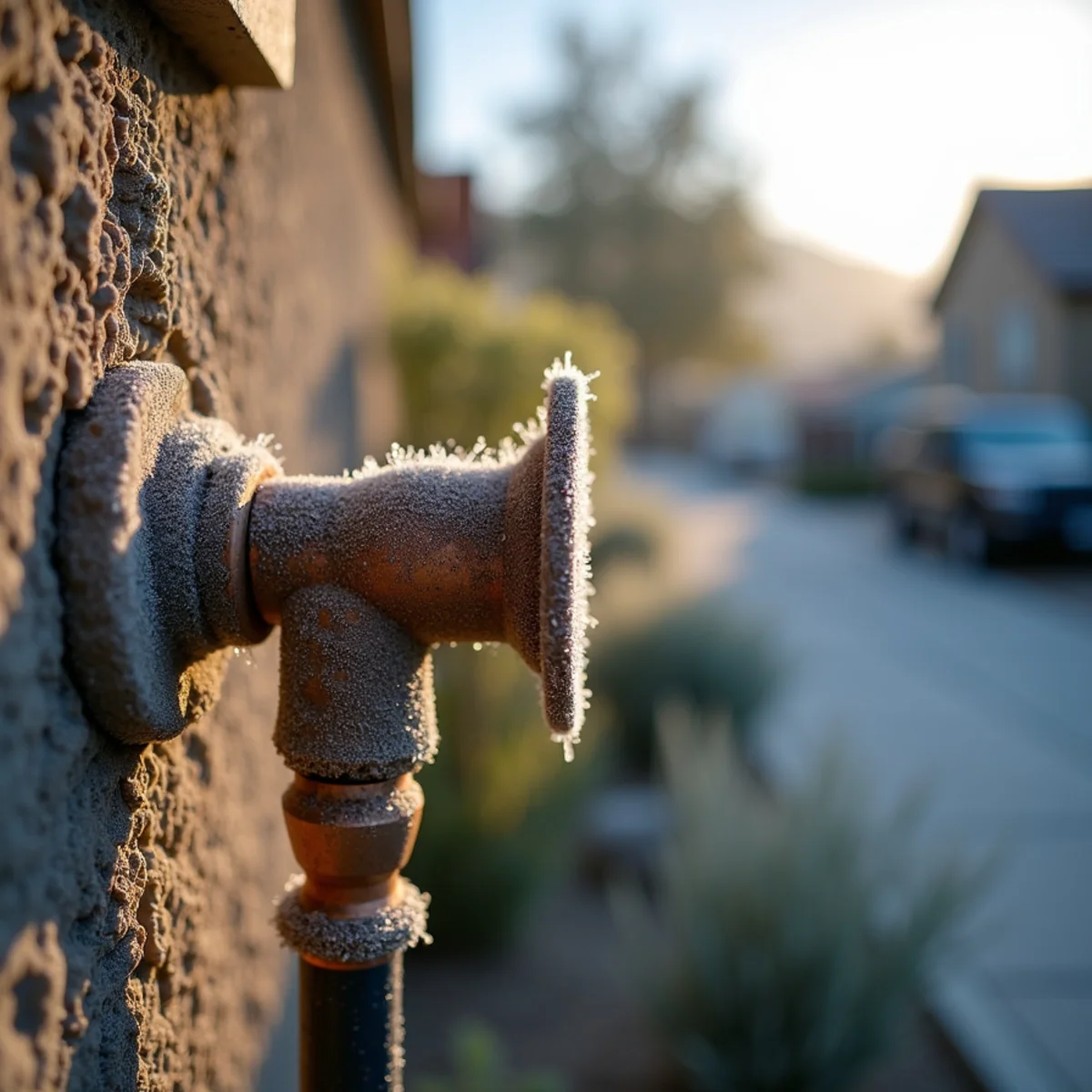
Interior plumbing is fine. Hose bibs, pool equipment and irrigation backflow are the ones that split at 3 a.m. in January.
5 min read
Local Risk & Rancho Cucamonga
South Fontana's Expansive Clay Soils: Why Slabs Crack, Walls Shift, and Pipes Shear
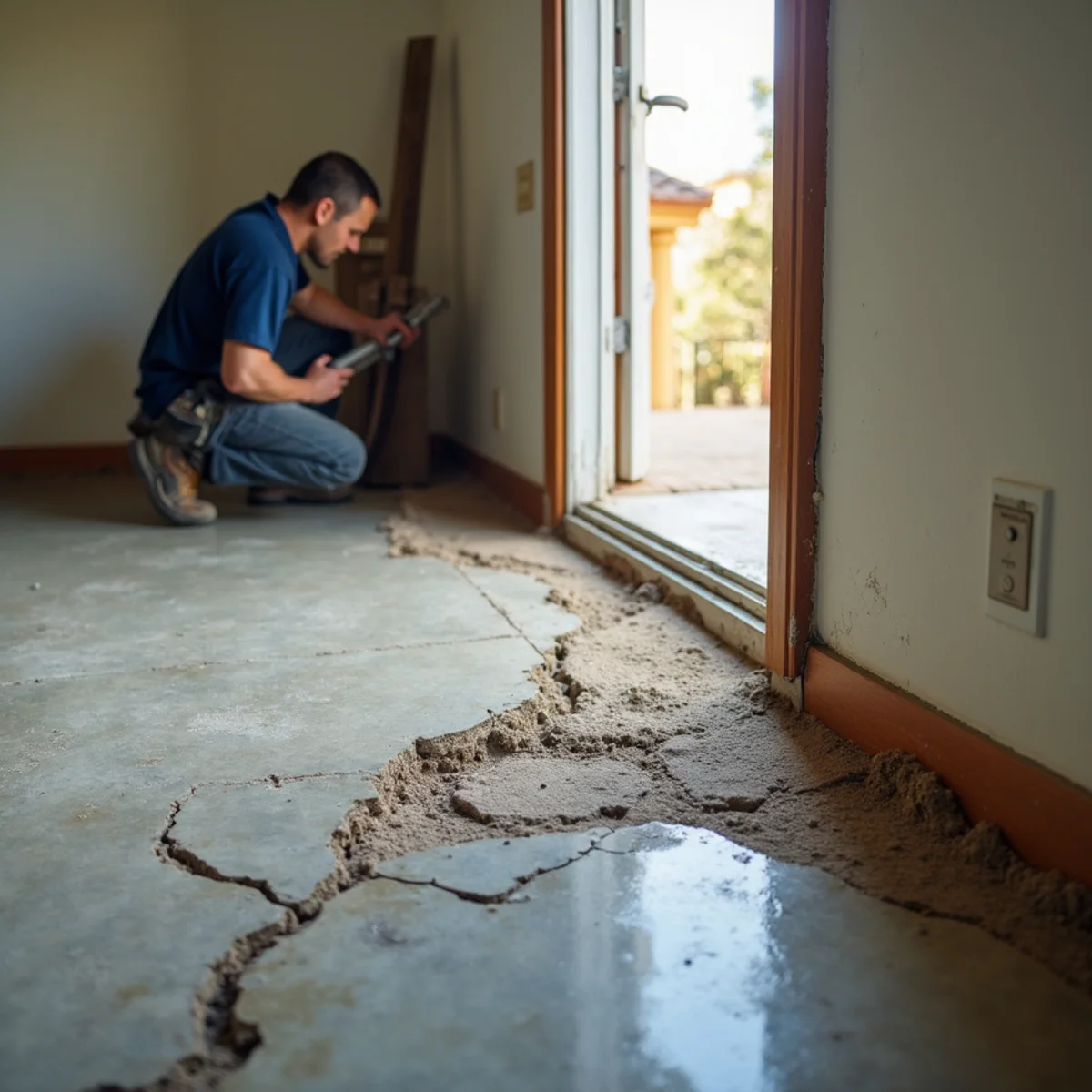
A slab leak wets the soil, the soil swells, the slab moves, the movement stresses the pipe. Here's how to break the loop.
5 min read
Local Risk & Rancho Cucamonga
California's Water Heater Strapping Law (HSC §19211): The Earthquake Leak Risk Hiding in Your Garage
Strapping stops your tank falling over in a quake. It does nothing about the tank corroding — and people conflate the two.
5 min read