
Local Risk & Rancho Cucamonga
South Fontana's Expansive Clay Soils: Why Slabs Crack, Walls Shift, and Pipes Shear
Dealing with this right now? We answer 24/7 and dispatch across Rancho Cucamonga in 60 minutes.
+1 (201) 277-9344Parts of south Fontana sit on expansive clay-loam soils deposited by the Lytle Creek and Day Creek floodplains. That soil behaves differently from the sandy, well-draining ground across much of the valley, and it changes what water damage looks like there.
What expansive soil does
Certain clay minerals absorb water into their crystal structure and physically swell. Dry them out and they contract, and shrink away from whatever they were pressing against.
That cycle produces soil movement — vertical and lateral — and anything built on or buried in it moves too.
Locally, the cycle is pronounced because the moisture regime is extreme: essentially no rain from April through October, then the year's rainfall concentrated November through March. Soil goes from thoroughly dry to saturated and back, annually.
What that does to a house
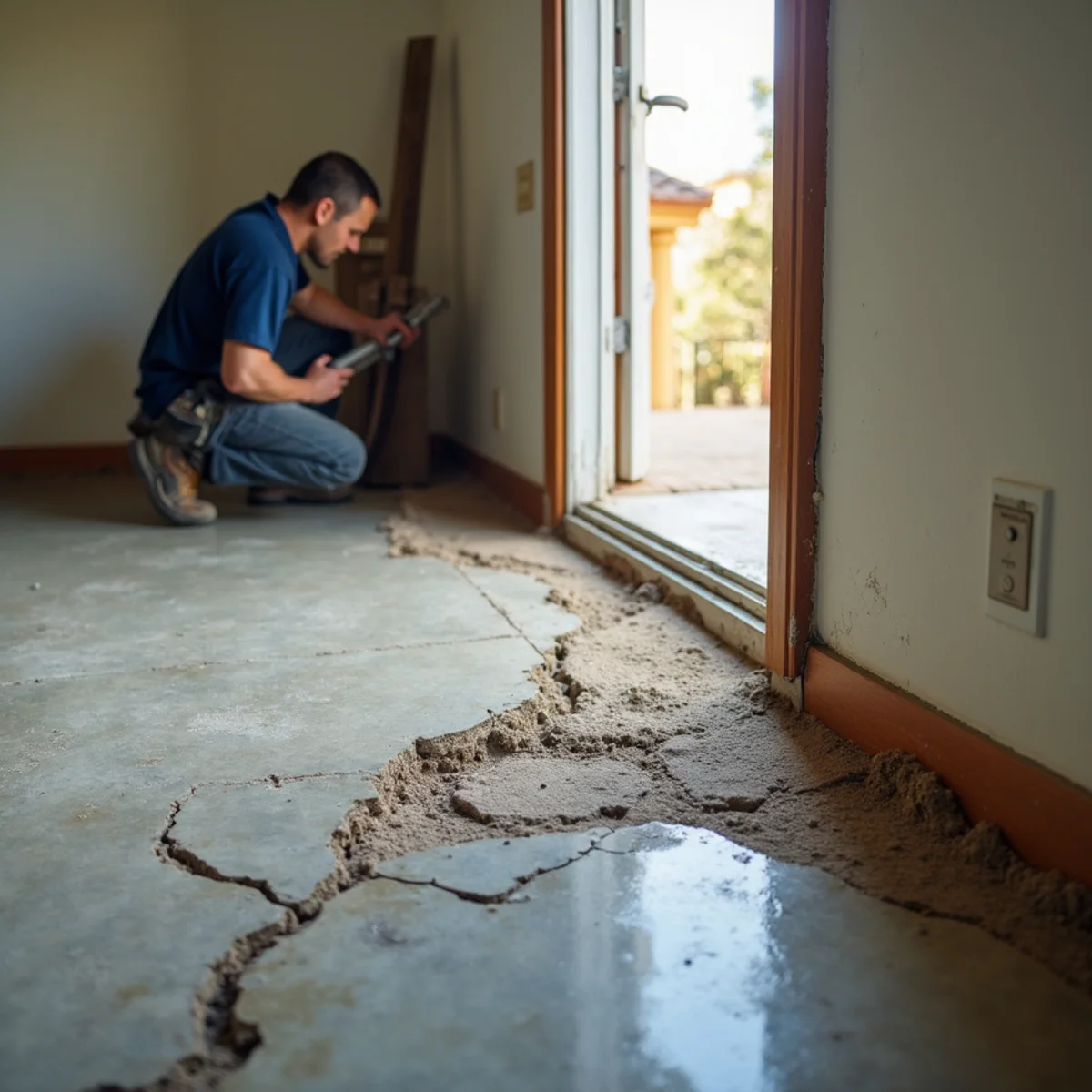
Slab cracking. Concrete is strong in compression and weak in tension. Differential movement underneath puts a slab into tension somewhere, and it cracks. Most slab cracks are cosmetic; some aren't.
Differential settlement. One part of the foundation moves relative to another. Symptoms: doors and windows that stick seasonally, drywall cracks radiating from door and window corners, floors that feel out of level, gaps opening at trim.
Seasonal reversal. A distinguishing feature. A door that sticks every winter and frees up every summer is moisture-driven soil movement, not a settling foundation. Homeowners frequently notice this for years without connecting it to anything.
Stress on buried pipe. This is where it becomes our problem. Water and drain lines running through and under the slab are rigidly connected at fixtures and at the point they exit the building. When the soil moves, the pipe is stressed at those connections, and enough cycles produce a crack, a shear or a joint failure.
The feedback loop
Here's the part that makes it worse than either problem alone.
- A supply line under the slab develops a leak.
- The escaping water saturates the surrounding clay.
- The wetted clay swells and lifts locally.
- The differential movement stresses the slab and the pipes running through it.
- The stress worsens the leak, or creates another one.
By the time a slab leak is found in this soil, the damage is often not confined to the water. And a homeowner who has noticed a door starting to stick and, separately, a warm patch on the hallway floor has usually not connected the two.
If you have both symptoms, mention both. They're one problem.
What water damage looks like on this ground
Slab leaks that present with structural symptoms. Alongside the warm floor spot and the raised water bill, a door that's started sticking or a new drywall crack.
Drain line failures under the slab. Cast iron and older ABS drain lines in 1950s–80s housing crack under movement. They leak underneath silently — no back-up, no puddle, just wet soil under the house.
Drainage that stopped working. Soil movement changes surface grade over years. A yard that drained fine when the house was built can develop a low spot against the foundation.
Crawl space moisture in raised-foundation homes, where clay holds water and releases it into the sub-area for months.
What to do about the soil
You can't change the soil. You can manage its moisture, and consistency is the goal — the damage comes from the swing, not from any particular state.
Keep moisture even around the perimeter. Sudden saturation on one side of a house while the other stays dry is what produces differential movement. Foundation watering during long dry spells sounds odd and is genuinely used on expansive soils.
Get roof water away from the foundation. Downspouts discharging beside the wall create exactly the localised saturation to avoid. Extensions are the cheapest fix available here.
Watch trees. Large trees near a foundation draw substantial moisture from the soil on their side, drying and shrinking it locally. Root barriers help.
Fix leaks immediately. A slow leak into expansive clay does more than waste water.
Maintain grading and drainage as an ongoing item rather than a one-off.
Locally
South Fontana is the clearest example, sitting on the Lytle and Day Creek floodplain deposits with a large stock of 1950s–80s Kaiser Steel-era housing on slab. Semi-rural Bloomington between Fontana and Colton has similar ground, and the older, larger parcels there add long buried service runs to the picture.
North Fontana sits on different, generally better-draining ground — one of several reasons the two ends of the city produce genuinely different jobs.
What a slab crack does and does not mean
Almost every slab has cracks, and on expansive ground they are close to universal. Knowing which ones matter saves both unnecessary panic and misplaced calm.
Usually not a concern. Fine hairline cracks, often appearing in the first year or two as the concrete cures and shrinks. Cracks that run through a control joint — that is what the joint is for. Cracks with no vertical displacement, where you can run a hand across and feel nothing.
Worth watching. A crack that has widened measurably over a season, one showing vertical offset between the two sides, or one running diagonally from a corner of a door or window opening. Those indicate movement rather than curing.
Worth acting on now, whatever the width. Any crack that is damp, discoloured or has efflorescence — that white mineral bloom — around it. That is water moving through the slab, and on this ground the usual sources are a leaking supply line under the concrete or saturated soil beneath the footing.
The water question is the one that concerns us. A dry crack is a structural conversation for an engineer. A wet one is a plumbing and moisture problem, and it does not improve on its own.
What we do
Non-invasive leak detection to locate a slab leak precisely — which matters more on expansive soil, because exploratory excavation is disruptive and can itself alter local drainage.
Then extraction, extended slab drying (concrete releases moisture slowly, and saturated clay beneath it slows things further), remediation of anything that grew under the flooring, and reconstruction.
For the repair itself we coordinate with a licensed plumber, and on this ground an overhead reroute is frequently the better answer — it removes that line from the slab and the soil permanently.
Where structural movement is involved rather than just water, that's a foundation contractor or a soils engineer, and we'll say so rather than pretending otherwise.
Slab leak in Fontana? +1 (201) 277-9344.
FAQ
Questions people also ask
How do I know if my house is on expansive soil?
The seasonal signature is the tell: doors and windows that stick every winter and free up every summer, drywall cracks that open and close through the year, and gaps at trim that come and go. A soils report from the original construction or a geotechnical assessment gives you the definitive answer.
Can a slab leak cause foundation movement?
On expansive clay, yes. Escaping water saturates the surrounding soil, the soil swells and lifts locally, and that differential movement stresses the slab and the pipes running through it. It's a feedback loop — which is why a slab leak on this ground deserves a faster response than one on sandy soil.
Should I water my foundation?
On expansive soil it's a recognised practice, and the goal is consistency rather than saturation — even moisture around the whole perimeter through long dry spells, so the soil doesn't shrink dramatically on one side. Getting roof water away from the foundation matters just as much, because concentrated discharge creates exactly the localised swelling you're trying to avoid.
Which slab cracks actually matter?
Hairline cracks from curing, and cracks running through a control joint, are generally not a concern. Worth watching: a crack that has widened over a season, one with vertical offset between the sides, or one running diagonally from a door or window corner. Worth acting on now whatever the width: any crack that is damp, discoloured or has efflorescence around it, because that is water moving through the slab.
Services mentioned
- Slab Leak DamageThe most common serious leak in Rancho Cucamonga's 1980s–90s tract homes. Detection, drying and full restoration.
- Leak DetectionThermal imaging, acoustic listening and moisture meters find the leak before we open anything up.
- Basement & Crawl SpaceBelow-grade water is out of sight and easy to ignore — until the whole house smells. We pump, sanitize and dry it properly.
Keep reading

Local Risk & Rancho Cucamonga
Spike in Your Cucamonga Valley Water District Bill? You Might Have a Hidden Leak
A slab leak runs 24 hours a day. Your bill notices long before your floor does — if you're reading it.
5 min read
Local Risk & Rancho Cucamonga
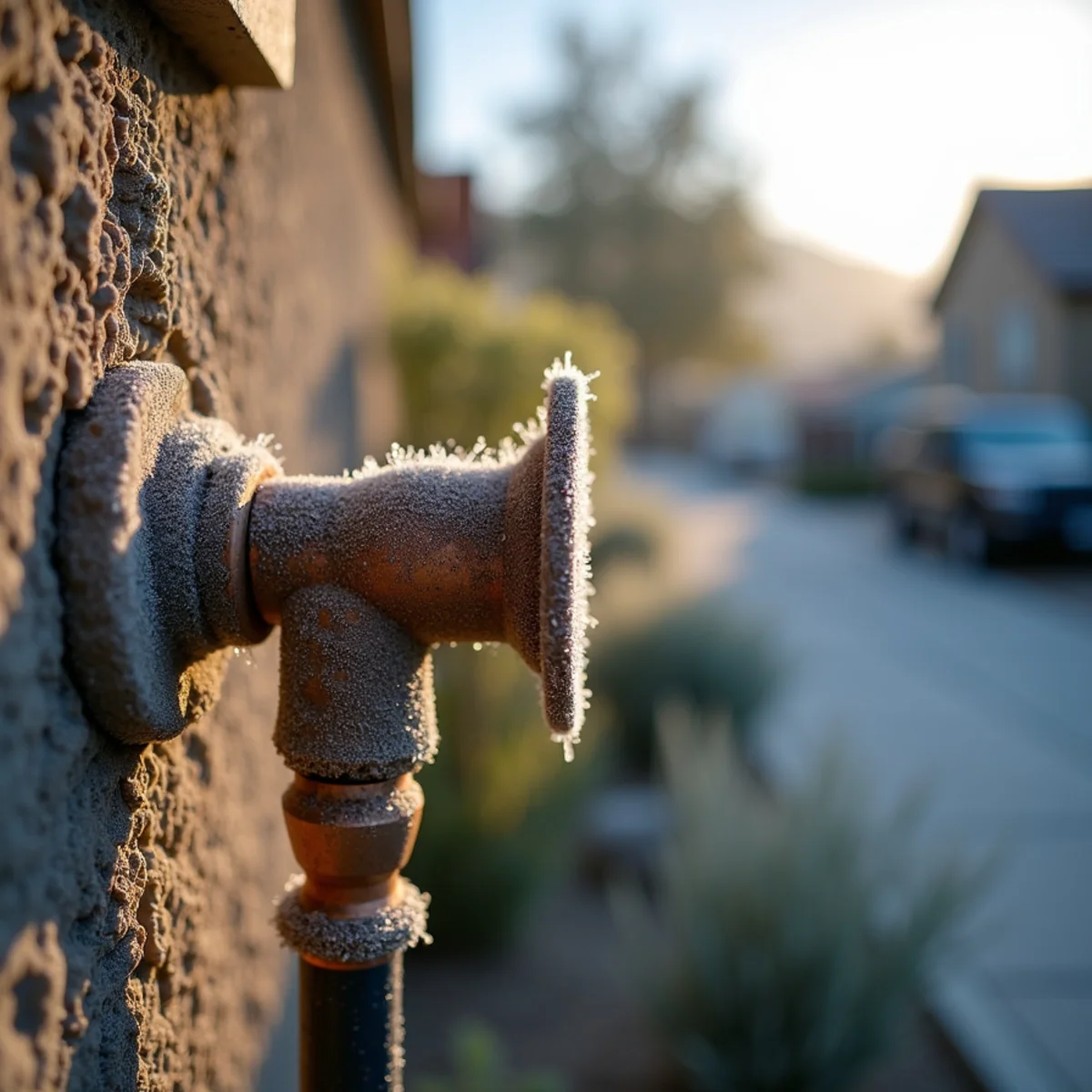
Do Pipes Really Freeze in Rancho Cucamonga? Foothill Freeze Nights in Alta Loma and Etiwanda
Interior plumbing is fine. Hose bibs, pool equipment and irrigation backflow are the ones that split at 3 a.m. in January.
5 min read
Local Risk & Rancho Cucamonga
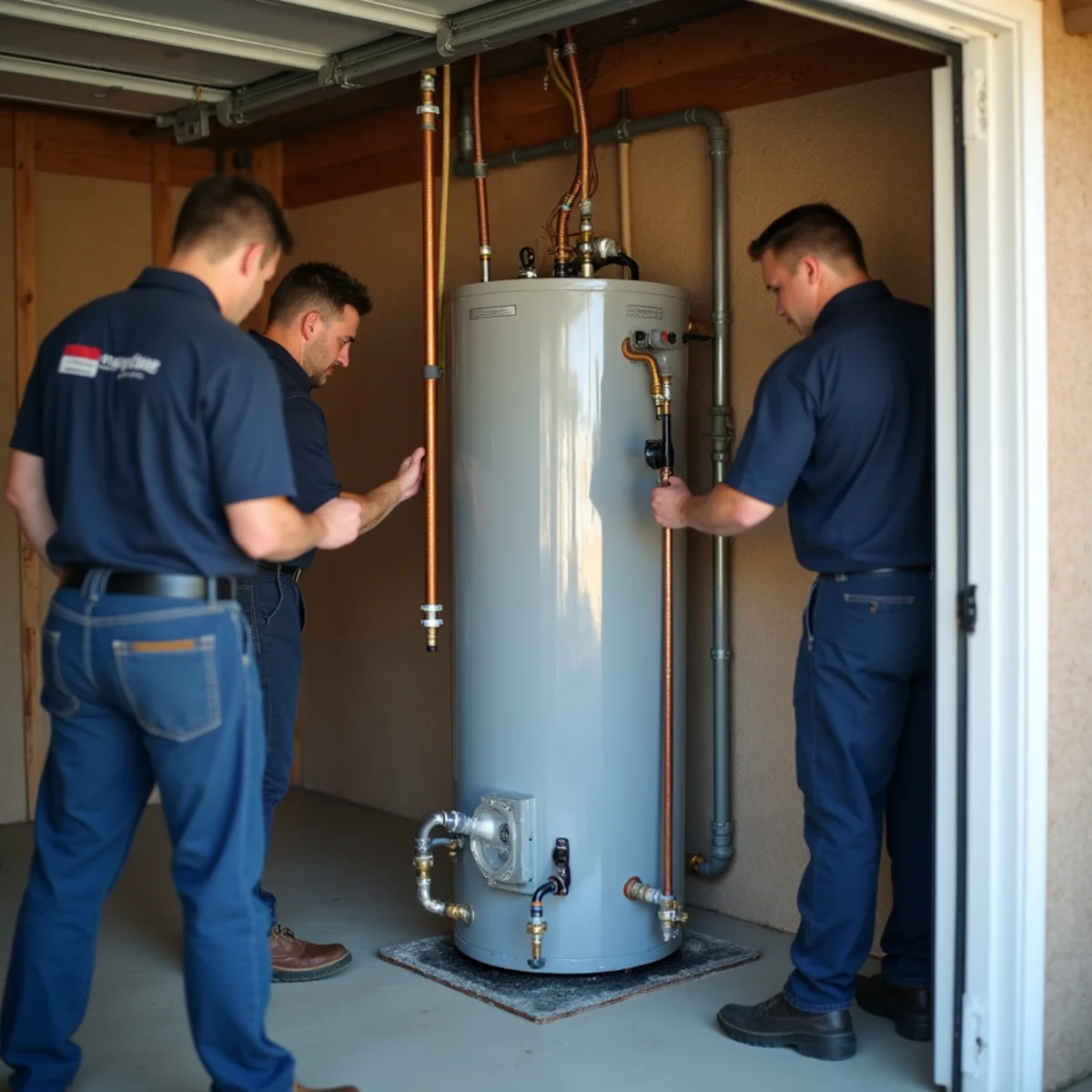
California's Water Heater Strapping Law (HSC §19211): The Earthquake Leak Risk Hiding in Your Garage
Strapping stops your tank falling over in a quake. It does nothing about the tank corroding — and people conflate the two.
5 min read