
How Restoration Works
Why Your House Still Smells Musty After the Water "Dried"
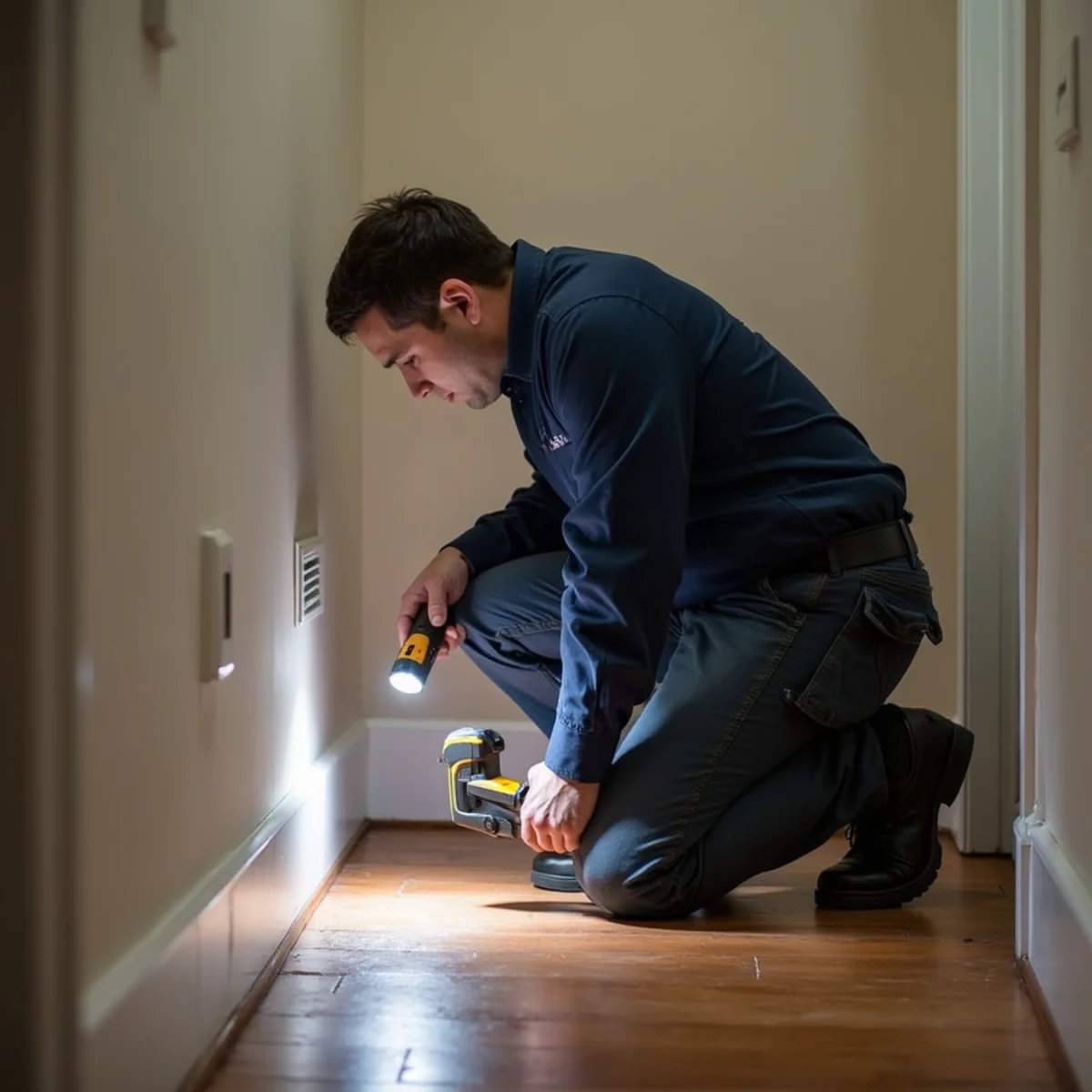
Dealing with this right now? We answer 24/7 and dispatch across Rancho Cucamonga in 60 minutes.
+1 (201) 277-9344A musty smell after a dry-out is not a lingering memory of the leak. It's a signal, and it means something is still wet enough to support microbial growth.
The odor comes from microbial volatile organic compounds — gases produced by actively growing mold and bacteria. Active growth requires moisture. The smell is therefore a fairly reliable moisture detector, and often a more sensitive one than a walkthrough.
Here's where we find it.
| What the smell is like | Where to look first |
|---|---|
| Earthy, like a cellar, worse in the morning | Crawl space or sub-area |
| Sharp and localised to one wall | Inside that wall cavity |
| Strongest at floor level, across a room | Under the flooring |
| Only when you open a cupboard | Cabinet toe-kick or vanity base |
| Comes on when the system runs | HVAC — the coil, the pan or the ducts |
1. The crawl space
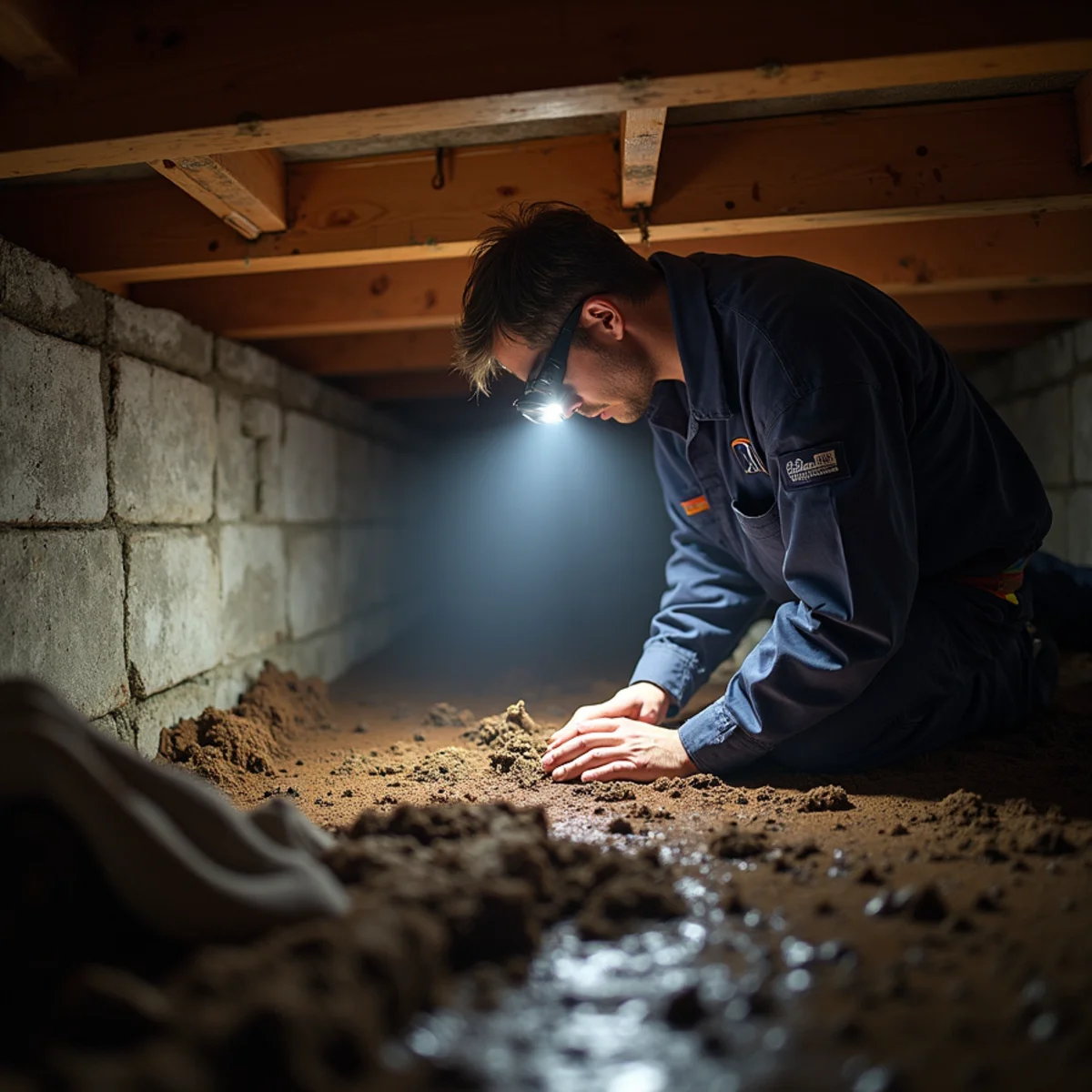
By some margin the most common answer in homes with raised foundations.
Air moves upward through a house, so whatever is in the sub-area gets drawn continuously into the rooms above through floor penetrations, plumbing chases and gaps. A crawl space that was never pumped, or that was pumped but never dried, keeps producing odor indefinitely.
The other giveaway is that the smell affects the whole house rather than one room, and it's often stronger near closets, along exterior walls and at floor level.
Batt insulation between the joists is the usual culprit — once saturated it never recovers, and it holds moisture against your floor framing for months. See flooded basement and crawl space cleanup.
2. Inside a wall cavity
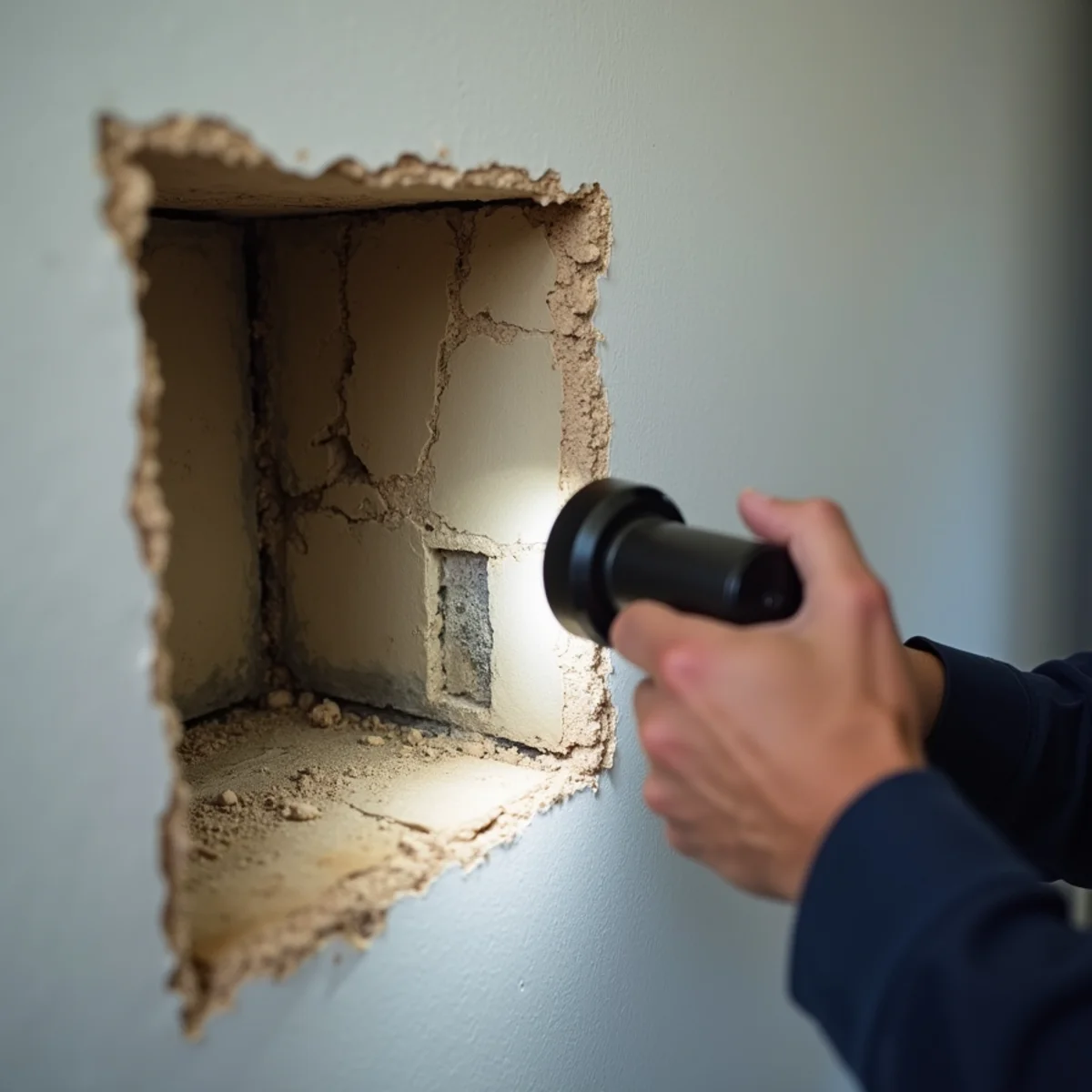
If the wall was dried from the room side only — a fan pointed at it — the cavity behind may never have dried at all.
Signs: the smell is localised to one wall or one room, it's stronger low down, and the wall may feel cool to the touch (evaporative cooling from moisture still leaving the material).
The fix requires opening or injecting the cavity. Painting over it does nothing, and neither does an air freshener.
3. Under the flooring
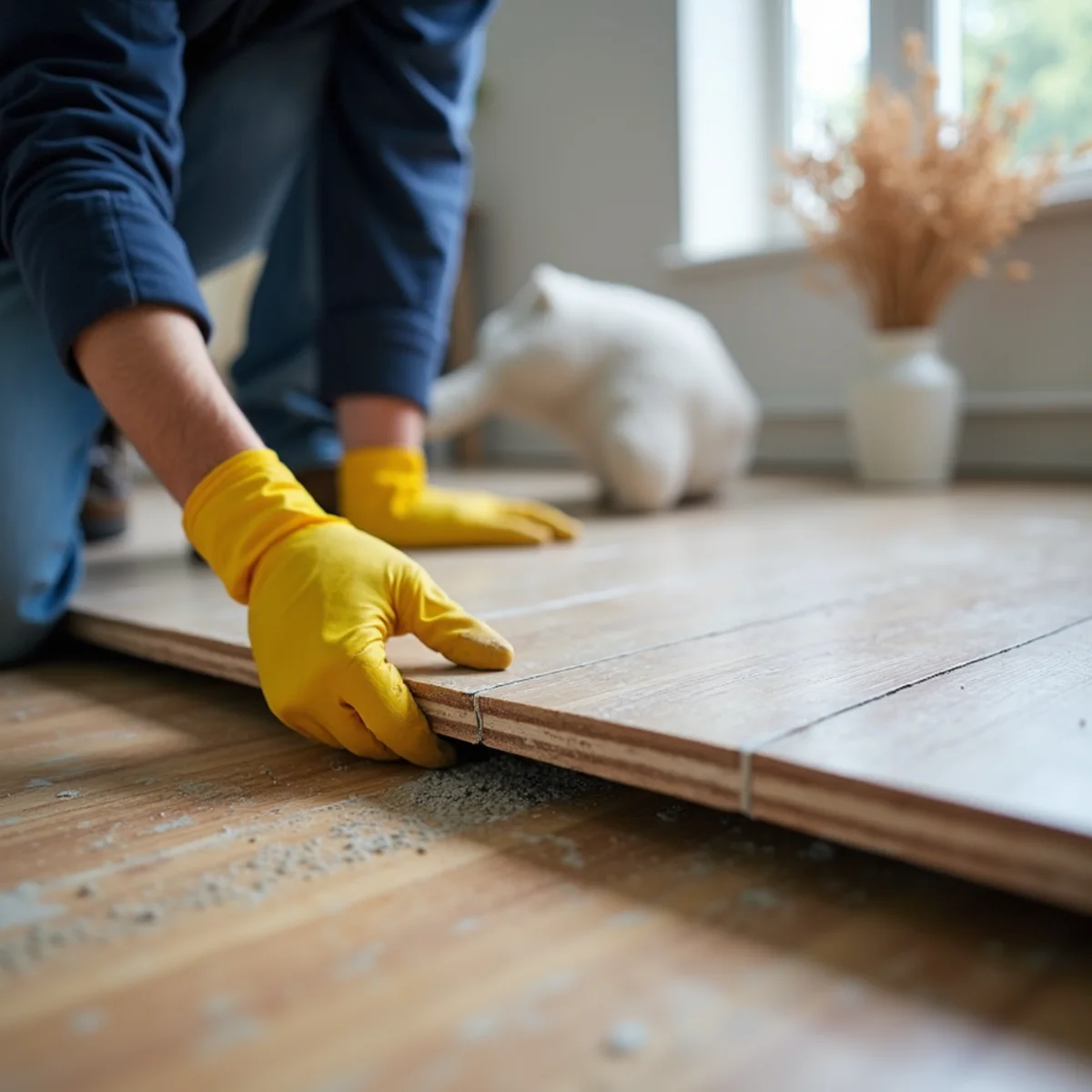
Water trapped under floating laminate or vinyl plank, or between a slab and glued-down flooring, has nowhere to go.
Signs: the smell is strongest at floor level, there may be slight cupping or lifting at seams, and it can worsen on warm days as temperature drives moisture out.
Over a slab, this frequently means the concrete itself was never dried to standard before new flooring went down.
4. Cabinet toe-kicks and vanity bases
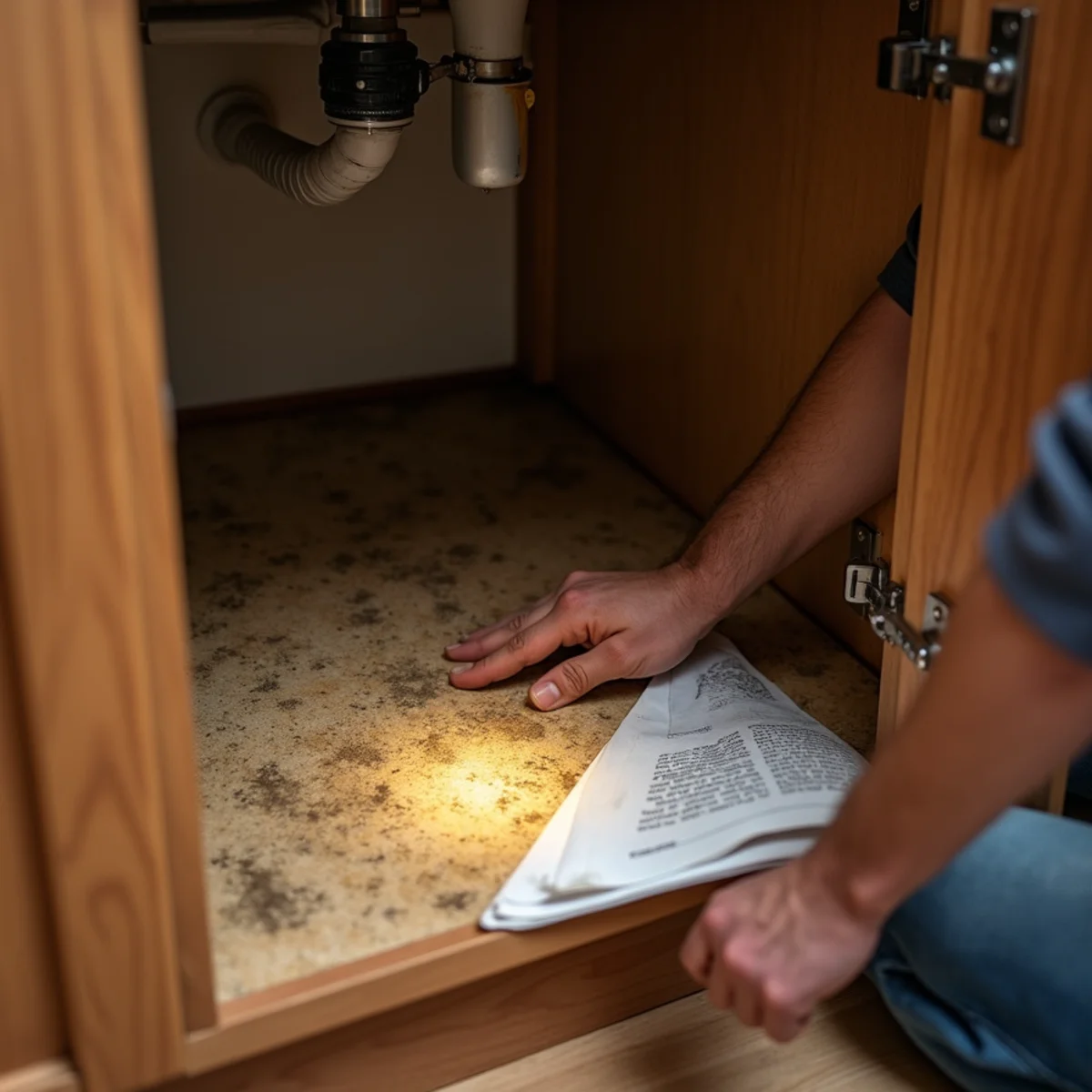
The dark, unventilated void under a cabinet run, floored with particle board. Water runs in during a kitchen or bathroom loss and stays.
Signs: the smell is strongest when you open a cabinet, particularly the sink base. The cabinet floor may feel soft or look discoloured at the back corners.
This is one of the most commonly missed spots on an incomplete dry-out, because it requires removing the toe-kick panel to reach.
5. The HVAC system
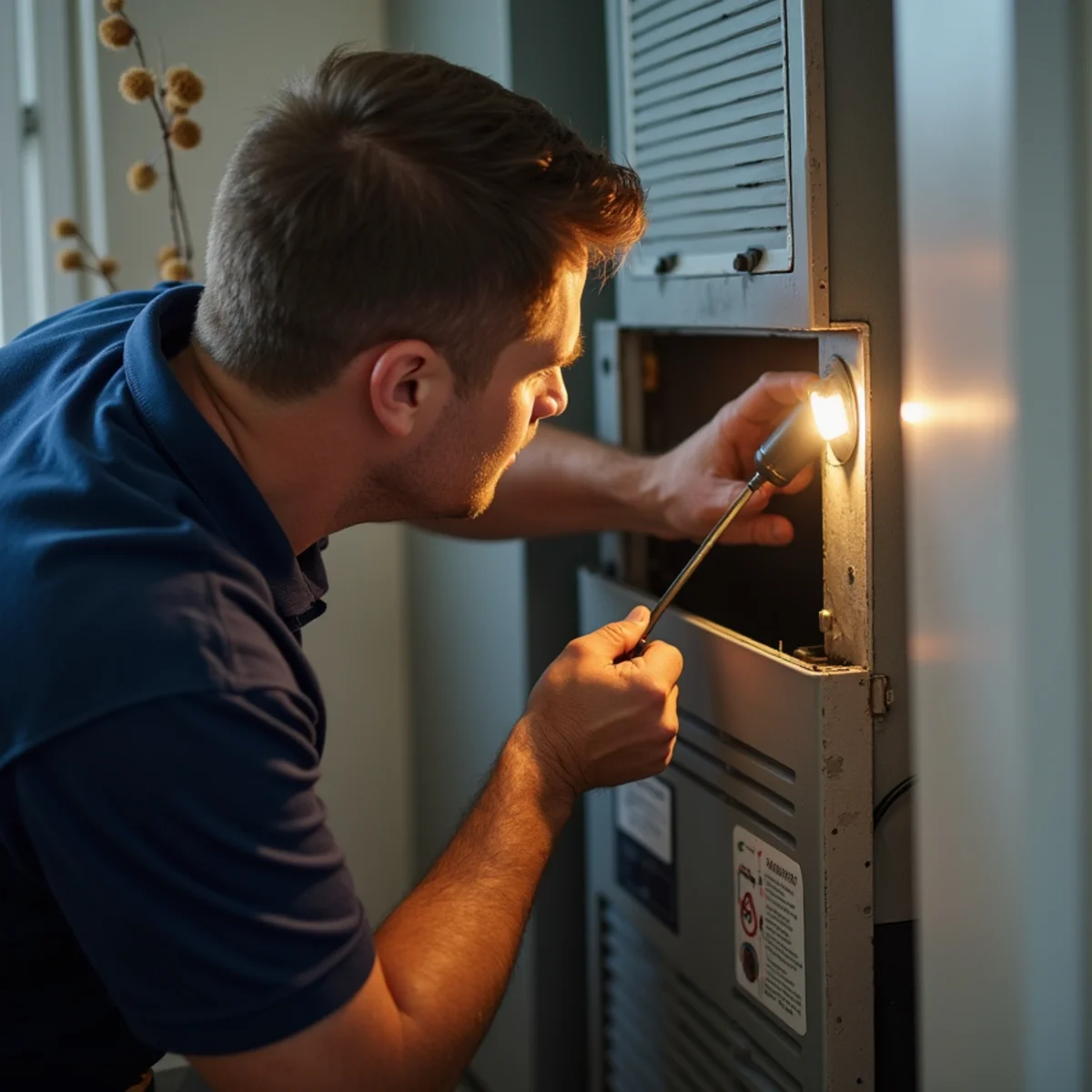
If the air handler, the ductwork or the return got wet — or if the system was run during the drying, which pulls damp air into the ducts — the system itself becomes the source and distributes it everywhere.
Signs: the smell is worst when the system first turns on, and it affects every room roughly equally.
How to narrow it down yourself
Note when and where it's strongest. One room means a localised source. Whole house means the crawl space or the HVAC. Worse when the AC starts means the system.
Check at floor level. Get down and smell along the base of walls. Odor concentrates low.
Open cabinets and closets and smell inside. Enclosed spaces concentrate it.
Note whether it's worse on warm days. Heat drives moisture out of materials, so a temperature-linked smell means something is still holding water.
What a proper investigation looks like
Thermal imaging across floors, walls and ceilings to find temperature anomalies indicating moisture. Moisture meters into the suspect materials — not the air, the materials. Physical inspection of the crawl space, the attic, behind the toe-kicks and inside the affected cavities.
Then a straight answer: here's where it's wet, here's why, here's what it will take.
Why it happened
Almost always one of four things:
The dry-out stopped too early. Equipment pulled when surfaces read dry but the slab, the cavity or the sub-area hadn't reached target.
Nobody metered anything. "It feels dry" is not a measurement.
Something wet was closed up. New drywall over wet insulation, new flooring over a wet slab.
A part of the structure was never included. The crawl space is the classic. The toe-kicks are second.
What does not fix it
There is a whole category of products sold for this, and it is worth being clear about what they achieve.
Air fresheners and plug-ins mask the odour for as long as they are running. They do nothing to the source, and they make the problem harder to locate because they suppress the very signal you need to follow.
Ozone generators oxidise odour molecules in the air and on exposed surfaces. They do not penetrate a wall cavity, a subfloor or a crawl space, so they do not reach where the growth actually is. They are also unsafe to run in occupied space, and the smell reliably returns once the material behind the wall carries on doing what it was doing.
Foggers and antimicrobial sprays applied to a surface treat the surface. If the growth is inside the assembly, spraying the room accomplishes very little.
Encapsulants and sealing paints lock a surface down. Applied over material that is still wet, they trap the moisture and the growth behind a film.
None of these are frauds exactly — each has a legitimate use as a finishing step after the source is removed and the material is dry. Used instead of that, they buy a few weeks and cost you the time in which the problem was cheapest to fix.
What it costs to fix
Less if you act on the smell than if you wait for the visible growth. A localised area found early is a contained remediation; the same problem in six months, having spread through a wall cavity into an adjacent room, is not.
The smell is the early warning. It's worth treating it as one.
We investigate these across the service area regularly — older raised-foundation homes in Beryl Park and along the foothill line in San Dimas are frequent candidates, because both have crawl spaces and both have had water in them at some point.
Musty smell that won't go away? +1 (201) 277-9344.
FAQ
Questions people also ask
Does a musty smell always mean mold?
It means active microbial growth, which requires moisture — so yes, something is still wet enough to support it. The smell comes from gases produced by growing organisms, which makes it a fairly sensitive moisture detector, often more sensitive than a visual walkthrough.
Can I just use an air purifier or odor bomb?
Those mask the symptom while the source keeps growing. Odor treatments have a place at the end of a remediation, once the wet material is gone and surfaces are treated — but applied to an active source they buy a few days and cost you the early warning.
The company said it was dry. Why does it smell?
Most commonly because something was never included in the scope. The crawl space is the usual answer, followed by cabinet toe-kicks, closed wall cavities dried only from the room side, and a slab that never reached its dry standard before new flooring went down.
Can a smell come back months after the job was finished?
It can, and it is a reliable sign that source material was left somewhere — most often a subfloor, a wall cavity, a cabinet base or the crawl space under the room. Odour tracks temperature and humidity, so something that has been quietly present all winter often announces itself with the first warm spell. That is a reason to reopen and look, not to deodorise.
Services mentioned
- Structural DryingAir movers and commercial dehumidifiers placed to a calculated load, with daily moisture readings you get to see.
- Mold RemediationContainment, HEPA filtration, source removal and moisture correction — remediation that fixes the cause, not just the stain.
- Basement & Crawl SpaceBelow-grade water is out of sight and easy to ignore — until the whole house smells. We pump, sanitize and dry it properly.
Keep reading
How Restoration Works
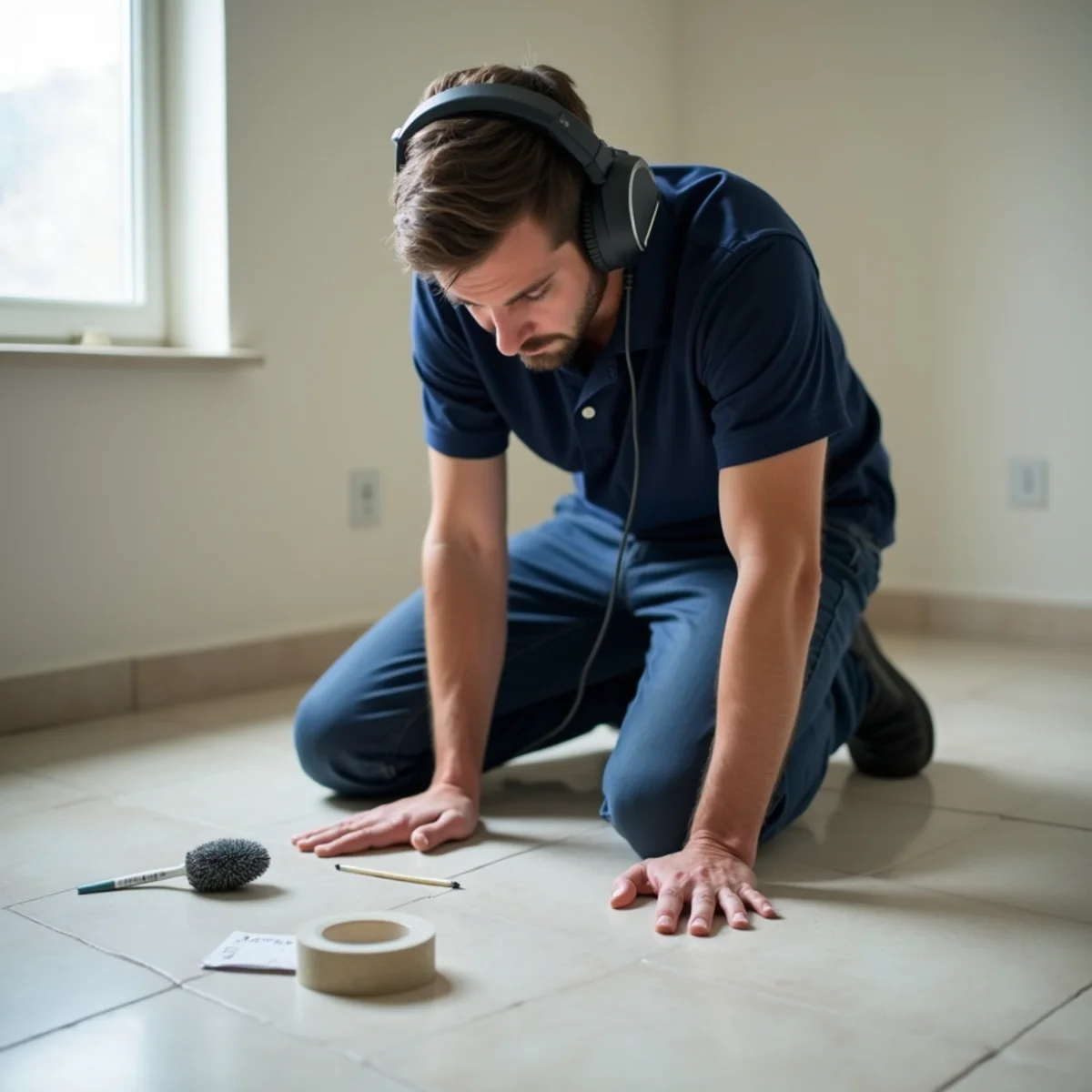
How Pros Find Slab Leaks Without Tearing Up Your Whole Floor
Four techniques that turn 'somewhere under the west half of the house' into a marked spot on your floor.
5 min read
How Restoration Works
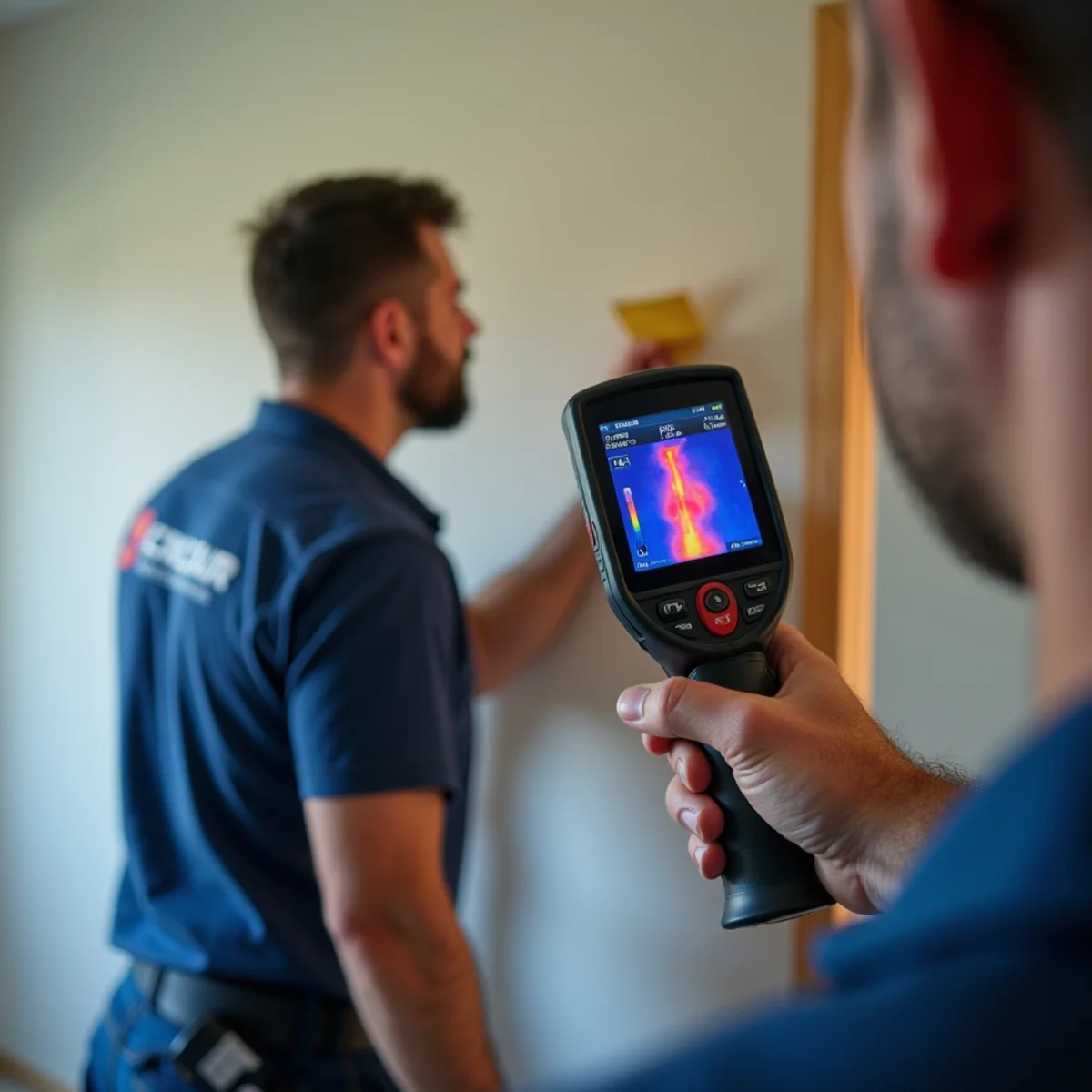
Hidden Leak Symptoms: Warm Floor Spots, High Water Bills, and the Sound of Running Water
Hidden leaks announce themselves indirectly. Here are the signals worth acting on, and the meter test that settles it.
5 min read
How Restoration Works
Black Mold vs. Mildew: How to Tell the Difference and When to Call a Pro
One wipes off a shower tile. The other is growing in the material. Here's how to tell which you have without a lab.
5 min read