
Local Risk & Rancho Cucamonga
Living Near Day Creek and Deer Creek: What Foothill Homeowners Should Know About Debris Basins
Dealing with this right now? We answer 24/7 and dispatch across Rancho Cucamonga in 60 minutes.
+1 (201) 277-9344If you live in the northern part of Rancho Cucamonga, there's engineered infrastructure between you and the mountain, and it's worth understanding what it does and — more usefully — what it doesn't.
The short version: the basins are genuinely protective and they work, catching mountain runoff and the material it carries before it reaches housing. What they cannot do is manage water once it is on your own lot — and on-site drainage, not basin failure, is what causes almost every flooded home we see up here.
What's up there
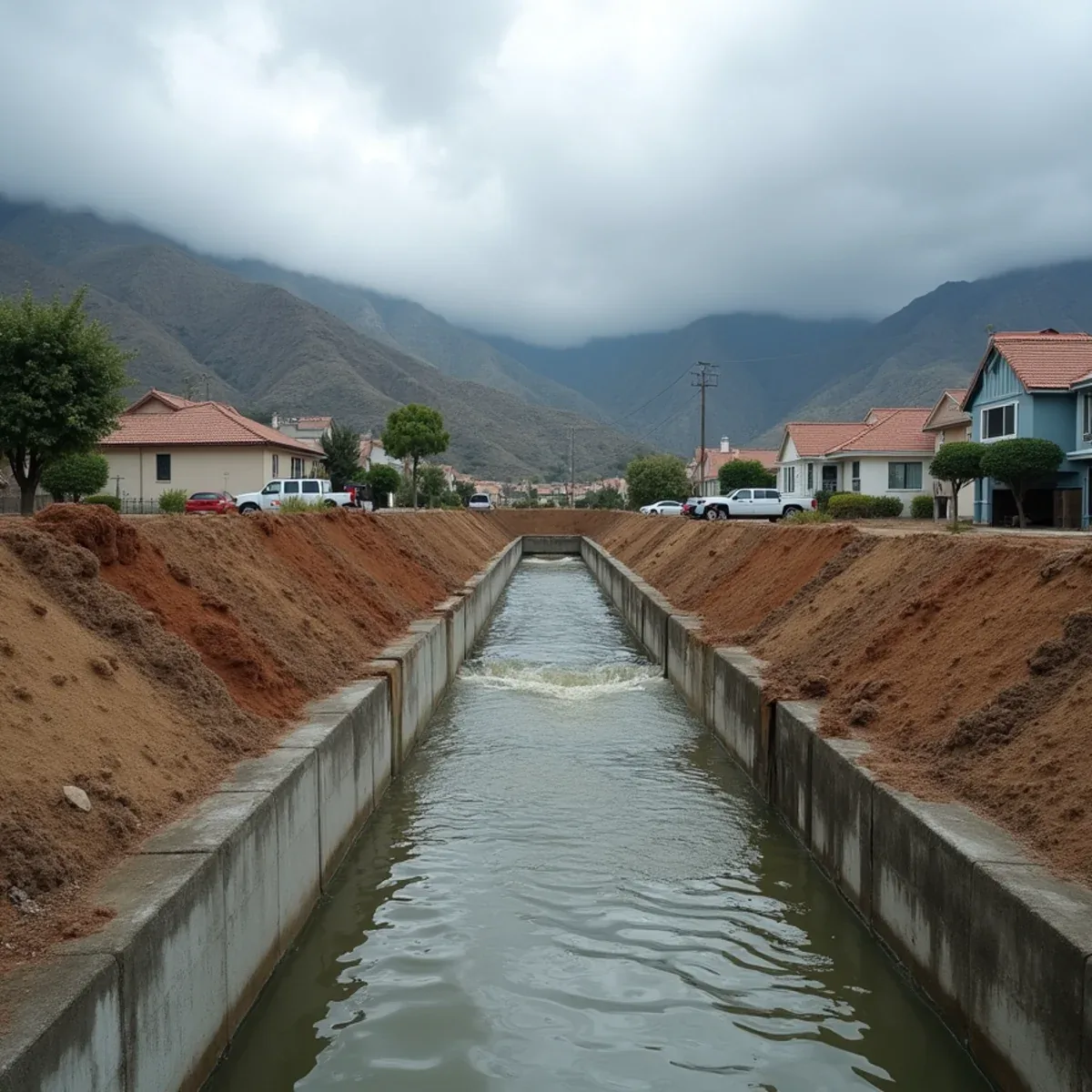
The San Bernardino County Flood Control District operates a system across the alluvial fan below the San Gabriels. The elements relevant to Rancho Cucamonga:
Debris dams and basins at the canyon mouths — Day Creek and Deer Creek among them. These catch the rock, gravel, sand and vegetation that storm runoff carries out of the mountains, letting water pass while retaining the solids. Debris is what does structural damage; separating it from the water is most of the job.
Improved channels carrying flow south across the valley — the Day Creek channel and the Cucamonga Creek channel are the visible ones through the city.
Spreading grounds — percolation basins, including the Cucamonga Creek basins near The Colonies, that let captured water soak into the aquifer rather than running downstream.
This system exists because the alluvial fan geology means water and debris move fast off a steep, fire-prone range onto a populated valley floor. It's well engineered and it works.
What it protects you from, and what it doesn't
It protects you from the mountain. Debris flow, canyon-mouth flooding, the enormous volumes that come down after a major storm.
It cannot protect you from your own lot. And in our experience, nearly all the storm water we extract from foothill homes entered because of on-site drainage rather than because the flood control system was overwhelmed.
The specific culprits, in rough order of frequency:
Grading that has settled. Builders establish a fall away from the foundation. Over fifteen or twenty years, soil settles, landscaping is added, hardscape goes in, and that fall flattens or reverses. Water then sits against the foundation instead of leaving.
Downspouts discharging at the foundation. A roof collects an enormous volume in a heavy storm and delivers it to a handful of points. If those points are next to your wall, you've concentrated the whole roof's rainfall against your foundation.
Silted yard drains and swales. Eight dry months fills area drains with leaves and sediment. They then don't work on the night they're needed.
Blocked retaining wall weep holes. On terraced foothill lots, weep holes relieve hydrostatic pressure behind a wall. Plugged, the pressure builds and water finds another route.
Hardscape changes. A new patio, driveway extension or planter that redirects sheet flow — usually without anyone realising it has.
The fire factor
Above the debris basins sits the wildland interface, and this is where the risk genuinely changes.
After a fire in the San Gabriels, the slope loses the vegetation that absorbed rainfall and held soil in place. Runoff volumes increase substantially and debris loads increase dramatically. That elevated condition persists for years while vegetation re-establishes.
Which means the risk in a neighborhood like Deer Creek or North Etiwanda isn't constant — it's a function of what's burned above you and how recently. A storm that would have been routine before a fire can be consequential after one.
The debris basins are designed for this and they perform. But post-fire is exactly when your own lot's drainage margin matters most.
The October walk
One hour, once a year, before the rain starts. This prevents most of what we get called for in January.
- Gutters cleared, and downspouts confirmed to discharge at least several feet from the foundation. Extensions are cheap.
- Every yard drain and area drain flushed with a hose and confirmed to flow.
- Swales cleared of debris and confirmed to still hold their shape.
- Grading checked on all four sides — does the ground still fall away from the house?
- Retaining wall weep holes checked for blockage.
- Low openings identified — garage threshold, sliders, lower-level doors — and thresholds checked.
- Sandbags bought and stored if you're below a burn scar. Not ordered when a storm is forecast.
The insurance reality
Standard California homeowners policies exclude surface water and flooding entirely. Water that runs across the ground into your house is a flood by definition regardless of whether there's a river anywhere near you.
That requires separate flood insurance, and NFIP policies carry a 30-day waiting period — so the useful time to ask your agent is September, not during a December storm.
The exception worth knowing: water entering through an opening created by wind damage is generally covered as a consequence of the wind. Which is why we photograph the entry point and causal sequence before any cleanup starts on a storm loss.
Who to call about what
Storm-season problems in this part of the city cross several jurisdictions, and knowing who owns which piece saves a lot of wasted calls.
The debris basins and the major flood control channels are San Bernardino County Flood Control District infrastructure. Concerns about a basin, a channel or the drainage structures feeding them belong there.
Streets, curb drains and public storm drain inlets are the City of Rancho Cucamonga. A blocked inlet on a public street, standing water in the roadway or a curb drain that has silted up is a city matter, and reporting it before the storm is more useful than after.
Common-area drainage, greenbelts and slope landscaping in an HOA tract belong to the association. Silted swales and blocked drains on common ground are their maintenance, and they respond much better to a written request in October than an emergency call in February.
Everything from your property line inward is yours — grading, downspouts, yard drains, wall weep holes and the hardscape that redirects sheet flow.
The overwhelming majority of water we pump out of homes up here entered because of that last category, which is the one nobody else is going to look at for you.
If it gets in
Storm water is Category 3 — contaminated regardless of how clear it looked. Porous materials below the water line come out rather than being dried, and cleaning precedes disinfection because disinfectant over silt does nothing. See flood cleanup.
Crawl spaces matter too. Water under the house keeps the floor above damp and the whole house smelling for months if it isn't pumped, treated and dried.
We work the Day Creek corridor and the northern foothill neighborhoods through every storm season, and dispatch 24/7: +1 (201) 277-9344.
FAQ
Questions people also ask
Do the debris basins mean my foothill home is safe from flooding?
They protect you from the mountain — the debris flow and canyon-mouth volumes that do structural damage — and they do that job well. What they can't manage is water on your own lot. Nearly all the storm water we extract from foothill homes entered because grading had settled, downspouts discharged at the foundation, or yard drains had silted up.
Does a fire above us change our flood risk?
Significantly, and for years rather than one season. Burned slopes lose the vegetation that absorbs rainfall and holds soil, so runoff volumes and debris loads increase substantially. Post-fire is when your own lot's drainage margin matters most — and when sandbags stored in advance earn their keep.
What's the single most valuable thing to do before winter?
Extend your downspouts. A roof concentrates an enormous volume of rainfall into a handful of discharge points, and if those points are next to your foundation you've directed the entire roof's water at your wall. Extensions cost very little and it's the highest-return item on the whole checklist.
Who do I call about a blocked drain — the city, the county or the HOA?
The debris basins and major flood control channels are San Bernardino County Flood Control District. Streets, curb drains and public storm drain inlets are the City of Rancho Cucamonga. Common-area drainage, greenbelts and slope landscaping in an HOA tract belong to the association. Everything inside your property line is yours — and that last category is what causes almost every flooded home up here.
Services mentioned
- Storm Damage CleanupEmergency tarping, water extraction and full interior restoration after Santa Ana winds and winter atmospheric rivers.
- Flood CleanupStorm and runoff flooding brings contaminated water. We pump, strip, sanitize and dry — then document it for your carrier.
- Basement & Crawl SpaceBelow-grade water is out of sight and easy to ignore — until the whole house smells. We pump, sanitize and dry it properly.
Keep reading

Local Risk & Rancho Cucamonga
Spike in Your Cucamonga Valley Water District Bill? You Might Have a Hidden Leak
A slab leak runs 24 hours a day. Your bill notices long before your floor does — if you're reading it.
5 min read
Local Risk & Rancho Cucamonga
Do Pipes Really Freeze in Rancho Cucamonga? Foothill Freeze Nights in Alta Loma and Etiwanda
Interior plumbing is fine. Hose bibs, pool equipment and irrigation backflow are the ones that split at 3 a.m. in January.
5 min read
Local Risk & Rancho Cucamonga
South Fontana's Expansive Clay Soils: Why Slabs Crack, Walls Shift, and Pipes Shear
A slab leak wets the soil, the soil swells, the slab moves, the movement stresses the pipe. Here's how to break the loop.
5 min read