
Prevention & Maintenance
Smart Water Sensors and Automatic Shut-Off Valves: Are They Worth It for Your Home?
Dealing with this right now? We answer 24/7 and dispatch across Rancho Cucamonga in 60 minutes.
+1 (201) 277-9344There are two categories of product here and they do genuinely different jobs. Worth understanding the difference before buying either.
The distinction that matters is between devices that tell you something is wrong and devices that do something about it. They cost very different amounts, they suit different households, and buying the wrong one is a common and expensive mistake.
Category 1: Leak sensors (they tell you)
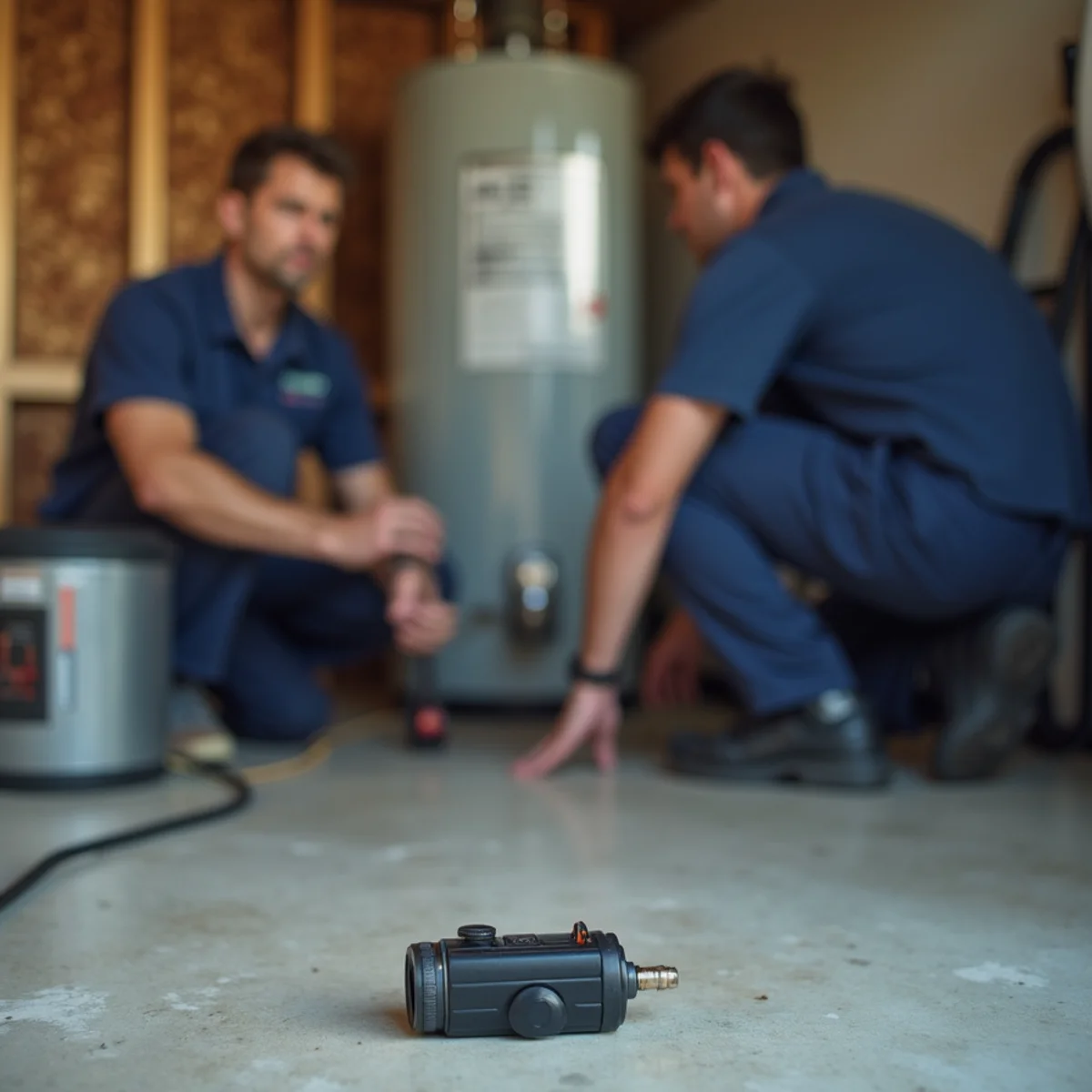
A small battery-powered puck you place on the floor where water would appear. When the contacts get wet, it alarms — locally, and on your phone if it's connected.
Cost: roughly $15–$30 each. Multi-packs are cheaper.
What they need: batteries lasting a year or more, and for the connected ones, Wi-Fi and an app.
What they do brilliantly: catch a slow failure early, and alert you to something that starts while nobody's home.
What they don't do: stop the water. If you're on a plane, a sensor gives you a notification and nothing else.
Category 2: Automatic shut-off systems (they act)
A motorised valve installed on your main supply line, paired with either sensors or built-in flow monitoring. When a leak is detected, it closes the main.
Two approaches:
Sensor-triggered. Place sensors around the house; if one gets wet, the valve closes. Simple and reliable. Only catches leaks where you put a sensor.
Flow-monitoring. The unit analyses flow patterns through the main and identifies anomalies — a fixture running continuously for hours, an unusual flow rate — then shuts off. Catches leaks anywhere in the system, including inside walls and under slabs, because it's watching the whole house's consumption.
Cost: several hundred to over a thousand dollars for the device, plus professional installation, since it's cut into your main line.
What they do brilliantly: stop a burst supply line at minute two instead of hour eight.
Who needs which
Sensors are enough if:
You're home most of the time, you don't travel much, and your plumbing is in reasonable condition. Sensors cost very little, cover the highest-risk points, and give you the minutes that matter.
An automatic shut-off is worth the money if:
You travel regularly, or the house sits empty. This is the strongest case by a distance. The most expensive losses we see are the ones that ran for days in an empty house — and every one of them would have been trivial with a valve that closed at minute two.
You have a second-floor laundry or bathrooms. An upstairs failure damages two floors and the ceiling between them. Minutes matter more.
Your plumbing is old. A 1980s slab-era house with copper at forty-plus years has a meaningfully elevated probability of a failure.
You have high-value finishes. Hardwood, custom cabinetry, a finished lower level, a wine room. The cost of the device against the cost of restoring those materials isn't close.
You have a vacation property or a rental you don't occupy.
Where to put sensors
In priority order:
- Next to the water heater — the most common single failure point, and usually in a garage where a slab can drain toward the house
- Behind the washing machine
- Under every sink, in the back of the cabinet where water actually collects
- Behind each toilet
- Under the dishwasher, and behind the refrigerator if it has a water line
- In the crawl space or sub-area, if you have one
- By any upstairs plumbing — this is where two-story homes get hurt
Six or eight sensors covers a typical house for well under two hundred dollars.
What to look for when buying
A loud local alarm, not just an app notification. You want it audible if you're home and Wi-Fi is down.
Long battery life and a low-battery alert. A sensor with a dead battery is a decoration.
Local alarm independent of the cloud. If the service goes offline or the company folds, the device should still beep when it gets wet.
For shut-off valves: manual override, so you can open the water yourself if the device fails. And a system that doesn't require a subscription to perform its core function.
Freeze detection is a genuine bonus at foothill elevations — some sensors also alarm on low temperature, which is useful in a garage or crawl space in January.
An insurance note
Some carriers offer a premium discount for a monitored automatic shut-off system. It's worth asking your agent before you buy — the discount doesn't usually pay for the device, but it changes the arithmetic.
The honest verdict
Sensors: buy them. There is no argument against $100 of sensors covering the eight highest-risk points in a house. The payback is the first time one goes off.
Automatic shut-off: worth it if you travel, if the house sits empty regularly, if you have upstairs plumbing, or if your plumbing is old. If you're home most days with newer plumbing on a single story, sensors alone are a reasonable stopping point.
Neither replaces the basics. Braided supply lines instead of rubber. A water heater replaced past ten years. A main shut-off you can find and turn in the dark. Those are cheaper than any device and they prevent more.
The failure modes nobody mentions
These devices genuinely work, and they still fail in a handful of predictable ways worth planning around.
Batteries die quietly. A sensor with a flat battery looks identical to a sensor doing its job. Choose devices that report low battery to the app, and put a calendar reminder in for an annual check regardless.
Wi-Fi drops. A sensor under a cast-iron tub in a garage corner may sit at the edge of coverage, and a device that cannot reach the network cannot alert anyone. Test each one where it will actually live rather than beside the router.
Alerts go to a phone that is on silent. The 2 a.m. failure is the one these devices exist for, and it is also the one most likely to be missed. Set water alerts to bypass do-not-disturb, and add a second household member to the account.
Nobody is home to act. An alert is only as good as the response. If you travel, either fit an automatic shut-off valve that acts without you, or make sure a neighbour is on the notification list.
Power cuts. Check whether an automatic valve fails open or closed and whether it has a battery backup, because storms take out power and cause plumbing failures at the same time.
And know where your valve is regardless
The best automatic system in the world doesn't help if it fails and you can't find your main. Locate it, turn it, confirm it works, label it, and tell your household. Ten minutes.
We recommend sensors to nearly every customer, particularly in two-story housing across the Day Creek corridor and hillside properties in Chino Hills where a slow leak on a lower level can run a long time before anyone notices.
Leak already? +1 (201) 277-9344.
FAQ
Questions people also ask
Are cheap leak sensors actually any good?
Yes, for what they do. A $20 puck that alarms when it gets wet is genuinely effective at the highest-risk points — beside the water heater, behind the washing machine, under sinks. Look for a loud local alarm that works without the cloud, long battery life and a low-battery alert.
Do I need an automatic shut-off valve?
It's worth the money if you travel regularly or the house sits empty, if you have upstairs plumbing, if your supply piping is 35+ years old, or if you have high-value finishes. If you're home most days with newer plumbing on a single story, sensors alone are a reasonable place to stop.
Will my insurance company give me a discount for one?
Some carriers do offer a premium discount for a monitored automatic shut-off system. It rarely pays for the device on its own but it changes the arithmetic — worth asking your agent before you buy rather than after.
How do these fail, and how do I plan around it?
Batteries die silently — choose devices that report low battery and check annually anyway. Wi-Fi drops at the edge of coverage, so test each sensor where it will actually live rather than beside the router. Alerts get missed on a phone set to silent, so let water alerts bypass do-not-disturb and add a second household member. And check whether an automatic valve fails open or closed on a power cut, since storms cause outages and plumbing failures together.
Services mentioned
- Leak DetectionThermal imaging, acoustic listening and moisture meters find the leak before we open anything up.
- Emergency Water RemovalOne number, answered by a person, any hour of any day — with a truck rolling before the call ends.
- Burst Pipe CleanupA failed supply line can put hundreds of gallons into your house in an hour. We stop it, pull it out and dry it.
Keep reading
Prevention & Maintenance
Gutters, Downspouts, and Yard Drainage: A Pre-Rainy-Season Checklist for Foothill Homes
Hillside water has momentum and a direction. Here's how to make sure yours goes somewhere other than your foundation.
5 min read
Prevention & Maintenance
When to Replace Washing Machine Hoses, Water Heaters, and Supply Lines (The Ages That Matter)
A table of ages, and the honest advice on which to replace proactively and which to run to failure.
5 min read
Prevention & Maintenance
The 10-Minute Monthly Leak Inspection: Everywhere Water Hides in Your Home
Under every sink, behind every toilet, around the water heater. The slow leaks are the expensive ones, and they're all findable.
6 min read