60-Minute Dispatch · 24/7
Water Damage Restoration in Summit Heights, Fontana, CA
2000s HOA tract homes right off the I-15 / Summit Avenue interchange, with builder systems reaching first-repair age.
- Documented dry standard
- Bonded & insured
- 24/7 emergency response
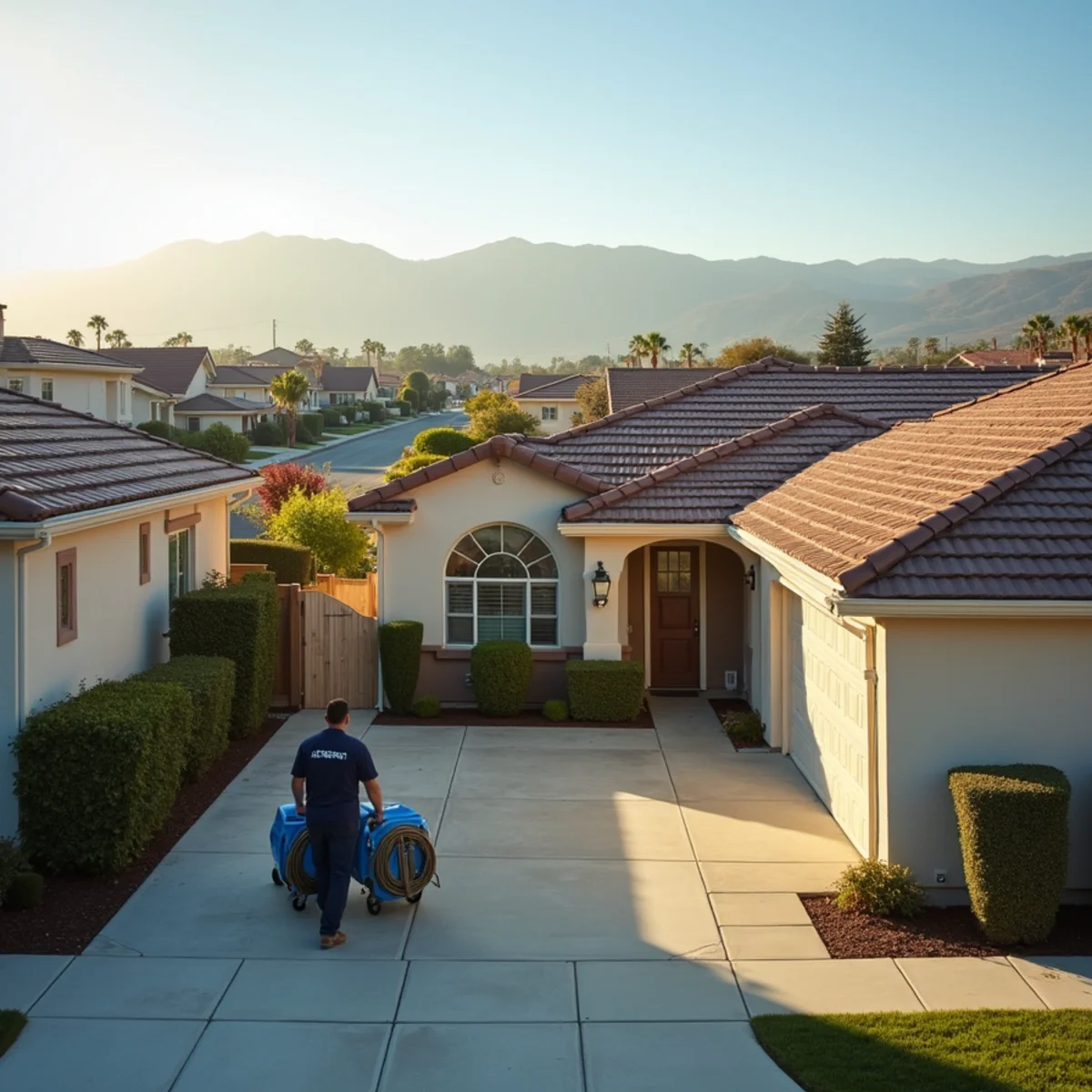
Summit Heights went up in the 2000s off the Summit Avenue interchange — HOA-governed tract housing, mostly two-story, built to a consistent spec across the neighborhood.
Twenty years on, everything that came with those houses is arriving at replacement age simultaneously.
Local risk profile
Why homes in Summit Heights take water damage the way they do
This is the first-repair window for a 2000s neighborhood, and it's a real phenomenon.
Builder-grade components have predictable service lives. Water heaters installed at construction were replaced around year ten to twelve; those replacements are now themselves aging. Angle stops and braided supply lines that came with the house are at or past their useful life. Dishwashers and washing machines have been through a cycle of replacement, and each replacement brought a new connection that may or may not have been made well. Toilet fill valves and supply lines are original in plenty of these homes.
The supply piping itself — copper or PEX depending on the builder and phase — is generally fine at twenty years. It's the fittings and appliances that fail.
Second-floor laundry rooms are common in this housing type and are a specific risk: a supply hose failure upstairs damages two floors plus the ceiling assembly between them, and open-plan layouts let the water travel further than it would in an older compartmentalised house.
Being close to the Lytle Creek wash and the I-15 corridor, the neighborhood also sits in an area where heavy winter runoff moves, though the newer drainage infrastructure handles it well.
On the ground
What our Summit Heights jobs actually look like
The most common Summit Heights job is a two-story loss from an upstairs failure — laundry, bathroom or a toilet supply line — that ran while the house was empty.
Three assemblies get wet: the upper floor and subfloor, the joist cavity between levels, and the downstairs ceiling. The cavity is the one that gets missed by crews drying only what they can see. We open and dry it directly, and we meter the joists rather than assuming.
Because this is an HOA neighborhood with consistent construction, we frequently see the same failure repeat across nearby homes within a year or two — the same builder-installed component reaching the end of its life on the same schedule.
The cheap preventive move for anyone in a 2000s tract: replace every braided supply line and washing machine hose with new stainless, and if your water heater is past ten years, replace it before it picks its own moment.
We work around
- Summit Avenue
- I-15 interchange
- Summit Heights parks
- Lytle Creek wash
Why Summit Heights
Why Summit Heights residents call us
We open the joist cavity instead of pointing fans at the ceiling. On a two-story loss the space between the floors is where the water sits longest and dries slowest, and it is the one assembly you cannot see from either room. We open it, meter the joists, and dry it directly — which is the difference between a repair that holds and a repair that comes back.
We tell you exactly which component failed. In a tract built to one spec, the part that let go in your laundry room is the same part sitting in your neighbour's wall on the same twenty-year clock. We identify it plainly, so replacing the rest of the set becomes an afternoon of work rather than the next emergency.
We work with the HOA when the damage crosses a boundary. Common walls, shared roof sections and association-maintained ground all complicate who documents what. We scope those elements separately from the outset so nobody is reconstructing the evidence weeks later when two carriers start asking.
We leave a written list of what to replace next. Water heater age off the label, which supply lines are still original, whether the pan is piped to a drain. It takes us ten minutes while the equipment runs, and in a neighbourhood at first-repair age it is the most useful thing we can hand you on the way out.
What we do here
Services we run most in Summit Heights
Chosen from what this area's housing and geography actually produce — not a generic list.
Burst Pipe Cleanup
A failed supply line can put hundreds of gallons into your house in an hour. We stop it, pull it out and dry it.
Learn moreCeiling Water Damage Repair
Find the actual leak, dry the cavity above, then repair and texture-match — not just paint over the stain.
Learn moreWater Heater Leak Cleanup
Forty to eighty gallons across a garage slab, heading for the house. Extraction, drywall drying and mold prevention.
Learn moreWater Extraction
Truck-mounted units pull standing and sub-surface water out in hours — the step that decides whether your floors survive.
Learn moreResidential Restoration
One company from the first phone call to the final coat of paint — so you're not hiring three contractors mid-crisis.
Learn more
- Documented dry standard
- Bonded & insured
- 24/7 emergency response
FAQ
Water damage questions from Summit Heights
Our house is 20 years old. What's most likely to fail?
Connections, not pipes. Braided supply lines, angle stops, washing machine hoses, toilet fill valves and the water heater — all builder-installed at the same time, all with service lives well under twenty years. Replacing the supply lines and hoses is an inexpensive afternoon and it prevents most of what we get called for in 2000s tracts.
The leak was upstairs but the damage is downstairs. What gets dried?
Three things: the upstairs flooring and subfloor, the joist cavity between the floors, and the downstairs ceiling assembly. The cavity has to be opened and dried directly with the joists metered — drying only what's visible from each room is why some two-story losses come back as a mold problem months later.
Our neighbour had the same failure last year. Is that a coincidence?
No. Summit Heights was built to a consistent spec over a short window, so builder-installed water heaters, angle stops and supply lines all reach the end of their service life on roughly the same schedule. Seeing the same failure move through a street over a couple of years is exactly what we expect in a 2000s tract.
How long will the drying equipment need to stay?
Typically three to five days for a two-story loss, driven by what the meters say rather than by the calendar. A joist cavity that was open to water for hours takes longer than a floor that was wet for twenty minutes. We log readings daily and pull equipment when the materials reach dry standard, not before.
Is it worth replacing components before they fail?
In a neighbourhood at this age, it is the best money you can spend. Braided supply lines and washing machine hoses swapped for new stainless, angle stops replaced if they are seized, and the water heater replaced on age past ten to twelve years rather than on the day it chooses. That is an inexpensive afternoon against the failures that fill our schedule from these streets.
How long before we can put flooring back down?
Not until the subfloor reaches dry standard, which for a two-story loss is usually four to six days and occasionally longer. Laying finish flooring over a subfloor that is still releasing moisture is the most common cause of a second failure — cupping, adhesive failure and growth underneath, months after everyone considered the job finished. We give you the final readings so the flooring installer is working from numbers rather than a guess.
Further reading
Useful for Summit Heights homeowners
Prevention & Maintenance
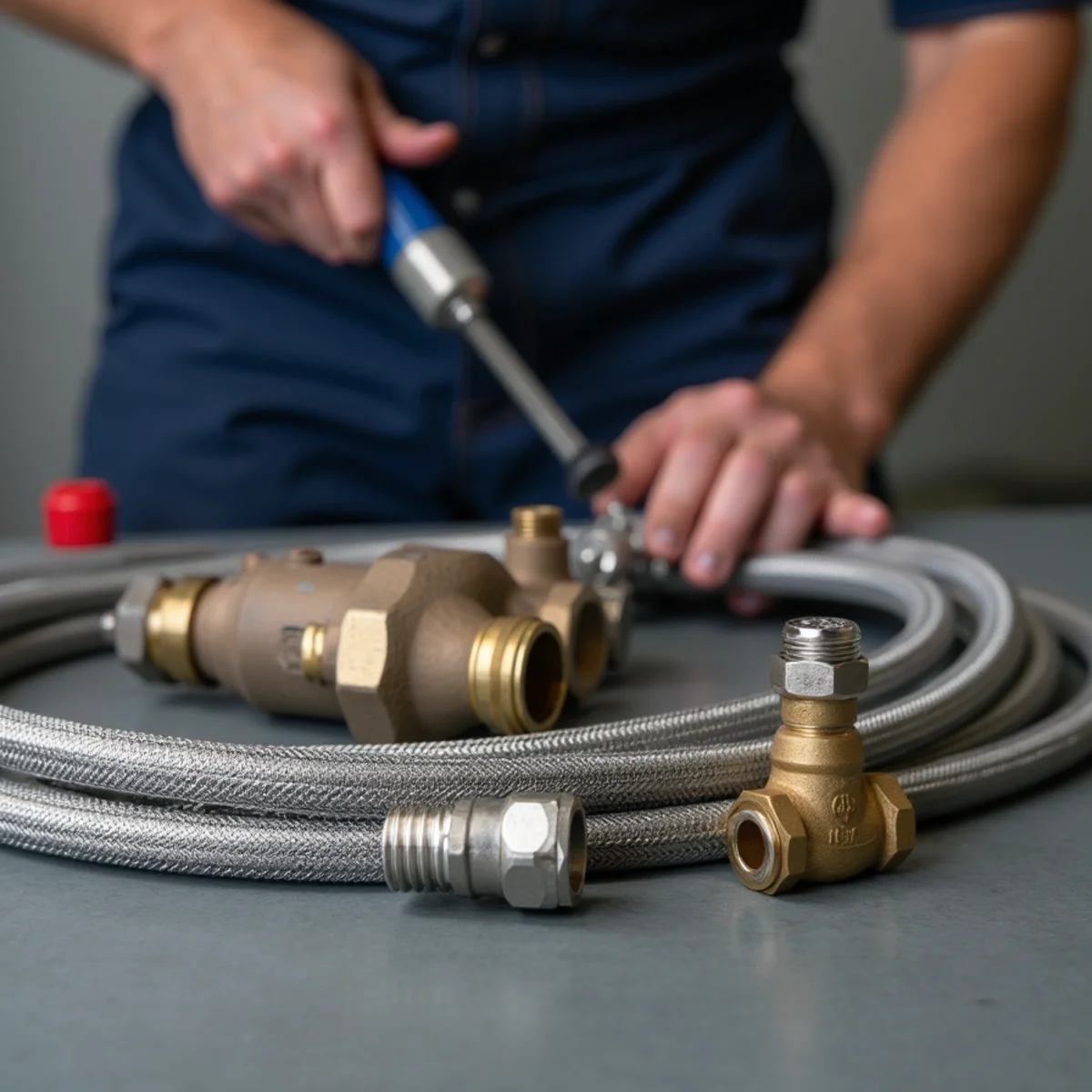
When to Replace Washing Machine Hoses, Water Heaters, and Supply Lines (The Ages That Matter)
A table of ages, and the honest advice on which to replace proactively and which to run to failure.
5 min read
Nearby
Other areas we serve close to here
Same crews, same response, same documentation.
Get in touch
Serving Summit Heights, Fontana from our Rancho Cucamonga base
RC Water Pros
Water Damage Restoration · Rancho Cucamonga, CA
- 11190 White Birch Dr
Rancho Cucamonga, CA 91730 - +1 (201) 277-9344
- Emergency response 24 hours a day, 7 days a week
Office & estimates: Mon–Sat, 7:00 AM – 7:00 PM
Water damage in Summit Heights? We're already close.
About 18 to 22 minutes east of our base via the 210 and I-15. Free assessment, 24/7 dispatch, and we handle your insurance documentation.
- Documented dry standard
- Bonded & insured
- 24/7 emergency response